Artículo 14
Article 14
Las acciones están originalmente sujetas a las normas de la Sharía. Por ello, ninguna acción debe emprenderse sin conocer antes su norma. En cambio, las cosas que quedan fuera de esto son originalmente mubah (permitidas), siempre que no exista una prueba que establezca su prohibición.
Actions are originally bound by the Shari’ah rules. Hence, no action should be undertaken unless its rule is known. The things on the other side are originally Mubah (permitted) as long as there is no evidence that stipulates prohibition.
El musulmán está obligado a conducir sus acciones de acuerdo con las normas de la Shari'ah. Allah (SWT) dice
The Muslim is commanded to conduct his actions according to the Shari’ah rules. Allah (swt) says

«Pero no, por tu Señor, no creerán [verdaderamente] hasta que te tomen a ti, [oh Muhammad ﷺ], por juez en aquello en que discrepan entre sí». (TMQ 4:65). Él (SWT) también dice,
“But no, by your Lord, they will not [truly] believe until they make you, [O Muhammad], judge concerning that over which they dispute among.” (TMQ 4:65). He (swt) also says,

«Y lo que el Mensajero ﷺ os haya dado, tomadlo; y lo que os haya prohibido, abstenéos de ello.» (TMQ 59:7).
“And whatever the Messenger (pbuh) has given you - take; and what he has forbidden you - refrain from.” (TMQ 59:7).
Por lo tanto, el principio original es que el musulmán se restrinja a las normas de la Shari'ah. Además, el principio de la Shari'ah establece: "No hay norma antes de la llegada de la Shari'ah". En otras palabras, a ningún asunto se le debe dar norma alguna antes de la llegada de la norma de Allah (swt) que lo regula. Por tanto, antes de la llegada de la norma de Allah (swt), a ningún asunto se le debe dar norma alguna. Esto significa que no se le debe dar la norma de permisibilidad, pues la ibaha es una norma de la Shari'ah que debe establecerse mediante el mensaje del Legislador; de lo contrario, no puede considerarse una norma de la Shari'ah. Esto es así porque la norma de la Shari'ah es el discurso del Legislador relacionado con los actos de los adoradores. Por consiguiente, lo que no ha sido mencionado en el mensaje del Legislador no puede considerarse una norma de la Shari'ah. Así pues, la permisibilidad no es la ausencia de una prohibición, sino la presencia de una evidencia de la Shari'ah que estipula lo mubah (permitido); es decir, la presencia de la elección del Legislador de realizar o abstenerse. Por lo tanto, el principio original es la sujeción al discurso del Legislador, no la ibahah, porque la norma de la ibahah misma requiere una confirmación del discurso del Legislador. Este principio es general, abarca tanto las acciones como las cosas. Así, si un musulmán quisiera realizar cualquier acción, le incumbiría sujetarse a la norma de Allah (swt) relativa a esa acción. Por ello, debe buscar esa norma hasta conocerla y acatarla. Del mismo modo, si un musulmán quisiera tomar o dar cualquier cosa, sea cual sea ese objeto, le incumbe sujetarse a la norma de Allah (swt) respecto a dicho objeto. Debe, pues, buscar esa norma hasta conocerla y acatarla. Esto es lo que indican los versículos y los hadices en su significado literal y en su comprensión. Por lo tanto, le está prohibido a un musulmán emprender cualquier acción o actuar respecto a cualquier cosa conforme a algo distinto de la norma de la Sharí'ah; más bien, está obligado a ajustarse a la norma de la Sharí'ah en toda acción que emprenda y en todo asunto. Después de que Allah (SWT) reveló
Therefore, the origin is that the Muslim restricts himself to the Shari’ah rules. Besides that the Shari’ah principle states: “No rule before the advent of Shari’ah”. In other words, no matter should be given any rule whatsoever before the advent of the rule of Allah (swt) pertaining it. Hence, before the advent of Allah’s (swt) rule, no matter should be given any rule. This means that it should not be given the rule of permissibility, for the Ibaha is a Shari’ah rule that must be established through the address of the Legislator; otherwise it cannot be considered a Shari’ah rule. This is so because the Shari’ah rule is the speech of the Legislator related to the actions of the worshippers. Therefore, anything that has not been mentioned in the address of the Legislator cannot be considered a Shari’ah rule. Therefore, permissibility is not the non-advent of a prohibition, it is rather the advent of Shari’ah evidence stipulating the Mubah (permitted); in other words, the advent of the choice from the Legislator to either undertake or abstain. Therefore, the origin is the abidance by the speech of the Legislator, not the Ibahah; because the rule of Ibahah itself requires a confirmation from the speech of the Legislator. This principle is general, covering the actions and the things. So if a Muslim wanted to perform any action, it would be incumbent upon him to abide by the rule of Allah (swt) pertaining that action. Therefore, he must search for that rule until he knows it and abides by it. In the same manner if a Muslim wanted to take or give anything, whatever that object may be, it is incumbent upon him to abide by the rule of Allah (swt) regarding that object. So he must search for that rule until he knows it and abides by it. This is what the verses and the hadith have indicated in their literal indication and their understanding. Therefore, it is forbidden for a Muslim to undertake any action or to act towards anything upon other than the Shari’ah rule; rather he is obliged to abide by the Shari’ah rule in every action he undertakes and in every matter. After Allah (swt) revealed

«Hoy he completado para vosotros vuestra religión, he colmado Mi gracia sobre vosotros y he aprobado para vosotros el Islam como religión.» (TMQ 5:3), y después Él (swt) dice,
“This day I have perfected for you your religion and completed My favor upon you and have approved for you Islam as religion.” (TMQ 5:3), and after He (swt) says,
«Y Nosotros te hemos revelado el Libro como explicación de todas las cosas» (TMQ 16:89). No queda ni una sola acción ni un solo objeto sin que Allah (SWT) haya explicado la evidencia de su norma, y a nadie le es lícito, habiendo comprendido estos dos versículos, afirmar que algunas acciones, algunas cosas o algunas situaciones carecen de norma en la Shari'ah; es decir, que la Shari'ah las ha ignorado por completo y, por tanto, no ha designado una evidencia o una señal que llame la atención de los obligados sobre la presencia de esta norma, o sea, sobre la existencia de una 'illah que indique la norma a la persona obligada a cumplirla: ¿es Wayib, o Mandub, o Haram, o Makruh, o Mubah? Tal afirmación, y cualquier otra similar, se considera una calumnia contra la Shari'ah. Por ello, a nadie le está permitido afirmar que tal acción es lícita porque no se ha mencionado norma alguna de la Shari'ah relacionada con ella, bajo el principio de que si no se menciona una norma de la Shari'ah, debe ser lícita; del mismo modo, no es lícito que alguien diga que este objeto es lícito porque no existe evidencia de la Shari'ah relacionada con él, de modo que el origen es la permisividad cuando no hay evidencia de la Shari'ah. Está prohibido sostener esto, porque toda acción y todo objeto tienen su evidencia en la Shari'ah; hay que buscar la norma de Allah (SWT) referente a la acción o al objeto para tomarla y aplicarla, en lugar de declararlos lícitos con el pretexto de que no hay evidencia para ellos.
“And We have sent down to you the Book as clarification for all things.” (TMQ 16:89), neither one single action, nor one single object has been left except that Allah (swt) has explained the evidence for its rule, and it is forbidden for anyone, having understood these two verses, to claim that some actions, some things or some situations are devoid of the Shari’ah rule; meaning that Shari’ah has completely ignored it and ,therefore, it failed to designate an evidence or a sign to draw the attention of the obligated to the presence of this Shari’ah rule, in other words, the presence of an Illah that indicated the rule to the person obligated to abide by it; is it Wajib, or Mandub, or Haram, or Makruh or Mubah? Such a claim and anything similar is considered a slander against Shari’ah. Therefore, it is forbidden for anyone to claim that such action is permitted because no Shari’ah rule related to it has been mentioned and the principle is that if no Shari’ah rule is mentioned it must be permitted, and in the same way it is not permitted for anyone to say that this object is permitted because there is no Shari’ah evidence related to it so the origin is permissibility if there is no Shari’ah evidence. It is forbidden to claim this because every action and everything has its evidence in Shari’ah; one must search for the rule of Allah (swt) pertaining to the action or the object to take it and apply it as opposed to making it permitted under the pretext that there is no evidence for it.
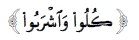
«Coma y bebe» (TMQ 2:60), o ha venido referido al objeto sin mención alguna de la acción, como cuando Allah (SWT) dice
“Eat and drink” (TMQ 2:60), or it has come regarding the object without any mention of the action whatsoever, such as Allah (swt) saying

«Se os prohíben los animales muertos, la sangre, la carne de cerdo» (TMQ 5:3). En consecuencia, la regla de prohibición en estas tres cosas se refiere únicamente a la acción del creyente en cuanto a comer, comprar, vender, alquilar y otras acciones. Por tanto, la regla de la Shari'ah trata sobre la acción del creyente, ya sea que se trate de una regla para la acción o de una regla para el objeto. Por esta razón, el principio en las acciones es que deben estar restringidas (a la regla de la Shari'ah), pues el mandato se relaciona únicamente con la acción del creyente.
“Prohibited to you are dead animals, blood, the flesh of swine.” (TMQ 5:3). Accordingly, the rule of prohibition in these three things is only in relation to the action of the worshipper in terms of eating, buying, selling and hiring and other actions. Therefore, the Shari'ah rule deals with the action of the worshipper, whether this were a rule for the action or a rule for the object. This is why the origin in actions is to be restricted (to the Shari’ah rule) because the address is only related to the action of the worshipper.
Sin embargo, al examinar con detenimiento las pruebas detalladas de las normas de la Shari'ah, resulta claro que, dentro de los textos que han llegado como pruebas de las normas, el estado del texto que sirve de prueba para la acción es distinto del estado del texto que sirve de prueba para el objeto, en cuanto a la manera en que se dirige el mensaje. En el texto relacionado con la acción, el mensaje se dirige únicamente a la acción, se mencione o no el objeto. Por ejemplo, Allah (SWT) dice,
However, by scrutinising the elaborated evidences of the Shari’ah rules, it becomes clear that within the texts which have come as evidences of the rules, the state of the text that acts as an evidence for the action is different to the state of the text that acts as evidence for the object, in terms of the manner in which the address is directed. In the text related to the action, the address is directed to the action alone, regardless of whether the object is mentioned or not. For instance, Allah (swt) says,

“Allah ha permitido el comercio y ha prohibido la usura.” (TMQ 2:275) Y Él (SWT) dice,
“Allah has permitted trade and has forbidden interest.” (TMQ 2:275) And He (swt) says,

«¡Oh, vosotros que creéis! Combatid a los incrédulos que están cerca de vosotros.» (TMQ 9:123) Y Él (swt) dice,
“O you who have believed, fight those adjacent to you of the disbelievers.” (TMQ 9:123) And He (swt) says,
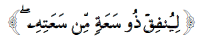
«Que el hombre de riqueza gaste de su riqueza». (TMQ 65:7) Y Él (swt) dice,
“Let a man of wealth spend from his wealth.” (TMQ 65:7) And He (swt) says,
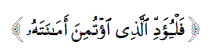
«Y si alguno de vosotros confía a otro, que quien ha sido confiado cumpla lo que se le confió [con fidelidad].» (TMQ 2:283) Y Allah (SWT) dice,
“And if one of you entrusts another, then let him who is entrusted discharge his trust [faithfully].” (TMQ 2:283) And Allah (swt) says,
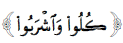
«Coman y beban» (TMQ 2:60). Y el Mensajero de Allah ﷺ dijo.
“Eat and drink” (TMQ 2:60). And the Messenger of Allah (pbuh) said.
.» الْبَ يِّ عَانِ بِالْخِيَارِ مَا لَمْ يَ تَ فَرَّقَا «.
.» الْبَ يِّ عَانِ بِالْخِيَارِ مَا لَمْ يَ تَ فَرَّقَا «.
«Ambas partes en una transacción comercial tienen el derecho (a elegir anularla) mientras no se hayan separado». Acordado por Ibn Umar y otros. Y dijo:
“Both parties in a business transaction have the righ (the choice to annul it) so long as they have not separated.” agreed upon through Ibn Umar and others. And he said.
.» أَعْطُوا الأَجِيرَ أَجْرَه «.
.» أَعْطُوا الأَجِيرَ أَجْرَه «.
«Dad al-ajir su ujrah» (narrado por Ibn Maya a través de Ibn Umar, y por Al-Bayhaqi a través de Abu Hurayrah, con una cadena de transmisión que Al-Baghawi juzgó como Hasan). En todos estos textos, la expresión se dirige a la acción, y el complemento no se menciona. Y en otros ejemplos, Allah (SWT) dice,
“Give the worker his wage” reported by Ibn Maja through Ibn Umar and Al-Bayhaqi through Abu Hurayrah with a chain that was deemed as Hasan by Al-Baghawi. In all of these texts, the address has been directed at the action, and the object has not been mentioned. And in other examples, Allah (swt) says,

«Y de cada uno coméis carne tierna». (TMQ 35:12). Y Él (swt) dice,
“And from each you eat tender meat.” (TMQ 35:12). And He (swt) says,
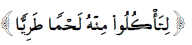
«Para comer de él carne tierna». (TMQ 16:14). Y Él (swt) dice,
“To eat from it tender.” (TMQ 16:14). And He (swt) says,

«Y de ella hizo brotar granos, de los que comen.» (TMQ 36:33). Y Él (swt) dice,
“And brought forth from it grain, and from it they eat.” (TMQ 36:33). And He (swt) says,

«Ciertamente, quienes consumen injustamente los bienes de los huérfanos». (TMQ 4:10). Y Allah (SWT) dice,
“Indeed, those who devour the property of orphans unjustly.” (TMQ 4:10).And Allah (swt) says,
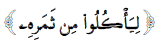
«Para que coman de su fruto». (TMQ 36:35). La alusión en todos estos casos también se dirige a la acción, aunque el objeto haya sido mencionado, y esto es similar a la alusión relacionada directamente con la acción del adorador. Este estado es distinto al del texto relacionado con el objeto, donde la alusión se dirige exclusivamente hacia el objeto, independientemente de si la acción fue mencionada junto a él o no. Por ejemplo, Allah (swt) dice
“That they may eat of His fruit.” (TMQ 36:35). The address in all these is also directed at the action, although the object has been mentioned and this is similar to the address related directly to the action of the worshipper. This state is different to the state of the text related to the object, where the address is directed exclusively towards the object, regardless of whether the action was mentioned alongside it or not. For instance Allah (swt) says
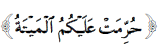
«Se os prohíben los animales muertos.» (TMQ 5:3). Allah (SWT) también dice
“Prohibited to you are dead animals.” (TMQ 5:3). Allah (swt) also says

«Ciertamente, Él os ha prohibido solamente la carroña, la sangre y la carne de cerdo». (TMQ 2:173). Allah (SWT) también dice
He has only forbidden to you dead animals, blood, the flesh of swine.” (TMQ 2:173). Allah (swt) also says
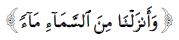
«Y hemos hecho descender agua del cielo.» (TMQ 23:18). Allah (SWT) también dice
“And We have sent down rain from the sky.” (TMQ 23:18).Allah (swt) also says

«Y hicimos de el agua toda cosa viva.» (TMQ 21:30). Asimismo, el dicho del Mensajero de Allah ﷺ con respecto al agua del mar:
“And made from water every living thing.” (TMQ 21:30). Also, the saying of the Messenger of Allah (pbuh) (saw) pertaining the sea water:

“¡Oh, creyentes! Ciertamente, el vino, el juego de azar, los altares de piedra [para sacrificios a otro que Allah] y las flechas adivinatorias son una abominación, obra de Satanás. Evitadlo, para que alcancéis el éxito.” (TMQ 5:90). Dice Allah (swt):
“O you who have believed, indeed, intoxicants, gambling, [sacrificing on] stone alters [to other than Allah], and divining arrows are but defilement from the work of Satan, so avoid it that you may be successful.” (TMQ 5:90). Allah (swt) says

«¿Han visto el agua que beben?» (TMQ 56:68). Dice Allah (SWT)
“Have you seen the water that you drink?” (TMQ 56:68). Allah (swt) says

«¿Han visto el fuego que encienden?» (TMQ 56:71). Allah (SWT) dice
“Have you seen the fire that you kindle?” (TMQ 56:71). Allah (swt) says

«Y de los frutos de las palmeras y de las vides obtenéis embriagante.» (TMQ.16:67). Dice Allah (SWT)
“And from the fruits of the palm trees and grapevines you take intoxicant.” (TMQ.16:67). Allah (swt) says

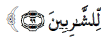
«Y ciertamente, en el ganado hay para vosotros una lección. Os damos de beber de lo que hay en sus vientres, entre excremento y sangre, leche pura, agradable para los que beben». (TMQ 16:66).
“And indeed, for you in grazing livestock is a lesson. We give you drink from what is in their bellies - between excretion and blood - pure milk, palatable to drinkers.” (TMQ 16:66).
La dirección en todos estos textos se dirige al objeto, aunque se haya mencionado la acción. Tal dirección está relacionada con el objeto; por lo tanto, es una exposición de una norma referente a ese objeto. Sin embargo, la relación de la norma con el objeto se refleja en que expone su norma respecto a la acción del adorador, y no respecto al objeto separado de la acción del siervo, ya que es inconcebible que un objeto tenga una norma a menos que esté relacionado con el siervo. Por consiguiente, la diferencia en el estado del texto se hace evidente en cuanto a la manera en que se dirige la dirección.
The address in all of these texts is directed at the object, though the action has been mentioned. Such an address is related to the object; thus it is an outlining of a rule pertaining to that object. However, the rule’s relation to the object is reflected in the fact that it outlines its rule vis-à-vis the action of the worshipper, not vis-à-vis the object detached from the action of the servant, since it is inconceivable for a object to have a rule unless it is related to the servant. Therefore, the difference in the state of the text becomes clear with regard to the manner in which the address is targeted.
Esta diferencia indica que, aunque la regla de la Shari'ah es el discurso del Legislador relacionado con las acciones de los adoradores, algunas reglas referidas a cosas específicas han llegado, sin embargo, a delinear la regla de esas cosas de manera no restringida, aunque su regla se relacionaba con el adorador y no estaba aislada de él. Mediante el examen, esta indicación nos muestra que las reglas de las cosas han llegado por medio de una evidencia general, que a su vez ha llegado a delinear la evidencia de las acciones, y que todo lo que se vinculó específicamente con las cosas es, en realidad, una excepción a la regla general que había llegado como evidencia para ellas a través de la evidencia de las acciones. Esto es así porque el estudio detallado ha revelado que el texto de la Shari'ah en el que el mandato se dirigió directamente a la acción ha llegado en términos generales. Por lo tanto, todas las cosas relacionadas con ello estarían permitidas, porque la petición de realizar o la opción era general, abarcando todo lo que está permitido con respecto a esta petición, y la prohibición de algo requiere un texto. Por ejemplo, Allah (swt) dice:

«Y Él os ha sometido cuanto hay en los cielos y cuanto hay en la tierra, todo procede de Él» (TMQ 45:13). Esto significa que las cosas de los cielos y de la tierra han sido creadas por Allah para nosotros, y, por tanto, son lícitas. Allah (swt) también dice
“And He has subjected to you whatever is in the heavens and whatever is on the earth - all from Him.” (TMQ 45:13). This means that the things in the skies and the earth have been created for us by Allah, and ,therefore, are permitted. Allah (swt) also says
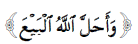
«Allah ha permitido el comercio y ha prohibido la usura.» (TMQ 2:275) Lo que significa que Allah (swt) ha hecho permitida la compra y venta de todas las cosas; por tanto, la ibahah (permisibilidad) de vender y comprar cualquiera de estas cosas no requiere una evidencia, porque la evidencia general abarca todo. Así, la prohibición de vender algo, como el alcohol, por ejemplo, requiere evidencia. Además, Allah (swt) dice
“Allah has permitted trade and has forbidden interest (usury).” (TMQ 2:275) which means that Allah (swt) has made the buying and selling of all things permitted; thus the ibahah of selling and buying any of these things does not require an evidence, because the general evidence comprises everything. So, the prohibition of selling something, such as alcohol for instance, requires evidence. Also, Allah (swt) says
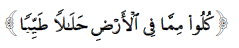
«¡Oh, humanos! Coman de lo que hay en la tierra, [que sea] lícito y bueno.» (TMQ 2:168), lo cual significa que comer todo es halal (lícito); por tanto, comer un alimento específico no requiere una prueba para hacerlo halal, porque la prueba general ya lo ha hecho halal. La prohibición de comer algo, como la carne de un animal muerto, por ejemplo, requiere una prueba. Dice Allah (SWT)
“O mankind, eat from whatever is on earth [that is] lawful and good.” (TMQ 2:168) which means that eating everything is Halal (lawful); thus the eating of a specific item does not require an evidence to make it Halal, because the general evidence has made it Halal. The prohibition of eating something, such as dead meat for instance, requires evidence. Allah (swt) says
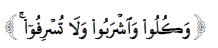
«Y coman y beban, pero no sean excesivos (extravagantes)». (TMQ 7:31) Lo que significa que beber cualquier cosa está permitido; por lo tanto, beber un artículo específico no requiere evidencia para ser permitido, porque la evidencia general lo ha permitido. Sin embargo, la prohibición de beber un artículo específico, como los embriagantes, por ejemplo, requiere evidencia.
“And eat and drink, but be not excessive (extravagant).” (TMQ 7:31) which means that the drinking of everything is permitted; thus the drinking of a specific item does not require an evidence to make it permitted, because the general evidence has made it permitted. However, the prohibition of drinking a specific item, such as intoxicants for instance, requires evidence.
De manera similar, se encuentran evidencias generales que permiten todo lo relacionado con acciones como hablar, caminar, jugar, oler, inhalar, mirar y otras acciones que realiza el ser humano; por tanto, la permisión de cualquier cosa relacionada con ellas no requiere evidencia, pero la prohibición de cualquier cosa relacionada con estas acciones sí requiere una evidencia que la haga ilícita.
Similar to these, general evidences are found permitting everything related to actions such as talking, walking, playing, smelling, inhaling, looking and other actions which man performs; thus the permission of anything related to them does not require an evidence, but the prohibition of anything related to these actions does require an evidence to make it forbidden.
Por lo tanto, las evidencias que aportan los textos y que se dirigen a las acciones han delineado la regla de las cosas de manera general e irrestricta; por ello, no requieren otros textos para precisar sus reglas. Así, la aparición de textos específicos relativos a las cosas, una vez establecida la regla general de estas, sirve como evidencia de que dichas reglas específicas han llegado para excluir las cosas de la regla general. De ahí que los textos de la Shari'ah hayan venido a precisar la regla legal referente a las cosas, indicando que son permitidas; por consiguiente, lo son salvo que exista un texto que las prohíba. Es de este modo como se deriva el principio de la Shari'ah «El origen de las cosas es la ibahah». Estas son las evidencias para este artículo.
Therefore, the evidences brought by the texts and targeted at the actions have outlined the rule of things in a general and unrestricted manner; ,therefore, they do not require other texts to outline their rules. Thus, the advent of specific texts related to things, once the general rule of these things had been outlined, serves as evidence that these specific rules have come to exclude the rule of these things from the general rule. Hence, the Shari’ah texts have come to outline the Shari’ah rule pertaining things, denoting that they are permitted; hence, they are permitted unless a text exists to prohibit them. It is in this manner that the Shari’ah principle “The origion of things is ibahah” is derived. These are the evidences for this article.