Modda 14
Article 14
Asl jihatdan amallar Shariat hukmlariga bog‘liqdir. Shu sababli, hukmi ma’lum bo‘lmagan hech bir amalni bajarish joiz emas. Aksincha, narsalar asl jihatdan mubohdir (ruxsat etilgan), to ularni man etuvchi dalil mavjud bo‘lmagan ekan.
Actions are originally bound by the Shari’ah rules. Hence, no action should be undertaken unless its rule is known. The things on the other side are originally Mubah (permitted) as long as there is no evidence that stipulates prohibition.
Musulmon kishi o'z amallarini Shariat qoidalariga muvofiq olib borishga buyurilgan. Alloh (SWT) shunday deydi:
The Muslim is commanded to conduct his actions according to the Shari’ah rules. Allah (swt) says

«Lekin yo‘q, Robbingga qasam, ular o‘rtalarida kelishmovchilik bo‘lgan narsada seni hakam qilmagunlaricha, haqiqatan iymon keltirmaydilar». (TMQ 4:65). U zot (SWT) yana aytadi,
“But no, by your Lord, they will not [truly] believe until they make you, [O Muhammad], judge concerning that over which they dispute among.” (TMQ 4:65). He (swt) also says,

"Ва Расул сизга нимани берган бўлса, уни олинглар; нимадан қайтарган бўлса, ундан тийилинглар." (ТМҚ 59:7).
“And whatever the Messenger (pbuh) has given you - take; and what he has forbidden you - refrain from.” (TMQ 59:7).
Shunday ekan, asl qoida shuki, musulmon o‘zini Shariat hukmlari bilan cheklaydi. Bundan tashqari, Shariat qoidasi shunday deydi: "Shariat kelgunga qadar hukm yo‘q". Boshqacha aytganda, Allahning (SWT) unga tegishli hukmi kelguniga qadar hech bir narsaga hech qanday hukm berilmaydi. Demak, Allahning (SWT) hukmi kelguniga qadar hech bir narsaga hukm berilmasligi kerak. Bu shuni anglatadiki, unga ruxsat (ibaha) hukmi ham berilmasligi kerak, chunki ibaha Shariat hukmi bo‘lib, uni Qonun chiqaruvchining xitobi orqali isbotlash shart; aks holda uni Shariat hukmi deb hisoblab bo‘lmaydi. Buning sababi shuki, Shariat hukmi ibodat qiluvchilarning amallariga oid Qonun chiqaruvchining kalomidir. Shuning uchun Qonun chiqaruvchining xitobida zikr qilinmagan har qanday narsani Shariat hukmi deb hisoblab bo‘lmaydi. Shu sababli, ruxsat (mubah) taqiqning yo‘qligi emas, balki Qonun chiqaruvchidan bajarish yoki tark etish o‘rtasida tanlov berilganini bildiruvchi Shariat dalilining kelishidir. Demak, asl qoida Qonun chiqaruvchining kalomiga amal qilishdir, ibahaga emas, chunki ibahaning o‘zi ham Qonun chiqaruvchining kalomidan tasdiqlanishni talab qiladi. Bu qoida umumiy bo‘lib, amallarga ham, narsalarga ham taalluqlidir. Shuning uchun musulmon biror amalni qilmoqchi bo‘lsa, o‘sha amalga tegishli Allahning (SWT) hukmiga amal qilishi vojibdir. Demak, u o‘sha hukmni bilmaguncha va unga amal qilmaguncha izlashi kerak. Xuddi shunday, musulmon biror narsani olmoqchi yoki bermoqchi bo‘lsa, bu narsa qanday bo‘lishidan qat’i nazar, unga tegishli Allahning (SWT) hukmiga amal qilishi vojibdir. Shuning uchun u o‘sha hukmni bilguncha va unga amal qilguncha izlashi kerak. Oyatlar va hadislar o‘zlarining lafziy ma’nosi va tushunilishi bilan aynan shuni ko‘rsatadi. Shuning uchun musulmonga har qanday ishni amalga oshirish yoki biror narsaga nisbatan Shariat hukmidan boshqa hukm asosida harakat qilish harom; aksincha, u qilayotgan har bir ishida va har bir masalada Shariat hukmiga amal qilishga majburdir. Alloh (SWT) nozil qilganidan keyin
Therefore, the origin is that the Muslim restricts himself to the Shari’ah rules. Besides that the Shari’ah principle states: “No rule before the advent of Shari’ah”. In other words, no matter should be given any rule whatsoever before the advent of the rule of Allah (swt) pertaining it. Hence, before the advent of Allah’s (swt) rule, no matter should be given any rule. This means that it should not be given the rule of permissibility, for the Ibaha is a Shari’ah rule that must be established through the address of the Legislator; otherwise it cannot be considered a Shari’ah rule. This is so because the Shari’ah rule is the speech of the Legislator related to the actions of the worshippers. Therefore, anything that has not been mentioned in the address of the Legislator cannot be considered a Shari’ah rule. Therefore, permissibility is not the non-advent of a prohibition, it is rather the advent of Shari’ah evidence stipulating the Mubah (permitted); in other words, the advent of the choice from the Legislator to either undertake or abstain. Therefore, the origin is the abidance by the speech of the Legislator, not the Ibahah; because the rule of Ibahah itself requires a confirmation from the speech of the Legislator. This principle is general, covering the actions and the things. So if a Muslim wanted to perform any action, it would be incumbent upon him to abide by the rule of Allah (swt) pertaining that action. Therefore, he must search for that rule until he knows it and abides by it. In the same manner if a Muslim wanted to take or give anything, whatever that object may be, it is incumbent upon him to abide by the rule of Allah (swt) regarding that object. So he must search for that rule until he knows it and abides by it. This is what the verses and the hadith have indicated in their literal indication and their understanding. Therefore, it is forbidden for a Muslim to undertake any action or to act towards anything upon other than the Shari’ah rule; rather he is obliged to abide by the Shari’ah rule in every action he undertakes and in every matter. After Allah (swt) revealed

{Bugun Men sizlar uchun dinингизни kamolga yetkazdim, sizlarga bo‘lgan ne'matimni to‘la qildim va sizlar uchun din sifatida Islomdan rozi bo‘ldim.} (TMQ 5:3), va shundan keyin U (swt) aytadi,
“This day I have perfected for you your religion and completed My favor upon you and have approved for you Islam as religion.” (TMQ 5:3), and after He (swt) says,
“Biz sizga Kitobni har bir narsaning bayoni sifatida nozil qildik.” (Nahl surasi, 89-oyat). Hech bir amal va hech bir narsa yo‘qki, Alloh (subhanahu va taolo) uning hukmining dalilini bayon qilmagan bo‘lsin. Ushbu ikki oyatni tushungan kishi uchun biror amal, biror narsa yoki biror holat Shariat hukmidan xoli, deb da’vo qilish harom hisoblanadi. Ya’ni Shariat uni butunlay e’tiborsiz qoldirgan, shu sababli mukallafni bu hukmning mavjudligiga diqqat qildiradigan dalil yoki alomatni belgilamagan, boshqacha aytganda, mukallafga o‘z hukmini bildiradigan illat mavjud emas, deb aytish mumkin emas. Bu amal vojibmi, mandubmi, harammi, makruhmi yoki mubohmi? Bunday da’vo va unga o‘xshash har qanday gap Shariatga nisbatan tuhmat hisoblanadi. Shu sababli kimgadir: “Bu amal ruxsat etilgan, chunki unga oid Shariat hukmi zikr qilinmagan, va qoida shuki, agar hukm zikr qilinmagan bo‘lsa, u ruxsat etilgan bo‘lishi kerak”, deyish mumkin emas. Xuddi shunday, kimgadir: “Bu narsa ruxsat etilgan, chunki unga oid Shariat dalili yo‘q, demak, dalil bo‘lmasa asl hukm ruxsatdir”, deyishi ham joiz emas. Bunday da’vo qilish harom, chunki har bir amal va har bir narsaning Shariatda dalili bor. Amal yoki narsaga oid Alloh (subhanahu va taolo)ning hukmini izlash, uni topib qabul qilish va amalga oshirish kerak, dalil yo‘q bahonasi bilan uni mubohga aylantirish esa to‘g‘ri emas.
“And We have sent down to you the Book as clarification for all things.” (TMQ 16:89), neither one single action, nor one single object has been left except that Allah (swt) has explained the evidence for its rule, and it is forbidden for anyone, having understood these two verses, to claim that some actions, some things or some situations are devoid of the Shari’ah rule; meaning that Shari’ah has completely ignored it and ,therefore, it failed to designate an evidence or a sign to draw the attention of the obligated to the presence of this Shari’ah rule, in other words, the presence of an Illah that indicated the rule to the person obligated to abide by it; is it Wajib, or Mandub, or Haram, or Makruh or Mubah? Such a claim and anything similar is considered a slander against Shari’ah. Therefore, it is forbidden for anyone to claim that such action is permitted because no Shari’ah rule related to it has been mentioned and the principle is that if no Shari’ah rule is mentioned it must be permitted, and in the same way it is not permitted for anyone to say that this object is permitted because there is no Shari’ah evidence related to it so the origin is permissibility if there is no Shari’ah evidence. It is forbidden to claim this because every action and everything has its evidence in Shari’ah; one must search for the rule of Allah (swt) pertaining to the action or the object to take it and apply it as opposed to making it permitted under the pretext that there is no evidence for it.
Shu bilan birga, shariat hukmi bandalarning amallariga oid Shariy' (Qonun chiqaruvchi)ning xitobi ekan, xitob shu sababli bandaning amali bilan bog'liq holda keladi, predmet bilan emas. Bu xitob asli bandaning amaliga qaratilgan bo'lib, predmet esa bandaning amali bilan bog'langan holda keladi. Bu xitob predmet haqida hech qanday zikr qilinmagan holda, amal haqida bo'lganda ham shunday bo'ladi, masalan, Alloh (SWT)ning shunday deyishi kabi:
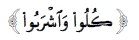
“Yeving va iching” (TMQ 2:60), yoki harakat haqida hech qanday zikr qilinmasdan, ob'ekt haqida kelgan bo'ladi, masalan, Alloh (SWT) aytadi:
“Eat and drink” (TMQ 2:60), or it has come regarding the object without any mention of the action whatsoever, such as Allah (swt) saying

"Sizlarga taqiqlangan narsalar: o'lik hayvon, qon, cho'chqa go'shti." (TMQ 5:3). Shunga ko'ra, bu uch narsadagi taqiqlash hukmi faqat ibodat qiluvchining amaliga nisbatan, ya'ni yeyish, sotib olish, sotish, ijaraga berish va boshqa amallar yuzasidan bo'ladi. Demak, shar'iy hukm ibodat qiluvchining amali bilan bog'liq bo'lib, bu hukm amal uchun yoki narsa uchun bo'lishidan qat'i nazar, shu bilan birga amal haqidagi asl qoida ham shar'iy hukm bilan cheklanishi kerak, chunki xitob faqat ibodat qiluvchining amaliga taalluqlidir.
“Prohibited to you are dead animals, blood, the flesh of swine.” (TMQ 5:3). Accordingly, the rule of prohibition in these three things is only in relation to the action of the worshipper in terms of eating, buying, selling and hiring and other actions. Therefore, the Shari'ah rule deals with the action of the worshipper, whether this were a rule for the action or a rule for the object. This is why the origin in actions is to be restricted (to the Shari’ah rule) because the address is only related to the action of the worshipper.
Biroq, shariat hukmlarining batafsil dalillarini sinchiklab o‘rganilganda ayon bo‘ladiki, hukmlarning dalili bo‘lib kelgan matnlarda, amal uchun dalil bo‘luvchi matnning holati ob’ekt uchun dalil bo‘luvchi matnning holatidan xitob yo‘nalishi jihatidan farq qiladi. Amalga oid matnda xitob ob’ekt zikr etilgan yoki etilmaganidan qat’i nazar, faqat amalning o‘ziga qaratiladi. Masalan, Alloh (SWT) shunday deydi:
However, by scrutinising the elaborated evidences of the Shari’ah rules, it becomes clear that within the texts which have come as evidences of the rules, the state of the text that acts as an evidence for the action is different to the state of the text that acts as evidence for the object, in terms of the manner in which the address is directed. In the text related to the action, the address is directed to the action alone, regardless of whether the object is mentioned or not. For instance, Allah (swt) says,

"Alloh savdo-sotiqni halol qildi va riboni (foizni) harom qildi." (BQ 2:275) Va U (SWT) aytadi,
“Allah has permitted trade and has forbidden interest.” (TMQ 2:275) And He (swt) says,

“Ey iymon keltirganlar, sizga yaqin bo‘lgan kofirlar bilan jang qilinglar”. (TMQ 9:123) Va U (SWT) aytadi,
“O you who have believed, fight those adjacent to you of the disbelievers.” (TMQ 9:123) And He (swt) says,
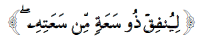
"Boy bo‘lgan kishi o‘z boyligidan infoq qilsin." (TMQ 65:7) Va U (SWT) aytadi,
“Let a man of wealth spend from his wealth.” (TMQ 65:7) And He (swt) says,
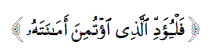
"Agar sizlardan biringiz boshqasiga ishonsa, u holda omonatga ega bo'lgan kishi o'z omonatini [sadoqat bilan] ado etsin." (TMQ 2:283) Va Alloh (SWT) aytadi,
“And if one of you entrusts another, then let him who is entrusted discharge his trust [faithfully].” (TMQ 2:283) And Allah (swt) says,
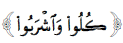
"Yeng va iching" (TMQ 2:60). Va Allohning Elchisi ﷺ aytdilar.
“Eat and drink” (TMQ 2:60). And the Messenger of Allah (pbuh) said.
.» الْبَ يِّ عَانِ بِالْخِيَارِ مَا لَمْ يَ تَ فَرَّقَا «.
.» الْبَ يِّ عَانِ بِالْخِيَارِ مَا لَمْ يَ تَ فَرَّقَا «.
“Ikki tomon savdo-sotiqda o‘zaro ajralmagunlaricha (uni bekor qilish ixtiyori) huquqiga ega bo‘ladilar”, — deb, Ibn Umar va boshqalardan rivoyat qilingan (ittifoq bilan). Va u (ﷺ) dedi.
“Both parties in a business transaction have the righ (the choice to annul it) so long as they have not separated.” agreed upon through Ibn Umar and others. And he said.
.» أَعْطُوا الأَجِيرَ أَجْرَه «.
.» أَعْطُوا الأَجِيرَ أَجْرَه «.
“Ishchiga uning haqini bering” degan hadis Ibn Moja tomonidan Ibn Umar orqali, Al-Bayhaqiy tomonidan esa Abu Hurayra orqali rivoyat qilingan; al-Bag‘aviy uning isnodini hasan deb hukm qilgan. Bu matnlarning barchasida xitob amalga qaratilgan, ammo ob’ekt zikr qilinmagan. Boshqa misollarda esa Alloh (SWT) shunday deydi,
“Give the worker his wage” reported by Ibn Maja through Ibn Umar and Al-Bayhaqi through Abu Hurayrah with a chain that was deemed as Hasan by Al-Baghawi. In all of these texts, the address has been directed at the action, and the object has not been mentioned. And in other examples, Allah (swt) says,

“Va har biridan yangi go‘sht yeysiz.” (TMQ 35:12). Va U (SWT) aytadi,
“And from each you eat tender meat.” (TMQ 35:12). And He (swt) says,
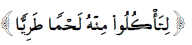
“U undan yangi, mazali go‘sht yeyishingiz uchun.” (TMQ 16:14). Va U (SWT) aytadi,
“To eat from it tender.” (TMQ 16:14). And He (swt) says,

"Va Biz u yerdan don chiqardik va undan ular yeydilar." (TMQ 36:33). Va U (SWT) aytadi,
“And brought forth from it grain, and from it they eat.” (TMQ 36:33). And He (swt) says,

“Albatta, yetimlarning molini nohaq yeydiganlar…” (TMQ 4:10).Va Alloh (SWT) aytadi,
“Indeed, those who devour the property of orphans unjustly.” (TMQ 4:10).And Allah (swt) says,
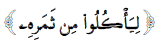
“U ushbu mevasidan yesinlar.” (TMQ 36:35). Bularning barchasida murojaat amalga ham qaratilgan, garchi maqsad (ob'ekt) zikr qilingan bo'lsa ham, va bu ibodat qiluvchining amaliga bevosita bog'liq murojaatga o'xshaydi. Bu holat maqsadga bog'liq matnning holatidan farq qiladi, u yerda murojaat faqat maqsadga qaratilgan bo'ladi, amal u bilan birga zikr qilinganmi yoki yo'qmi, buning ahamiyati yo'q. Masalan, Alloh (SWT) aytadi
“That they may eat of His fruit.” (TMQ 36:35). The address in all these is also directed at the action, although the object has been mentioned and this is similar to the address related directly to the action of the worshipper. This state is different to the state of the text related to the object, where the address is directed exclusively towards the object, regardless of whether the action was mentioned alongside it or not. For instance Allah (swt) says
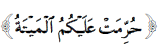
"Sizlarga o'lik hayvonlar haram qilindi." (TMQ 5:3). Alloh (SWT) yana aytadi
“Prohibited to you are dead animals.” (TMQ 5:3). Allah (swt) also says

U Unga faqat o‘lik hayvonni, qonni, cho‘chqa go‘shtini harom qildi» (Baqara, 173). Alloh (SWT) yana aytadi
He has only forbidden to you dead animals, blood, the flesh of swine.” (TMQ 2:173). Allah (swt) also says
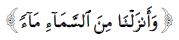
"Va Biz osmondan suv yomg'iri yog'dirdik." (TMQ 23:18). Alloh (SWT) yana shunday deydi
“And We have sent down rain from the sky.” (TMQ 23:18).Allah (swt) also says

«Va suvdan har bir jonli narsani yaratdik.» (TMQ 21:30). Shuningdek, dengiz suvi haqida Allohning Elchisi ﷺ ning hadisi:
“And made from water every living thing.” (TMQ 21:30). Also, the saying of the Messenger of Allah (pbuh) (saw) pertaining the sea water:

"Ey iymon keltirganlar! Darhaqiqat, sharob, qimor, butlar ustida qurbonlik qilish (Allohdan boshqasiga) va falokat ko'rsatuvchi o'qlar — bular shaytonning ishidan bo'lgan nopok narsalardir. Bas, ulardan qochingki, najot topasizlar."(TMQ 5:90). Alloh (SWT) aytadi:
“O you who have believed, indeed, intoxicants, gambling, [sacrificing on] stone alters [to other than Allah], and divining arrows are but defilement from the work of Satan, so avoid it that you may be successful.” (TMQ 5:90). Allah (swt) says

"Siz ichadigan suvni ko'rdingizmi?" (TMQ 56:68). Alloh (SWT) shunday deydi.
“Have you seen the water that you drink?” (TMQ 56:68). Allah (swt) says

"Siz yoqayotgan olovni ko'rdingizmi?" (TMQ 56:71). Alloh (SWT) shunday deydi.
“Have you seen the fire that you kindle?” (TMQ 56:71). Allah (swt) says

“Va xurmo daraxtlari hamda uzum tokidan ham mast qiluvchi narsa olasiz.” (TMQ.16:67). Alloh (SWT) aytadi
“And from the fruits of the palm trees and grapevines you take intoxicant.” (TMQ.16:67). Allah (swt) says

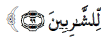
Albatta, chorva mollalarida sizlar uchun ibrat bor. Biz sizlarni ularning qorinlaridagi narsadan — axlat bilan qon o‘rtasidagi, ichuvchilar uchun mazali bo‘lgan toza sut bilan sug‘oramiz.
“And indeed, for you in grazing livestock is a lesson. We give you drink from what is in their bellies - between excretion and blood - pure milk, palatable to drinkers.” (TMQ 16:66).
Barcha matnlarda murojaat ko‘rsatilgan harakat zikr qilingan bo‘lsa-da, to‘g‘ridan-to‘g‘ri ob’ektga qaratilgan. Bunday murojaat ob’ektga taalluqlidir; shu sababli u o‘sha ob’ektga oid hukmning bayonidir. Ammo hukmning ob’ektga taalluqliligi shundan ko‘rinadiki, u hukmni bandaning harakati nisbatan bayon qiladi, bandaning harakatidan ajratilgan ob’ekt nisbatan emas, chunki bandaga taalluqli bo‘lmagan holda ob’ektning hukmi bo‘lishi tasavvur qilib bo‘lmaydi. Shuning uchun murojaatning qaratilish usuli jihatidan matn holatidagi farq aniq bo‘ladi.
The address in all of these texts is directed at the object, though the action has been mentioned. Such an address is related to the object; thus it is an outlining of a rule pertaining to that object. However, the rule’s relation to the object is reflected in the fact that it outlines its rule vis-à-vis the action of the worshipper, not vis-à-vis the object detached from the action of the servant, since it is inconceivable for a object to have a rule unless it is related to the servant. Therefore, the difference in the state of the text becomes clear with regard to the manner in which the address is targeted.
Bu farq shuni ko'rsatadiki, garchi shariat hukmi ibodat qiluvchilarning harakatlariga taalluqli Shoriʼning xitobi bo'lsa-da, narsalarga xos ba'zi hukmlar ularning hukmini cheklanmagan tarzda bayon qilib kelgan, holbuki ularning hukmi bandadan ajratilgan holda emas, balki banda bilan bog'liq edi. Tahlil orqali bu ishora shuni bayon qiladiki, narsalarning hukmlari umumiy dalil orqali kelgan bo'lib, u esa harakatlar dalilini bayon qilib kelgan; narsalarga xos ravishda kelgan har qanday narsa esa harakatlar dalili orqali ular uchun dalil bo'lib kelgan umumiy qoidadan istisnodir. Buning sababi shundaki, batafsil o'rganish shuni ochib berdiki, xitob to'g'ridan-to'g'ri harakatga qaratilgan shariat matni umumiy ma'noda kelgan. Shuning uchun unga taalluqli barcha narsalar mubох bo'ladi, chunki bajarishga yoki ixtiyorga oid talab umumiy bo'lib, bu talab yuzasidan ruxsat etilgan barchasini o'z ichiga oladi, narsaning harom qilinishi esa matnni talab qiladi. Masalan, Alloh (subhanahu va taolo) aytadi:
This difference indicates that although the Shari’ah rule is the speech of the Legislator related to the actions of the worshippers some rules specified to things have however come to outline the rule of these things in an unrestricted manner, even though their rule was in relation to the worshipper as opposed to being isolated from the worshipper. Through scrutiny, this indication outlines to us that the rules of things have come through a general evidence, which in turn has come to outline the evidence of the actions, and that whatever came specifically related to things is in fact an exception from the general rule which had come as evidence for them through the evidence of the actions. This is so because detailed study has revealed that the Shari’ah text in which the address was directly targeted at the action has come in general terms. Therefore, all the things related to it would be permitted because the request to perform or the choice was general, encompassing all that which is permitted vis-à-vis this request, and the prohibition of something requires a text. For instance, Allah (swt) says

"Va U sizga osmonlarda bor narsalarni va yerda bor narsalarni — hammasini O‘zidan — bo‘ysundirib qo‘ydi" (TMQ 45:13). Bu shuni anglatadiki, osmonlardagi va yerdagi narsalar Alloh tomonidan biz uchun yaratilgan va shu sababli ruxsat etilgan. Alloh (SWT) yana shunday deydi
“And He has subjected to you whatever is in the heavens and whatever is on the earth - all from Him.” (TMQ 45:13). This means that the things in the skies and the earth have been created for us by Allah, and ,therefore, are permitted. Allah (swt) also says
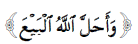
“Alloh savdo-sotiqni halol qildi va riboni (sudxo‘rlikni) haram qildi.” (TMQ 2:275) Bu shuni anglatadiki, Alloh (SWT) barcha narsalarni sotish va sotib olishni halol qilgan; shuning uchun bu narsalardan istalgan birini sotish yoki sotib olishning ruxsat etilganligi uchun alohida dalil talab qilinmaydi, chunki umumiy dalil barcha narsani o‘z ichiga oladi. Demak, masalan, spirtli ichimlikni sotishni taqiqlash uchun dalil kerak bo‘ladi. Shuningdek, Alloh (SWT) aytadi:
“Allah has permitted trade and has forbidden interest (usury).” (TMQ 2:275) which means that Allah (swt) has made the buying and selling of all things permitted; thus the ibahah of selling and buying any of these things does not require an evidence, because the general evidence comprises everything. So, the prohibition of selling something, such as alcohol for instance, requires evidence. Also, Allah (swt) says
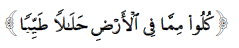
“Ey insonlar, yer yuzidagi halol va pokiza narsalardan yenglar.” (TMQ 2:168) Bu esa barcha narsani yeyish halol ekanligini bildiradi; shuning uchun biror bir narsani yeyish uchun alohida dalil talab qilinmaydi, chunki umumiy dalil uni halol qilgan. Biror narsani yeyishni taqiqlash, masalan, o‘lik go‘shtni yeyishni taqiqlash esa dalil talab qiladi. Alloh (SWT) aytadi
“O mankind, eat from whatever is on earth [that is] lawful and good.” (TMQ 2:168) which means that eating everything is Halal (lawful); thus the eating of a specific item does not require an evidence to make it Halal, because the general evidence has made it Halal. The prohibition of eating something, such as dead meat for instance, requires evidence. Allah (swt) says
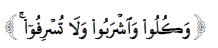
“Yeying va ichingiz, lekin haddan oshmang (isrof qilmang).” (TMQ 7:31) Bu shuni anglatadiki, har qanday narsani ichish ruxsat etilgan; shuning uchun muayyan bir narsani ichish uchun uni halol qilishga dalil talab etilmaydi, chunki umumiy dalil uni halol qilgan. Biroq, muayyan bir narsani, masalan, mast qiluvchi ichimliklarni ichishni man etish uchun dalil talab etiladi.
“And eat and drink, but be not excessive (extravagant).” (TMQ 7:31) which means that the drinking of everything is permitted; thus the drinking of a specific item does not require an evidence to make it permitted, because the general evidence has made it permitted. However, the prohibition of drinking a specific item, such as intoxicants for instance, requires evidence.
Xuddi shunga o'xshash, gapirish, yurish, o'ynash, hidlash, nafas olish, qarash va insonning bajaradigan boshqa harakatlariga tegishli barcha narsalarni ruxsat etuvchi umumiy dalillar topiladi; shuning uchun ularga bog'liq har qanday narsaning ruxsat etilishi uchun dalil talab qilinmaydi, ammo ularga bog'liq har qanday narsaning harom qilinishi uchun esa dalil talab qilinadi.
Similar to these, general evidences are found permitting everything related to actions such as talking, walking, playing, smelling, inhaling, looking and other actions which man performs; thus the permission of anything related to them does not require an evidence, but the prohibition of anything related to these actions does require an evidence to make it forbidden.
Shuning uchun amallarga qaratilgan dalillar matnlari narsalarning hukmini umumiy va cheklanmagan tarzda belgilab bergan; shuning uchun ular o'z hukmlarini belgilash uchun boshqa matnlarga muhtoj emas. Shunday ekan, narsalarning umumiy hukmi belgilab bo'lingandan so'ng, ushbu narsalarga oid xos matnlarning kelishi bu xos hukmlar narsalarning hukmini umumiy hukmdan chiqarib yuborish uchun kelganidan dalolat beradi. Demak, Shariat matnlari narsalarga oid shar'iy hukmni belgilash uchun kelgan bo'lib, ular ruxsat etilgan ekanini bildiradi; shuning uchun ular ularni taqiqlovchi matn mavjud bo'lmaguncha ruxsat etilgandir. Aynan shu tarzda "Narsalarning asli ibohadir" degan shar'iy qoida keltirib chiqariladi. Ushbu maqola uchun dalillar shulardir.
Therefore, the evidences brought by the texts and targeted at the actions have outlined the rule of things in a general and unrestricted manner; ,therefore, they do not require other texts to outline their rules. Thus, the advent of specific texts related to things, once the general rule of these things had been outlined, serves as evidence that these specific rules have come to exclude the rule of these things from the general rule. Hence, the Shari’ah texts have come to outline the Shari’ah rule pertaining things, denoting that they are permitted; hence, they are permitted unless a text exists to prohibit them. It is in this manner that the Shari’ah principle “The origion of things is ibahah” is derived. These are the evidences for this article.