第14条
Article 14
行為は本来、シャリーアの規定に拘束される。したがって、その規定が分かっていない行為は、いかなるものも行うべきではない。反対に、それ以外のものは本来ムバーフ(許容)であり、禁止を定める根拠がない限り、そのまま許される。
Actions are originally bound by the Shari’ah rules. Hence, no action should be undertaken unless its rule is known. The things on the other side are originally Mubah (permitted) as long as there is no evidence that stipulates prohibition.
ムスリムは、シャリーアの規則に従って自らの行いを律するよう命じられています。アッラーは(SWT)こう仰せられています。
The Muslim is commanded to conduct his actions according to the Shari’ah rules. Allah (swt) says

「しかし、そうではない。あなたの主にかけて、彼らは、自分たちの間で争いが生じたことについて、あなた、ムハンマドに裁定を委ねるまで、真に信仰したことにはならない」(クルアーン 4:65)。彼(SWT)はまたこうも仰せである。
“But no, by your Lord, they will not [truly] believe until they make you, [O Muhammad], judge concerning that over which they dispute among.” (TMQ 4:65). He (swt) also says,

「また、使徒があなたがたに与えるものは受け取り、禁じるものは控えなさい。」(クルアーン 59:7)
“And whatever the Messenger (pbuh) has given you - take; and what he has forbidden you - refrain from.” (TMQ 59:7).
だからこそ、ムスリムが自らを シャリーアの規定に制約することが原則である。さらに、シャリーアの原理には「シャリーアの到来以前には規定はない」とある。言い換えれば、いかなる事柄についても、それに関するアッラー(SWT)の規定が到来する以前には、いかなる規定も与えられてはならない。したがって、アッラー(SWT)の規定が到来する以前には、いかなる事柄にも規定を与えてはならない。このことは、許容(イバーハ)の規定を与えてもならないことを意味する。なぜなら、イバーハもまた立法者の言明を通じて確立されねばならないシャリーアの規定であり、そうでなければシャリーアの規定とみなすことはできないからである。これは、シャリーアの規定が、信徒の行為に関する立法者の言葉であるためである。したがって、立法者の言明の中で言及されていないものは、シャリーアの規定とみなすことはできない。ゆえに、許容(マンドゥーブ・ムバーフ)は禁止の不在ではなく、ムバーフを規定するシャリーアの根拠、すなわち、行うか控えるかについての立法者からの選択の存在である。それゆえ、原則は立法者の言葉に従うことであり、イバーハではない。なぜなら、イバーハという規定そのものが、立法者の言葉による確認を必要とするからである。この原理は一般的であり、行為にも事物にも及ぶ。したがって、あるムスリムが何らかの行為をしようとするなら、その行為に関するアッラー(SWT)の規定に従うことが彼に義務づけられる。ゆえに、彼はその規定を知り、それに従うまで探求しなければならない。同様に、ムスリムが何かを取り、あるいは与えようとする場合、その対象が何であれ、その対象に関するアッラー(SWT)の規定に従うことが彼に義務づけられる。ゆえに、彼はその規定を知り、それに従うまで探求しなければならない。これこそが、クルアーンの節とハディースが、その文字通りの指示と理解において示していることである。 したがって、イスラム教徒が、シャリーア(イスラム法)の規定以外に基づいて行動したり、何かに対して振る舞ったりすることは禁じられている。むしろ彼は、自らが行うあらゆる行動とあらゆる事柄において、シャリーアの規定に従う義務がある。アッラーフ(SWT)が啓示された後
Therefore, the origin is that the Muslim restricts himself to the Shari’ah rules. Besides that the Shari’ah principle states: “No rule before the advent of Shari’ah”. In other words, no matter should be given any rule whatsoever before the advent of the rule of Allah (swt) pertaining it. Hence, before the advent of Allah’s (swt) rule, no matter should be given any rule. This means that it should not be given the rule of permissibility, for the Ibaha is a Shari’ah rule that must be established through the address of the Legislator; otherwise it cannot be considered a Shari’ah rule. This is so because the Shari’ah rule is the speech of the Legislator related to the actions of the worshippers. Therefore, anything that has not been mentioned in the address of the Legislator cannot be considered a Shari’ah rule. Therefore, permissibility is not the non-advent of a prohibition, it is rather the advent of Shari’ah evidence stipulating the Mubah (permitted); in other words, the advent of the choice from the Legislator to either undertake or abstain. Therefore, the origin is the abidance by the speech of the Legislator, not the Ibahah; because the rule of Ibahah itself requires a confirmation from the speech of the Legislator. This principle is general, covering the actions and the things. So if a Muslim wanted to perform any action, it would be incumbent upon him to abide by the rule of Allah (swt) pertaining that action. Therefore, he must search for that rule until he knows it and abides by it. In the same manner if a Muslim wanted to take or give anything, whatever that object may be, it is incumbent upon him to abide by the rule of Allah (swt) regarding that object. So he must search for that rule until he knows it and abides by it. This is what the verses and the hadith have indicated in their literal indication and their understanding. Therefore, it is forbidden for a Muslim to undertake any action or to act towards anything upon other than the Shari’ah rule; rather he is obliged to abide by the Shari’ah rule in every action he undertakes and in every matter. After Allah (swt) revealed

「今日、わたしはあなたがたのために宗教を完成させ、あなたがたへの恩恵を全うし、イスラームを宗教として選んだ」(TMQ 5:3)。そしてアッラー(スブハーナhu wa ta'ala)は続けて言われる、
“This day I have perfected for you your religion and completed My favor upon you and have approved for you Islam as religion.” (TMQ 5:3), and after He (swt) says,
「また、わたしはあなたに啓典を下した。すべてのことを明らかにする解説として。」(TMQ 16:89)。ひとつの行為も、ひとつの対象も、アッラー(swt)がその規定の根拠を説明しておられないものはない。この二つの節を理解した者であれば、ある行為、ある事物、ある状況にはシャリーアの規定が欠けている、と主張することは禁じられている。すなわち、シャリーアがそれを完全に無視し、そのため義務を負う者の注意をその規定、言い換えれば義務者にその規定を示す理由(イッラ)の存在へと向ける根拠や印を定めなかった、という主張である。その行為は、ワージブか、マンドゥーブか、ハラームか、マクルーフか、ムバーフか。このような主張やそれに類するものは、シャリーアへの中傷とみなされる。したがって、関連するシャリーアの規定が述べられていないから、その行為は許されると主張することは禁じられている。また、「規定が述べられていなければ許される」という原則があるのだから、というのも誤りである。同様に、その対象に関するシャリーアの根拠がないから、その対象は許される、と言うことも許されない。根拠がなければ元来は許容である、という理屈も成り立たない。なぜなら、あらゆる行為とあらゆる事物にはシャリーアにおける根拠があるからである。人は、その行為や対象に関するアッラー(swt)の規定を探求し、それを受け入れて適用すべきであり、根拠がないことを口実にして許容としてはならない。
“And We have sent down to you the Book as clarification for all things.” (TMQ 16:89), neither one single action, nor one single object has been left except that Allah (swt) has explained the evidence for its rule, and it is forbidden for anyone, having understood these two verses, to claim that some actions, some things or some situations are devoid of the Shari’ah rule; meaning that Shari’ah has completely ignored it and ,therefore, it failed to designate an evidence or a sign to draw the attention of the obligated to the presence of this Shari’ah rule, in other words, the presence of an Illah that indicated the rule to the person obligated to abide by it; is it Wajib, or Mandub, or Haram, or Makruh or Mubah? Such a claim and anything similar is considered a slander against Shari’ah. Therefore, it is forbidden for anyone to claim that such action is permitted because no Shari’ah rule related to it has been mentioned and the principle is that if no Shari’ah rule is mentioned it must be permitted, and in the same way it is not permitted for anyone to say that this object is permitted because there is no Shari’ah evidence related to it so the origin is permissibility if there is no Shari’ah evidence. It is forbidden to claim this because every action and everything has its evidence in Shari’ah; one must search for the rule of Allah (swt) pertaining to the action or the object to take it and apply it as opposed to making it permitted under the pretext that there is no evidence for it.
しかしながら、シャリーアの規定は、信者の行為に関連する立法者(アッ=シャーリウ)の言葉であるため、その言葉は対象物ではなく信者の行為を扱うものとなる。この言葉は、対象物を、信者の行為との関連を考慮して扱うものとして現れる。したがって、この言葉は本来、信者の行為に向けられており、対象物は信者の行為に結びつけられた形で現れるのである。これは、言葉が対象物について一切言及せずに行為について述べている場合でも同様であり、例えばアッラー(SWT)が次のように仰るときがそうである。
However, since the Shari’ah rule is the speech of the Legislator related to the actions of the worshippers, the speech has ,therefore, come to deal with the action of the worshipper, not to deal with the object. This speech has come to deal with the object in consideration of its connection to the action of the worshipper. Thus the speech is originally directed at the action of the worshipper and the object came linked to the action of the worshipper. This is whether the speech was regarding the action without any mention of the object whatsoever, such as Allah (swt) saying
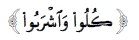
「食べなさい、飲みなさい」(TMQ 2:60)のように、行為について一切の言及がなく、対象だけが示されている場合もあります。例えば、アッラー(SWT)が次のように仰せられる場合です。
“Eat and drink” (TMQ 2:60), or it has come regarding the object without any mention of the action whatsoever, such as Allah (swt) saying

「あなたがたに禁じられているのは、死肉、血、豚肉である」(TMQ 5:3)。したがって、これら三つのものに関する禁止の規定は、飲食、売買、賃貸借などの、信徒の行為に関係するものに限られる。ゆえに、シャリーアの規定は信徒の行為に関わるのであり、それが行為についての規定であれ、対象物についての規定であれ、同じである。このため、行為における原則は(シャリーアの規定によって)制限されるべきである。なぜなら、その命令は信徒の行為にのみ関係するからである。
“Prohibited to you are dead animals, blood, the flesh of swine.” (TMQ 5:3). Accordingly, the rule of prohibition in these three things is only in relation to the action of the worshipper in terms of eating, buying, selling and hiring and other actions. Therefore, the Shari'ah rule deals with the action of the worshipper, whether this were a rule for the action or a rule for the object. This is why the origin in actions is to be restricted (to the Shari’ah rule) because the address is only related to the action of the worshipper.
しかし、シャリーアの諸規定の根拠となる詳細な証拠を精査すると、規定の根拠として提示されたテキストの中で、行為の根拠となるテキストと対象(客体)の根拠となるテキストとでは、その語りかけの向け方において状態が異なることが明らかになる。行為に関するテキストでは、対象が言及されているかどうかにかかわらず、語りかけは行為そのものに向けられている。例えば、アッラーは次のように仰せられている。
However, by scrutinising the elaborated evidences of the Shari’ah rules, it becomes clear that within the texts which have come as evidences of the rules, the state of the text that acts as an evidence for the action is different to the state of the text that acts as evidence for the object, in terms of the manner in which the address is directed. In the text related to the action, the address is directed to the action alone, regardless of whether the object is mentioned or not. For instance, Allah (swt) says,

「アッラーは商売を許し、利息を禁じられた」(TMQ 2:275)そして、彼(SWT)はこう仰せられる。
“Allah has permitted trade and has forbidden interest.” (TMQ 2:275) And He (swt) says,

「ああ、信仰する者たちよ。あなたがたの近くにいる不信仰者たちと戦いなさい。」(クルアーン 9:123)そして、アッラーは(スブハーナhu wa taʿālā)こう仰せられる。 Note: the instruction says to keep (SWT) as written, so the correct rendering keeps "(SWT)" exactly as given in the source. Correction, following the rules exactly: 「ああ、信仰する者たちよ。あなたがたの近くにいる不信仰者たちと戦いなさい。」(TMQ 9:123)そして、彼(SWT)はこう仰せられる。
“O you who have believed, fight those adjacent to you of the disbelievers.” (TMQ 9:123) And He (swt) says,
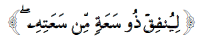
「富裕な者は、その富から施しなさい。」(コーラン65:7)そして、アッラーは(SWT)こう仰せられる、
“Let a man of wealth spend from his wealth.” (TMQ 65:7) And He (swt) says,
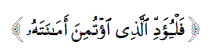
「もし互いに信頼し合って預けることがあるならば、預けられた者は、その預かり物を忠実に返すがよい」(クルアーン 2:283)そしてアッラー(SWT)は次のように仰せられる、
“And if one of you entrusts another, then let him who is entrusted discharge his trust [faithfully].” (TMQ 2:283) And Allah (swt) says,
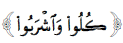
「食べなさい、そして飲みなさい」(TMQ 2:60)。そしてアッラーの使徒ﷺは仰いました。
“Eat and drink” (TMQ 2:60). And the Messenger of Allah (pbuh) said.
.» الْبَ يِّ عَانِ بِالْخِيَارِ مَا لَمْ يَ تَ فَرَّقَا «.
.» الْبَ يِّ عَانِ بِالْخِيَارِ مَا لَمْ يَ تَ فَرَّقَا «.
「売買の当事者は、別れていない限り、取引を取り消す選択権を持つ」——イブン・ウマルらを通じて伝えられ、合意された(ハディース)。そして彼(預言者)は言った。 Wait, the original says "agreed upon" (Muttafaqun ʿalayhi) and "And he said." — the sentence following "And he said" is cut off. Also, the Prophet Muhammad is referred to implicitly as the one who said, so ﷺ should be added after the mention. Corrected translation: 「売買の当事者は、別れていない限り、取引を取り消す選択権を持つ」——イブン・ウマルらを通じて伝えられ、合意された(ハディース)。そして預言者ﷺは言った。
“Both parties in a business transaction have the righ (the choice to annul it) so long as they have not separated.” agreed upon through Ibn Umar and others. And he said.
.» أَعْطُوا الأَجِيرَ أَجْرَه «.
.» أَعْطُوا الأَجِيرَ أَجْرَه «.
「労働者にその賃金を支払え」というハディースは、イブン・マージャがイブン・ウマルを通じて伝え、またアル=バイハキーがアブー・フライラを通じて伝えたもので、その伝承経路はアル=バガウィーによってハサン(良好)と判断されている。これらすべての文章では、呼びかけは行為に向けられており、その対象は言及されていない。また、別の例では、アッラー(SWT)は次のように仰っている。
“Give the worker his wage” reported by Ibn Maja through Ibn Umar and Al-Bayhaqi through Abu Hurayrah with a chain that was deemed as Hasan by Al-Baghawi. In all of these texts, the address has been directed at the action, and the object has not been mentioned. And in other examples, Allah (swt) says,

「そして、それぞれ(の海)から新鮮な肉を食べる。」(クルアーン 35:12)そして、アッラーは(SWT)こう仰せられる、
“And from each you eat tender meat.” (TMQ 35:12). And He (swt) says,
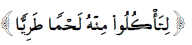
「それから、そこから新鮮な肉を食べるためでもある」(TMQ 16:14)。そしてアッラーはこう仰せられる。
“To eat from it tender.” (TMQ 16:14). And He (swt) says,

「そして、そこから穀物を生えさせ、それを彼らは食べる」(クルアーン 36:33)。そしてアッラー(SWT)はこう仰せられる。
“And brought forth from it grain, and from it they eat.” (TMQ 36:33). And He (swt) says,

「本当に、不当に孤児の財産を食い尽くす者たちは」(TMQ 4:10)。また、アッラーは(SWT)こう仰せられる。
“Indeed, those who devour the property of orphans unjustly.” (TMQ 4:10).And Allah (swt) says,
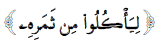
「そして彼らが、その実りを食べることができるように」(TMQ 36:35)。これらすべてにおいても、対象がすでに言及されているとはいえ、その呼びかけは行為そのものに向けられており、これは信徒の行為に直接関わる呼びかけと類似している。この状態は、対象に関する文が対象のみに向けられている状態とは異なる。そこでは、行為が対象と共に言及されているかどうかにかかわらず、呼びかけは対象だけに向けられている。例えば、アッラー(swt)は次のように仰せである。
“That they may eat of His fruit.” (TMQ 36:35). The address in all these is also directed at the action, although the object has been mentioned and this is similar to the address related directly to the action of the worshipper. This state is different to the state of the text related to the object, where the address is directed exclusively towards the object, regardless of whether the action was mentioned alongside it or not. For instance Allah (swt) says
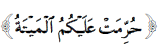
「あなたがたに禁じられているのは、死んだ動物である」(クルアーン 5:3)。アッラーはまた(SWT)言われる
“Prohibited to you are dead animals.” (TMQ 5:3). Allah (swt) also says

「彼はあなた方に、死肉、血、豚肉を禁じられただけである」(クルアーン 2:173)。アッラーは(SWT)また次のように仰せられる
He has only forbidden to you dead animals, blood, the flesh of swine.” (TMQ 2:173). Allah (swt) also says
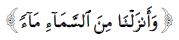
「そして我らは天から雨を降らせた」(TMQ 23:18)。アッラーは(SWT)また次のように仰せられる。
“And We have sent down rain from the sky.” (TMQ 23:18).Allah (swt) also says

「そして水から生きているすべてのものを創られた。」(TMQ 21:30)。また、海水に関する預言者ムハンマド ﷺ の言葉も(以下のとおりである):
“And made from water every living thing.” (TMQ 21:30). Also, the saying of the Messenger of Allah (pbuh) (saw) pertaining the sea water:

「信仰する者たちよ。まことに、酒、賭矢、偶像の石、占いの矢は、悪魔の行いによる穢れにすぎない。それを避けなさい。そうすればあなた方は成功するであろう。」(タフヒーム・アル=クルアーン 5:90)アッラーは(SWT)こう仰せられる。
“O you who have believed, indeed, intoxicants, gambling, [sacrificing on] stone alters [to other than Allah], and divining arrows are but defilement from the work of Satan, so avoid it that you may be successful.” (TMQ 5:90). Allah (swt) says

「あなたがたが飲む水を見たことがあるか」(TMQ 56:68)とアッラーは仰せられる。(SWT)
“Have you seen the water that you drink?” (TMQ 56:68). Allah (swt) says

「あなたがたは、火を点けるその火をご覧になりましたか」(TMQ 56:71)。アッラーは(SWT)と仰せられています。
“Have you seen the fire that you kindle?” (TMQ 56:71). Allah (swt) says

「そして、ナツメヤシとブドウの実から、あなたがたは酒と良い食物を得ている」(TMQ.16:67)。アッラーは(SWT)こう仰せられる。
“And from the fruits of the palm trees and grapevines you take intoxicant.” (TMQ.16:67). Allah (swt) says

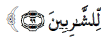
「まことに、家畜の中にこそ、あなたがたへの教訓がある。われらは、その腹の中にあるもの、糞と血の間から、飲む者にとって美味な、純粋な乳をあなたがたに飲ませる」(TMQ 16:66)
“And indeed, for you in grazing livestock is a lesson. We give you drink from what is in their bellies - between excretion and blood - pure milk, palatable to drinkers.” (TMQ 16:66).
対象へ向けられた言及であっても、その行為は既に述べられている。このような言及は対象に関わるものであり、それゆえ対象に関する規定を示すものである。ただし、その規定が対象と関係づけられていることは、それが僕(しもべ)の行為との関係において規定を示していること、すなわち、しもべの行為から切り離された対象との関係においてではないことに表れている。対象に規定があるということは、それがしもべと関係しているのでなければ考えられないからである。したがって、言及の仕方に関して、本文の状態の違いが明らかになるのである。
The address in all of these texts is directed at the object, though the action has been mentioned. Such an address is related to the object; thus it is an outlining of a rule pertaining to that object. However, the rule’s relation to the object is reflected in the fact that it outlines its rule vis-à-vis the action of the worshipper, not vis-à-vis the object detached from the action of the servant, since it is inconceivable for a object to have a rule unless it is related to the servant. Therefore, the difference in the state of the text becomes clear with regard to the manner in which the address is targeted.
この相違は、シャリーアの規定は信者の行為に関わるアッラーの御言葉である一方で、特定の物事に関する規定の中には、それが信者に関わるものであって信者から切り離されたものではないにもかかわらず、それらの物事の規定を無制限な形で示すに至ったものがあることを示している。精査すると、この示唆は、物事の規定が一般的な証拠を通して示されており、その一般的な証拠がさらに行為の証拠を明らかにしていること、そして物事に特に関連して示されたものはすべて、行為の証拠を通じてそれらの証拠となった一般原則からの例外であることを明らかにしている。なぜなら、詳細な研究により、行為そのものを直接の対象としたシャリーアの文言が一般的な表現で示されていることが判明しているからである。したがって、その行為に関連するすべての事物は、この要求に関して許容される全てを包含する一般的な要求または選択が存在するがゆえに許容されることになる。そして何かを禁じるには典拠が必要である。例えばアッラー(swt)は次のように仰せられる
This difference indicates that although the Shari’ah rule is the speech of the Legislator related to the actions of the worshippers some rules specified to things have however come to outline the rule of these things in an unrestricted manner, even though their rule was in relation to the worshipper as opposed to being isolated from the worshipper. Through scrutiny, this indication outlines to us that the rules of things have come through a general evidence, which in turn has come to outline the evidence of the actions, and that whatever came specifically related to things is in fact an exception from the general rule which had come as evidence for them through the evidence of the actions. This is so because detailed study has revealed that the Shari’ah text in which the address was directly targeted at the action has come in general terms. Therefore, all the things related to it would be permitted because the request to perform or the choice was general, encompassing all that which is permitted vis-à-vis this request, and the prohibition of something requires a text. For instance, Allah (swt) says

「そして、天にあるもの、地にあるものすべてを、彼はあなたがたのために従わせられた。すべては彼からのものである」(クルアーン 45:13)。これは、天と地にあるものはアッラーによってわたしたちのために創造されたものであり、したがって許されているものであることを意味する。アッラー(SWT)はまた次のように言われる。
“And He has subjected to you whatever is in the heavens and whatever is on the earth - all from Him.” (TMQ 45:13). This means that the things in the skies and the earth have been created for us by Allah, and ,therefore, are permitted. Allah (swt) also says
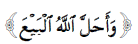
「アッラーは商売を許し、利子(リバー)を禁じられた」(クルアーン2章275節)。これは、アッラー(SWT)があらゆる物の売買を許可されたことを意味する。したがって、これらの物のいずれかの売買が許されていることには証拠を必要としない。一般的な証拠がすべてを包含しているからである。よって、たとえばアルコールのように、ある物を売ることを禁じるには証拠が必要となる。また、アッラー(SWT)は次のように言われる。
“Allah has permitted trade and has forbidden interest (usury).” (TMQ 2:275) which means that Allah (swt) has made the buying and selling of all things permitted; thus the ibahah of selling and buying any of these things does not require an evidence, because the general evidence comprises everything. So, the prohibition of selling something, such as alcohol for instance, requires evidence. Also, Allah (swt) says
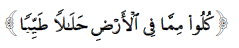
「ああ人びとよ、地上にあるもののうち、合法で良いものを食べなさい。」(TMQ 2:168)これは、あらゆるものを食べることが合法(ハラール)であることを意味する。したがって、特定の食物を食べることがハラールであるためには、証拠は必要ない。なぜなら、一般的な証拠によってそれがハラールとされているからである。ある物を食べることの禁止、例えば死肉などには、証拠が必要である。アッラー(SWT)は仰せられる。
“O mankind, eat from whatever is on earth [that is] lawful and good.” (TMQ 2:168) which means that eating everything is Halal (lawful); thus the eating of a specific item does not require an evidence to make it Halal, because the general evidence has made it Halal. The prohibition of eating something, such as dead meat for instance, requires evidence. Allah (swt) says
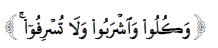
「そして食べ、飲みなさい。ただし度を越してはならない(浪費してはならない)」(クルアーン 7:31)。この節が意味するのは、あらゆる飲み物を飲むことは許されている、ということである。したがって、特定の飲み物を飲むことが許されるかどうかを示す証拠は必要なく、一般的な証拠によってすでに許されているからである。しかし、特定の飲み物、たとえば酒類を飲むことを禁じる場合には、証拠が必要である。
“And eat and drink, but be not excessive (extravagant).” (TMQ 7:31) which means that the drinking of everything is permitted; thus the drinking of a specific item does not require an evidence to make it permitted, because the general evidence has made it permitted. However, the prohibition of drinking a specific item, such as intoxicants for instance, requires evidence.
同様に、話すこと、歩くこと、遊ぶこと、匂いを嗅ぐこと、息を吸うこと、見ること、その他人間が行うあらゆる行為に関する、許可を示す一般的な証拠が存在する。したがって、それらに関連するものの許可には証拠は必要ないが、それらに関連するものを禁止するには、禁止とするための証拠が必要となる。
Similar to these, general evidences are found permitting everything related to actions such as talking, walking, playing, smelling, inhaling, looking and other actions which man performs; thus the permission of anything related to them does not require an evidence, but the prohibition of anything related to these actions does require an evidence to make it forbidden.
したがって、行為に向けられた本文が示す根拠は、物事の規定を一般的かつ無制限な形で明らかにしている。ゆえに、それらの規定を明らかにするために別の本文を必要としない。このように、物事の一般的な規定が明らかにされた後に、物事に関する個別の本文が現れることは、その個別の規定が物事を一般的な規定から除外するために来たことの証拠となる。よって、シャリーア(Shari'ah)の本文は物事に関するシャリーアの規定を明らかにするために来ており、それらが許可されていることを示している。したがって、禁止する本文が存在しない限り、それらは許可されている。このようにして、「物事の根本は許可(イバーハ)である」というシャリーアの原則が導き出される。これらが本項の根拠である。
Therefore, the evidences brought by the texts and targeted at the actions have outlined the rule of things in a general and unrestricted manner; ,therefore, they do not require other texts to outline their rules. Thus, the advent of specific texts related to things, once the general rule of these things had been outlined, serves as evidence that these specific rules have come to exclude the rule of these things from the general rule. Hence, the Shari’ah texts have come to outline the Shari’ah rule pertaining things, denoting that they are permitted; hence, they are permitted unless a text exists to prohibit them. It is in this manner that the Shari’ah principle “The origion of things is ibahah” is derived. These are the evidences for this article.