Madde 14
Article 14
Fiiller asalen Şeriat hükümlerine tabidir. Bu nedenle, hükmü bilinmeden hiçbir fiil yapılmamalıdır. Buna karşılık, aksi yönde olan şeyler asalen mübahtır (caiz), yasaklayan bir delil bulunmadığı sürece.
Actions are originally bound by the Shari’ah rules. Hence, no action should be undertaken unless its rule is known. The things on the other side are originally Mubah (permitted) as long as there is no evidence that stipulates prohibition.
Müslüman, eylemlerini Şeriat kurallarına göre yürütmekle emrolunmuştur. Allah (SWT) şöyle buyurur:
The Muslim is commanded to conduct his actions according to the Shari’ah rules. Allah (swt) says

“Hayır, Rabbinin adına andolsun ki, aralarında çıkan ihtilafta seni hakem kılmadıkça ve sonra verdiğin hükümden gönüllerinde bir sıkıntı duymadan tamamen teslim olmadıkça iman etmiş olmazlar.” (Nisa 4:65). Yüce Allah ayrıca şöyle buyurur,
“But no, by your Lord, they will not [truly] believe until they make you, [O Muhammad], judge concerning that over which they dispute among.” (TMQ 4:65). He (swt) also says,

"Ve Peygamber size ne verdiyse onu alın; neyi yasakladıysa ondan da sakının." (Haşr, 59:7) Note: the verse reference "TMQ" is a source label, so I've rendered the reference in Turkish form as Haşr suresi, 59:7.
“And whatever the Messenger (pbuh) has given you - take; and what he has forbidden you - refrain from.” (TMQ 59:7).
Bu nedenle asıl olan, Müslümanın kendisini Şeriat hükümleriyle sınırlamasıdır. Bunun yanında Şeriat ilkesi şöyle der: "Şeriat gelmeden önce hüküm yoktur." Başka bir ifadeyle, Allah'ın (swt) o konuya ilişkin hükmü gelmeden önce hiçbir şeye herhangi bir hüküm verilmemelidir. Dolayısıyla Allah'ın (swt) hükmü gelmeden önce hiçbir şeye hüküm verilmemelidir. Bu, ona ibahe (mubahlık) hükmünün de verilmemesi gerektiği anlamına gelir; çünkü ibahe, Kanun Koyucunun hitabıyla sabit olması gereken bir Şeriat hükmüdür, aksi halde Şeriat hükmü sayılamaz. Bunun sebebi, Şeriat hükmünün kulların fiillerine ilişkin Kanun Koyucunun sözü olmasıdır. Bu yüzden Kanun Koyucunun hitabında zikredilmeyen hiçbir şey Şeriat hükmü sayılamaz. Dolayısıyla mubahlık, bir yasağın bulunmamasını değil, Kanun Koyucudan yapma veya yapmama tercihini bildiren Şeriat delilinin gelmesini ifade eder. Bu nedenle asıl olan, ibahenin değil, Kanun Koyucunun sözüne bağlı kalmaktır; çünkü ibahe hükmünün kendisi bile Kanun Koyucunun sözünden bir teyit gerektirir. Bu ilke genel olup hem fiilleri hem de şeyleri kapsar. Dolayısıyla bir Müslüman herhangi bir fiili yapmak istediğinde, o fiile ilişkin Allah'ın (swt) hükmüne uyması ona farzdır. Bu yüzden o hükmü bilinceye ve ona uyuncaya kadar araştırmalıdır. Aynı şekilde bir Müslüman herhangi bir şeyi almak veya vermek istediğinde, o şey ne olursa olsun, o şeye ilişkin Allah'ın (swt) hükmüne uyması ona farzdır. Bu yüzden o hükmü bilinceye ve ona uyuncaya kadar araştırmalıdır. Ayetlerin ve hadislerin lafzi delaleti ve anlaşılışlarıyla işaret ettikleri şey de budur. Bu nedenle, bir Müslümanın Şeriat hükmü dışında herhangi bir fiili üstlenmesi veya herhangi bir konuda ona göre davranması haramdır; aksine o, üstlendiği her fiilde ve her meselede Şeriat hükmüne uymakla yükümlüdür. Allah (SWT) indirdikten sonra
Therefore, the origin is that the Muslim restricts himself to the Shari’ah rules. Besides that the Shari’ah principle states: “No rule before the advent of Shari’ah”. In other words, no matter should be given any rule whatsoever before the advent of the rule of Allah (swt) pertaining it. Hence, before the advent of Allah’s (swt) rule, no matter should be given any rule. This means that it should not be given the rule of permissibility, for the Ibaha is a Shari’ah rule that must be established through the address of the Legislator; otherwise it cannot be considered a Shari’ah rule. This is so because the Shari’ah rule is the speech of the Legislator related to the actions of the worshippers. Therefore, anything that has not been mentioned in the address of the Legislator cannot be considered a Shari’ah rule. Therefore, permissibility is not the non-advent of a prohibition, it is rather the advent of Shari’ah evidence stipulating the Mubah (permitted); in other words, the advent of the choice from the Legislator to either undertake or abstain. Therefore, the origin is the abidance by the speech of the Legislator, not the Ibahah; because the rule of Ibahah itself requires a confirmation from the speech of the Legislator. This principle is general, covering the actions and the things. So if a Muslim wanted to perform any action, it would be incumbent upon him to abide by the rule of Allah (swt) pertaining that action. Therefore, he must search for that rule until he knows it and abides by it. In the same manner if a Muslim wanted to take or give anything, whatever that object may be, it is incumbent upon him to abide by the rule of Allah (swt) regarding that object. So he must search for that rule until he knows it and abides by it. This is what the verses and the hadith have indicated in their literal indication and their understanding. Therefore, it is forbidden for a Muslim to undertake any action or to act towards anything upon other than the Shari’ah rule; rather he is obliged to abide by the Shari’ah rule in every action he undertakes and in every matter. After Allah (swt) revealed

“Bugün dininizi sizin için kemale erdirdim, üzerinizdeki nimetimi tamamladım ve sizin için din olarak İslam'ı onayladım.” (Mâide, 5/3) Ardından Yüce Allah (SWT) şöyle buyurur,
“This day I have perfected for you your religion and completed My favor upon you and have approved for you Islam as religion.” (TMQ 5:3), and after He (swt) says,
“Ve sana, her şeyi açıklayan bir kitap olarak Kitab'ı indirdik.” (Nahl, 16/89). Ne tek bir fiil, ne de tek bir nesne, Allah (c.c.) onun hükmünün delilini açıklamış olmaksızın bırakılmamıştır. Bu iki ayeti anlayan hiç kimsenin, bazı fiillerin, bazı şeylerin ya da bazı durumların Şeriat hükmünden yoksun olduğunu iddia etmesi caiz değildir; yani Şeriat'ın bunu tamamen yok saydığını, dolayısıyla mükellefin dikkatini bu Şeriat hükmünün varlığına, başka bir deyişle, mükellefin ona uymakla yükümlü olduğu hükmü gösteren illetin varlığına çekecek bir delil ya da bir işaret koymadığını söylemesi caiz değildir. Bu fiil Vacip mi, Mendup mu, Haram mı, Mekruh mu, yoksa Mubah mı? Böyle bir iddia ve buna benzer her söz, Şeriat'a karşı bir iftira sayılır. Bu nedenle, hiç kimsenin, bu fiille ilgili bir Şeriat hükmü zikredilmediği ve kuralın, eğer bir Şeriat hükmü zikredilmiyorsa o fiilin caiz olması gerektiği olduğu için bu fiilin caiz olduğunu iddia etmesi helal değildir. Aynı şekilde, hiç kimsenin bu nesnenin ona dair bir Şeriat delili bulunmadığı için caiz olduğunu söylemesi de caiz değildir; çünkü delil yoksa asıl olan caiz olmasıdır. Bunu iddia etmek yasaktır, çünkü her fiilin ve her şeyin Şeriat'ta bir delili vardır. Kişi, bir delili olmadığı bahanesiyle onu caiz kılmak yerine, o fiile ya da nesneye ilişkin Allah'ın (c.c.) hükmünü araştırıp onu almalı ve uygulamalıdır.
“And We have sent down to you the Book as clarification for all things.” (TMQ 16:89), neither one single action, nor one single object has been left except that Allah (swt) has explained the evidence for its rule, and it is forbidden for anyone, having understood these two verses, to claim that some actions, some things or some situations are devoid of the Shari’ah rule; meaning that Shari’ah has completely ignored it and ,therefore, it failed to designate an evidence or a sign to draw the attention of the obligated to the presence of this Shari’ah rule, in other words, the presence of an Illah that indicated the rule to the person obligated to abide by it; is it Wajib, or Mandub, or Haram, or Makruh or Mubah? Such a claim and anything similar is considered a slander against Shari’ah. Therefore, it is forbidden for anyone to claim that such action is permitted because no Shari’ah rule related to it has been mentioned and the principle is that if no Shari’ah rule is mentioned it must be permitted, and in the same way it is not permitted for anyone to say that this object is permitted because there is no Shari’ah evidence related to it so the origin is permissibility if there is no Shari’ah evidence. It is forbidden to claim this because every action and everything has its evidence in Shari’ah; one must search for the rule of Allah (swt) pertaining to the action or the object to take it and apply it as opposed to making it permitted under the pretext that there is no evidence for it.
Ancak Şeriat hükmü, Şari'nin kulların fiilleriyle ilgili hitabı olduğundan, bu hitap kulun fiiliyle ilgilenir, nesneyle değil. Bu hitap, nesneye ancak kulun fiiliyle olan bağlantısı dikkate alınarak yönelmiştir. Dolayısıyla hitap aslen kulun fiiline yöneliktir ve nesne, kulun fiiline bağlı olarak gelmiştir. Bu durum, hitabın fiile ilişkin olup nesnenin hiç anılmadığı durumda da geçerlidir; nitekim Allah (SWT)'un şu sözünde olduğu gibi:
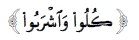
“Yiyin ve için” (TMQ 2:60) ya da hiçbir fiil belirtilmeden, nesne hakkında gelmiş olabilir; tıpkı Allah'ın (c.c.) şöyle buyurduğu gibi:
“Eat and drink” (TMQ 2:60), or it has come regarding the object without any mention of the action whatsoever, such as Allah (swt) saying

"Size haram kılınmıştır: leş, kan ve domuz eti." (TMQ 5:3). Buna göre, bu üç şeyde yasaklama hükmü yalnızca kulun yeme, satın alma, satma, kiralama ve diğer fiillerine ilişkindir. Dolayısıyla şer'i hüküm, bunun fiile dair bir hüküm mü yoksa nesneye dair bir hüküm mü olduğuna bakılmaksızın, kulun fiiliyle ilgilenir. Bu sebeple fiillerdeki asıl, (şer'i hükümle) sınırlandırılmalıdır; çünkü hitap yalnızca kulun fiiline ilişkindir.
“Prohibited to you are dead animals, blood, the flesh of swine.” (TMQ 5:3). Accordingly, the rule of prohibition in these three things is only in relation to the action of the worshipper in terms of eating, buying, selling and hiring and other actions. Therefore, the Shari'ah rule deals with the action of the worshipper, whether this were a rule for the action or a rule for the object. This is why the origin in actions is to be restricted (to the Shari’ah rule) because the address is only related to the action of the worshipper.
Ancak Şeriat hükümlerinin detaylandırılmış delillerini incelediğinde açıkça görülür ki, hükümlerin delili olarak gelen metinlerde, fiil için delil olan metnin durumu, hitabın yöneltiliş biçimi bakımından, fiil için değil nesne için delil olan metnin durumundan farklıdır. Fiille ilgili metinde hitap, nesnenin zikredilip zikredilmemesine bakılmaksızın yalnızca fiile yöneliktir. Nitekim Allah (swt) şöyle buyurur,
However, by scrutinising the elaborated evidences of the Shari’ah rules, it becomes clear that within the texts which have come as evidences of the rules, the state of the text that acts as an evidence for the action is different to the state of the text that acts as evidence for the object, in terms of the manner in which the address is directed. In the text related to the action, the address is directed to the action alone, regardless of whether the object is mentioned or not. For instance, Allah (swt) says,

"Allah alışverişi helal kılmış, riba'yı ise haram kılmıştır." (Bakara 2:275) Ve O (SWT) şöyle buyurur:
“Allah has permitted trade and has forbidden interest.” (TMQ 2:275) And He (swt) says,

"Ey iman edenler, size yakın olan kafirlerle savaşın." (TMQ 9:123) Ve O (swt) şöyle buyurur,
“O you who have believed, fight those adjacent to you of the disbelievers.” (TMQ 9:123) And He (swt) says,
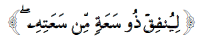
“Zengin kimse, zenginliğinden harcasın.” (Talâk 65:7) Ve O (c.c.) şöyle buyurur,
“Let a man of wealth spend from his wealth.” (TMQ 65:7) And He (swt) says,
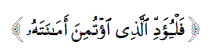
“Ve eğer biriniz diğerine emanet ederse, emanet edilen de emanetini [dürüstçe] yerine getirsin.” (TMQ 2:283) Ve Allah (SWT) şöyle buyurur,
“And if one of you entrusts another, then let him who is entrusted discharge his trust [faithfully].” (TMQ 2:283) And Allah (swt) says,
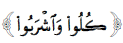
"Yiyin ve için" (TMQ 2:60). Ve Allah'ın Resûlü ﷺ şöyle buyurdu.
“Eat and drink” (TMQ 2:60). And the Messenger of Allah (pbuh) said.
.» الْبَ يِّ عَانِ بِالْخِيَارِ مَا لَمْ يَ تَ فَرَّقَا «.
.» الْبَ يِّ عَانِ بِالْخِيَارِ مَا لَمْ يَ تَ فَرَّقَا «.
“Alışveriş yapan iki taraf, birbirlerinden ayrılmadıkları sürece (akdi feshetme) hakkına sahiptir.” Bu, İbn Ömer ve başkaları yoluyla rivayet edilip üzerinde ittifak edilmiş bir hadistir. Ayrıca şöyle buyurmuştur.
“Both parties in a business transaction have the righ (the choice to annul it) so long as they have not separated.” agreed upon through Ibn Umar and others. And he said.
.» أَعْطُوا الأَجِيرَ أَجْرَه «.
.» أَعْطُوا الأَجِيرَ أَجْرَه «.
“İşçiye ücretini verin” hadisi, İbn Mace tarafından İbn Ömer yoluyla ve Beyhakî tarafından Ebû Hureyre yoluyla rivayet edilmiştir; Bağavî de bu hadisin senedini hasen olarak değerlendirmiştir. Bu metinlerin hepsinde hitap fiile yöneltilmiş, nesne ise zikredilmemiştir. Diğer örneklerde ise Allah (SWT) şöyle buyurur:
“Give the worker his wage” reported by Ibn Maja through Ibn Umar and Al-Bayhaqi through Abu Hurayrah with a chain that was deemed as Hasan by Al-Baghawi. In all of these texts, the address has been directed at the action, and the object has not been mentioned. And in other examples, Allah (swt) says,

“Ve her birinden taze et yersiniz.” (TMQ 35:12). Ve O (SWT) şöyle buyurur,
“And from each you eat tender meat.” (TMQ 35:12). And He (swt) says,
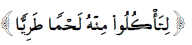
“Ondan taze et.” (TMQ 16:14). Ve O (SWT) şöyle buyurur:
“To eat from it tender.” (TMQ 16:14). And He (swt) says,

"Ve onda, onlardan yiyecekleri olan taneler çıkarmıştır." (TMQ 36:33). Ve O (swt) şöyle buyurur,
“And brought forth from it grain, and from it they eat.” (TMQ 36:33). And He (swt) says,

“Şüphesiz ki yetimlerin malını haksızlıkla yiyenler…” (Tercüme edilmiş Kur'an, 4:10). Ve Allah (SWT) şöyle buyurur,
“Indeed, those who devour the property of orphans unjustly.” (TMQ 4:10).And Allah (swt) says,
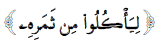
"Böylece O'nun meyvesinden yesinler." (TMQ 36:35). Bütün bunlarda hitap, nesnenin zikredilmiş olmasına rağmen, fiile de yöneliktir; bu da kulun eylemiyle doğrudan ilgili hitaba benzemektedir. Bu durum, hitabın nesneye münhasıran yöneldiği, eylemin onunla birlikte zikredilip zikredilmemesinin fark etmediği metnin durumundan farklıdır. Nitekim Allah (swt) şöyle buyurur:
“That they may eat of His fruit.” (TMQ 36:35). The address in all these is also directed at the action, although the object has been mentioned and this is similar to the address related directly to the action of the worshipper. This state is different to the state of the text related to the object, where the address is directed exclusively towards the object, regardless of whether the action was mentioned alongside it or not. For instance Allah (swt) says
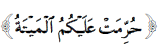
“Size haram kılınmıştır: leş (ölmüş hayvan).” (TMQ 5:3). Allah (SWT) ayrıca şöyle buyurur
“Prohibited to you are dead animals.” (TMQ 5:3). Allah (swt) also says

Ancak Allah size yalnızca ölü hayvanı, kanı, domuz etini haram kılmıştır. (Bakara, 2:173). Allah (SWT) ayrıca şöyle buyurur:
He has only forbidden to you dead animals, blood, the flesh of swine.” (TMQ 2:173). Allah (swt) also says
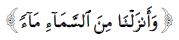
"Ve Biz gökten su indirdik." (TMQ 23:18). Allah (SWT) ayrıca şöyle buyurur:
“And We have sent down rain from the sky.” (TMQ 23:18).Allah (swt) also says

"Ve her canlıyı sudan yarattık." (TMQ 21:30). Ayrıca Allah'ın Elçisi ﷺ'in deniz suyuna dair sözü:
“And made from water every living thing.” (TMQ 21:30). Also, the saying of the Messenger of Allah (pbuh) (saw) pertaining the sea water:

"Ey iman edenler! Şarap, kumar, dikili taşlar ve fal okları, ancak şeytanın işinden bir pisliktir. Kurtuluşa erebilmeniz için bundan kaçının." (Mâide 5/90). Allah (c.c.) şöyle buyurur.
“O you who have believed, indeed, intoxicants, gambling, [sacrificing on] stone alters [to other than Allah], and divining arrows are but defilement from the work of Satan, so avoid it that you may be successful.” (TMQ 5:90). Allah (swt) says

"Içtiğiniz suyu gördünüz mü?" (Vakıa, 68). Allah (SWT) şöyle buyurur:
“Have you seen the water that you drink?” (TMQ 56:68). Allah (swt) says

"Yaktığınız ateşi gördünüz mü?" (Vâkıa, 71). Allah (SWT) şöyle buyurur:
“Have you seen the fire that you kindle?” (TMQ 56:71). Allah (swt) says

“Hurmalık ağaçlarının ve üzüm bağlarının meyvelerinden de sarhoş edici bir şey ve güzel bir rızık edinirsiniz.” (TMQ.16:67). Allah (SWT) şöyle buyurur:
“And from the fruits of the palm trees and grapevines you take intoxicant.” (TMQ.16:67). Allah (swt) says

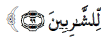
“Şüphesiz ki hayvanlarda sizin için bir ibret vardır. Onların karınlarında olanlardan, dışkı ile kan arasından, içenlere lezzetli, saf süt içiriyoruz.” (TMQ 16:66).
“And indeed, for you in grazing livestock is a lesson. We give you drink from what is in their bellies - between excretion and blood - pure milk, palatable to drinkers.” (TMQ 16:66).
Bütün bu metinlerde hitap, fiil zikredilmiş olmasına rağmen nesneye yöneliktir. Böyle bir hitap nesneyle ilgilidir; dolayısıyla bu, o nesneye ilişkin bir hükmün ortaya konmasıdır. Ancak hükmün nesneyle ilgisi, kulun fiilinden soyutlanmış nesneye göre değil, kulun fiiline göre bir hüküm ortaya koymasında görülür; çünkü bir nesnenin, kulla ilişkili olmaksızın bir hükme sahip olması düşünülemez. Bu nedenle, hitabın hedefleniş biçimi bakımından metnin durumundaki farklılık açıkça ortaya çıkar.
The address in all of these texts is directed at the object, though the action has been mentioned. Such an address is related to the object; thus it is an outlining of a rule pertaining to that object. However, the rule’s relation to the object is reflected in the fact that it outlines its rule vis-à-vis the action of the worshipper, not vis-à-vis the object detached from the action of the servant, since it is inconceivable for a object to have a rule unless it is related to the servant. Therefore, the difference in the state of the text becomes clear with regard to the manner in which the address is targeted.
Bu ayrım, Şeriat hükmünün her ne kadar kulların fiillerine ilişkin Şâri'in sözü olsa da, şeylere bağlanmış bazı hükümlerin, kulla ilişkili olmalarına rağmen, bu şeylerin hükmünü kayıtsız bir biçimde belirlemeye geldiğini göstermektedir; bu şeyler kuldan soyutlanmış değildir. İncelendiğinde bu gösterge, şeylerin hükümlerinin fiillerin delilini belirlemeye gelen genel bir delil aracılığıyla geldiğini, şeylere özgü olarak gelen her şeyin ise, fiillerin delili aracılığıyla onlar için delil olarak gelmiş olan genel kuralın bir istisnası olduğunu bize ortaya koymaktadır. Bunun nedeni, ayrıntılı bir araştırmanın, hitabın doğrudan fiile yöneldiği Şeriat metninin genel ifadelerle geldiğini ortaya koymuş olmasıdır. Dolayısıyla bu talebe veya tercihe ilişkin olarak izin verilen her şeyi kapsadığından, bununla ilgili olan bütün şeyler mübah olacaktır; çünkü bir şeyin yasaklanması bir metni gerektirir. Örneğin Allah (SWT) şöyle buyurmaktadır:
This difference indicates that although the Shari’ah rule is the speech of the Legislator related to the actions of the worshippers some rules specified to things have however come to outline the rule of these things in an unrestricted manner, even though their rule was in relation to the worshipper as opposed to being isolated from the worshipper. Through scrutiny, this indication outlines to us that the rules of things have come through a general evidence, which in turn has come to outline the evidence of the actions, and that whatever came specifically related to things is in fact an exception from the general rule which had come as evidence for them through the evidence of the actions. This is so because detailed study has revealed that the Shari’ah text in which the address was directly targeted at the action has come in general terms. Therefore, all the things related to it would be permitted because the request to perform or the choice was general, encompassing all that which is permitted vis-à-vis this request, and the prohibition of something requires a text. For instance, Allah (swt) says

“Ve göklerde ve yerde ne varsa, hepsini O'ndan olmak üzere size boyun eğdirmiştir.” (TMQ 45:13). Bu, göklerdeki ve yerdeki şeylerin Allah tarafından bizim için yaratıldığı ve bu yüzden helal olduğu anlamına gelir. Allah (swt) ayrıca şöyle buyurur:
“And He has subjected to you whatever is in the heavens and whatever is on the earth - all from Him.” (TMQ 45:13). This means that the things in the skies and the earth have been created for us by Allah, and ,therefore, are permitted. Allah (swt) also says
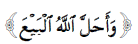
“Allah alışverişi helal kılmış, faizi ise haram kılmıştır.” (Bakara 2:275) Bu ayet, Allah'ın (c.c.) her türlü şeyin alınıp satılmasını helal kıldığı anlamındadır. Dolayısıyla bu şeylerden herhangi birinin alınıp satılmasının caiz olması için ayrıca bir delil gerekmez, çünkü genel delil her şeyi kapsar. Buna karşılık, örneğin alkolün satılmasının yasaklanması ise bir delil gerektirir. Ayrıca Allah (c.c.) şöyle buyurmaktadır:
“Allah has permitted trade and has forbidden interest (usury).” (TMQ 2:275) which means that Allah (swt) has made the buying and selling of all things permitted; thus the ibahah of selling and buying any of these things does not require an evidence, because the general evidence comprises everything. So, the prohibition of selling something, such as alcohol for instance, requires evidence. Also, Allah (swt) says
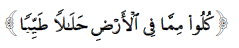
"Ey insanlar, yeryüzündeki helal ve temiz olan şeylerden yiyin." (Kur'an-ı Kerim, 2:168) Bu ayet, her şeyi yemenin helal olduğu anlamına gelir; dolayısıyla belirli bir şeyin yenmesinin helal olduğunu göstermek için ayrıca bir delile ihtiyaç yoktur, çünkü genel delil onu helal kılmıştır. Ölü hayvan eti gibi bir şeyin yenmesinin yasaklanması ise delil gerektirir. Allah (c.c.) şöyle buyurur:
“O mankind, eat from whatever is on earth [that is] lawful and good.” (TMQ 2:168) which means that eating everything is Halal (lawful); thus the eating of a specific item does not require an evidence to make it Halal, because the general evidence has made it Halal. The prohibition of eating something, such as dead meat for instance, requires evidence. Allah (swt) says
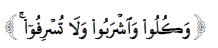
“Yeyin, için, fakat israf etmeyin (aşırıya kaçmayın).” (TMQ 7:31) Bu ayet, her şeyi içmenin caiz olduğunu ifade eder; dolayısıyla belirli bir şeyi içmenin caiz olduğunu göstermek için özel bir delile ihtiyaç yoktur, çünkü genel delil onu caiz kılmıştır. Ancak belirli bir şeyin içilmesinin yasaklanması, örneğin sarhoş edici içkiler gibi, bir delil gerektirir.
“And eat and drink, but be not excessive (extravagant).” (TMQ 7:31) which means that the drinking of everything is permitted; thus the drinking of a specific item does not require an evidence to make it permitted, because the general evidence has made it permitted. However, the prohibition of drinking a specific item, such as intoxicants for instance, requires evidence.
Bunlara benzer şekilde, konuşma, yürüme, oyun oynama, koklama, soluma, bakma ve insanın gerçekleştirdiği diğer eylemler gibi fiillerle ilgili her şeyi mubah kılan genel deliller bulunmaktadır. Dolayısıyla bu eylemlerle ilgili herhangi bir şeyin izni için delil gerekmez; ancak bu eylemlerle ilgili herhangi bir şeyin haram kılınması için ise onu yasaklayan bir delil gerekir.
Similar to these, general evidences are found permitting everything related to actions such as talking, walking, playing, smelling, inhaling, looking and other actions which man performs; thus the permission of anything related to them does not require an evidence, but the prohibition of anything related to these actions does require an evidence to make it forbidden.
Bu nedenle, fiillere yönelik olarak metinlerin getirdiği deliller, şeylerin hükmünü genel ve sınırlandırılmamış bir biçimde belirlemiştir; dolayısıyla bu şeylerin hükümlerini belirlemek için başka metinlere ihtiyaç duymazlar. Böylece, şeylerle ilgili özel metinlerin gelmesi, bu şeylerin genel hükmü belirlendikten sonra, bu özel hükümlerin şeylerin hükmünü genel hükmün dışına çıkardığına delildir. Dolayısıyla Şer'i metinler, şeyleri ilgilendiren Şer'i hükmü belirlemeye, bunların mubah olduğunu bildirmek üzere gelmiştir; bu yüzden, onları yasaklayan bir metin bulunmadıkça mubahtırlar. Şer'i kaide olan "Şeylerin aslı ibahadır" ilkesi de bu şekilde türetilmiştir. Bu makalenin delilleri bunlardır.
Therefore, the evidences brought by the texts and targeted at the actions have outlined the rule of things in a general and unrestricted manner; ,therefore, they do not require other texts to outline their rules. Thus, the advent of specific texts related to things, once the general rule of these things had been outlined, serves as evidence that these specific rules have come to exclude the rule of these things from the general rule. Hence, the Shari’ah texts have come to outline the Shari’ah rule pertaining things, denoting that they are permitted; hence, they are permitted unless a text exists to prohibit them. It is in this manner that the Shari’ah principle “The origion of things is ibahah” is derived. These are the evidences for this article.