৫.৫ কাসীর বিন আব্দুল্লাহ বিন আমর বিন আওফ আল-মুযানীর প্রতি ন্যায়বিচার
5.5 Fairness to Kathir bin Abdullah bin ‘Amr bin ‘Awf Al- Muzani
- এটি “তাকরীব আত-তাহযীব” [ইবনু হাজার] (১/৪৬০/৫৬১৭) গ্রন্থে বর্ণিত হয়েছে: [কাসীর ইবনু আব্দুল্লাহ ইবনু আমর ইবনু আওফ আল-মুযানী আল-মাদানী দায়ীফ (দুর্বল)। যারা তাঁর প্রতি মিথ্যা আরোপ করেছে তারা সীমালঙ্ঘন করেছে। (তিনি) সপ্তম (অর্থাৎ বর্ণনাসূত্রের স্তর বা প্রজন্ম) ছিলেন।]
- The following came stated in in “Taqrib At-Tahdhib” [Ibn Hajar] (1/460/5617): [Kathir bin Abdullah bin ‘Amr bin ‘Awf Al-Muzani Al- Madani is Da’if (weak). Those who attributed lying to him were excessive. (He was from) the seventh (i.e. generation or line of transmission)].
- তবে আলবানী তাঁর “ইরওয়াউল গালীল” গ্রন্থে (৫/১৫৫) উল্লেখ করেছেন: [হাফিয (অর্থাৎ ইবনু হাজার) [আল-ফাতহ (৪/৩৭১)-এ] বলেছেন: [এবং কাসীর ইবনু আব্দুল্লাহ অধিকাংশ আলেমের মতে যয়ীফ। তবে আল-বুখারী এবং তাঁর অনুসারী যেমন আত-তিরমিযী ও ইবনু খুযাইমা তাঁর বিষয়টিকে (বা মর্যাদাকে) শক্তিশালী বলেছেন।]
- However, in “Irwaa’ Al-Ghalil”, by Al-Albani (5/155), the following was stated: [Al-Hafizh (i.e. ibn Hajar) said [in Al-Fat’h – (4/371)]: [And Kathir bin Abdullah is Da’if in the view of the majority however Al- Bukahri and those who followed him like At-Tirmidhi and Ibn Khuzaimah strengthen his affair (or status)].
- নিম্নলিখিত বর্ণনাটি “আত-তারীখ আল-কাবীর” [আল-বুখারী] (৭/২১৭/৯৪৫)-এ এসেছে: [কাসীর ইবনু আব্দুল্লাহ ইবনু আমর ইবনু আওফ আল-মুযানী আল-মাদানী তাঁর পিতা থেকে শুনেছেন (অথবা তাঁর পিতা থেকে গ্রহণ করেছেন), আর মারওয়ান ইবনু মু‘আবিয়া, ইসমাঈল ইবনু আবী উওয়াইস ও ইয়াহইয়া আল-আনসারী তাঁর থেকে বর্ণনা করেছেন]। এটি আল-বুখারীর “আত-তারীখ আল-কাবীর”-এর অন্য একটি সংস্করণে (৭/৯৬/৯৪৫) উল্লেখ আছে। ইমাম আল-বুখারী তাকে যঈফ (দুর্বল) বলে চিহ্নিত করেননি এবং তার সম্পর্কে একটি অক্ষরও বলেননি! - নিম্নলিখিত বক্তব্যটি “আল-জারহ ওয়াত-তা‘দীল” [ইবনু আবী হাতিম] (৭/১৫৪/৮৫৮)-এ বলা হয়েছে: [কাসীর ইবনু আব্দুল্লাহ ইবনু আমর ইবনু আওফ আল-মুযানী তাঁর পিতা থেকে বর্ণনা করেছেন, এ ছাড়া মুহাম্মাদ ইবনু কা‘ব ও রুবাইহ ইবনু আব্দুর রহমান থেকেও; আর তাঁর থেকে বর্ণনা করেছেন আব্দুল আযীয ইবনু মুহাম্মাদ, মারওয়ান ইবনু মু‘আবিয়া, মা‘ন ইবনু ঈসা, আব্দুল্লাহ ইবনু ওয়াহব, আব্দুল্লাহ ইবনু নাফি‘ আস-সাইগ, মুহাম্মাদ ইবনু খালিদ ইবনু আতমা, আবু ‘আমির আল-আকাদী, খালিদ ইবনু মাখলাদ, ইবনু কা‘নাব ও ইবনু আবী উওয়াইস। আমি আমার পিতাকে এমন বলতে শুনেছি। আব্দুর রহমান আমাদের কাছে বর্ণনা করেছেন মুহাম্মাদ ইবনু হামাওয়াইহ ইবনু আল-হাসান থেকে, যিনি বলেছেন: আমি আবু তালিবকে বলতে শুনেছি: আমি আহমাদ (অর্থাৎ আহমাদ ইবনু হাম্বাল)-কে কাসীর ইবনু আব্দুল্লাহ ইবনু আমর ইবনু আওফ সম্পর্কে জিজ্ঞেস করলাম, তিনি বললেন: “মুনকার (অর্থাৎ হাদীসের ত্রুটির কারণে প্রত্যাখ্যাত), তার কোনো মূল্য নেই”। আব্দুর রহমান আমাদের কাছে বর্ণনা করেছেন: তিনি বলেছেন: আব্বাস ইবনু মুহাম্মাদ আদ-দাওরীর কাছে ইয়াহইয়া ইবনু মা‘ঈন থেকে পড়ে শোনানো হয়েছিল যে, তিনি বলেছেন: “কাসীর ইবনু আব্দুল্লাহ আল-মুযানী হাদীসে যঈফ (দুর্বল)”। আব্দুর রহমান আমাদের কাছে বর্ণনা করেছেন। তিনি বলেছেন: আমি আবু যুর‘আকে কাসীর ইবনু আব্দুল্লাহ ইবনু আমর ইবনু আওফ সম্পর্কে জিজ্ঞেস করলাম। তিনি বললেন: “হাদীসে দুর্বল, শক্তিশালী নয়”। আমি তাঁকে বললাম: বাহয ইবনু হাকীম, আব্দুল মুহাইমিন ও কাসীর ইবনু আব্দুল্লাহ— এদের মধ্যে কে আপনার কাছে সবচেয়ে প্রিয়? তিনি বললেন: “বাহয ও আব্দুল মুহাইমিন তার চেয়ে আমার কাছে বেশি প্রিয়”। আব্দুর রহমান আমাদের কাছে বর্ণনা করেছেন: তিনি বলেছেন: আমার পিতাকে কাসীর ইবনু আব্দুল্লাহ ইবনু আমর ইবনু আওফ সম্পর্কে জিজ্ঞেস করা হলে তিনি বললেন: “সে মজবুত/শক্তিশালী (মাতীন) নয়”।
- The following came recorded in “At-Tarikh Al-Kabir” [Al-Bukhari] (7/217/945): [Kathir bin Abdullah bin ‘Amr bin ‘Awf Al-Muzani Al- Madani listened to (or received from) his father, while Marwan bin Mu’awiyah, Isma’il bin Abu Uwais and Yahya Al-Ansari related from him]. It is recorded in another edition of “At-Tarikh Al-Kabir” by Al- Bukhari (7/96/945). Al-Bukhari did not classify him as Da’if (weak) and he did not speak about him, not even a single letter! - The following came stated in “Al-Jarh Wa At-Ta’dil” [Ibn Abu Hatim] (7/154/858): [Kathir bin Abdullah bin ‘Amr bin ‘Awf Al-Muzani related from his father in addition to Muhammad bin Ka’b and Rubaih bin Abdur Rahman, while Abdul ‘Aziz bin Muhammad, Marwan bin Mu’awiyah, Ma’n bin ‘Eisa, Abdullah bin Wahb, Abdullah bin Nafi’ As-Sa’igh, Muhammad bin Khalid bin ‘Athma, Abu ‘Amir Al-‘Aqadiy. Khalid bin Makhlad, Ibn Qa’nab and Ibn Abu Uwais related from him. I heard my father saying that. Abdur Rahman related to us from Muhammad bin Hamawaih bin Al-Hasan who said: I heard Abu Talib who said: I asked Ahmad (meaning Ahmad bin Hanbal) concerning Kathir bin Abdullah bin ‘Amr bin ‘Awf and he said: “Munkar (i.e. rejectable due to defectiveness in respect to) Al-Hadith, of no worth”. Abdur Rahman related to us: He said: It was read to Al-‘Abbas bin Muhammad Ad- Dawri from Yahya bin Ma’een That he said: “Kathir bin Abdullah Al- Muzani is Da’if (weak) in Hadith”. Abdur Rahman related to us. He said: I asked Abu Zur’ah about Kathir bin Abdullah bin ‘Amr bin ‘Awf. He said: “Feeble/weak in Hadith and not strong”. I said to him: Out of Bahz bin Hakim, Abdul Muhaimin and Kathir bin Abdullah, which of them is the most beloved to you? He said: “Bahz and Abdul Muhaiman are more beloved to me than him”. Abdur Rahman related to us: He said: My father was asked about Kathir bin Abdullah bin ‘Amr bin ‘Awf and he said: “He is not solid/strong (Matin)”.
"এই উক্তি 'তিনি মাতীন (সুদৃঢ়/শক্তিশালী) নন'—এটি 'তিনি কাবী (শক্তিশালী) নন' উক্তির মতো নয়, এবং 'দাঈফ' (দুর্বল) উক্তির সমার্থকও নয়। কারণ 'মাতীন' বর্ণনাকারী হলেন সেই ব্যক্তি, যিনি শক্তি ও নির্ভরযোগ্যতার দিক থেকে সর্বোচ্চ স্তরে পৌঁছেছেন।" - "তারীখুল ইসলাম" (১০/২২৪/৩৩০)-এ পরস্পরবিরোধী উক্তি বর্ণিত হয়েছে: [কাসীর বিন আবদুল্লাহ বিন আমর বিন আওফ বিন যায়েদ বিন তালহা আল-ইয়াশকুরী আল-মুযানী আল-মাদানী ... তিনি তাঁর পিতা থেকে এবং তাঁর দাদা থেকে (সনদসহ) বর্ণনা করেছেন, এ ছাড়াও নাফে' ও মুহাম্মাদ বিন কা'ব আল-কুরাযী থেকেও। এবং তাঁর থেকে যাঁরা বর্ণনা করেছেন তাঁরা হলেন: ইবনু ওয়াহব, আবদুল্লাহ বিন নাফে', আল-কা'নাবী, ইসমাঈল বিন আবী উয়াইস ও খালক।]
I say: This statement “He is not solid/strong (Matin)” is not like the statement “He is not Qawiy (strong))” and it is not synonymous with the statement “Da’if” (weak). That is because the “Matin” narrator is the one who has reached the pinnacle in respect to strength and reliability. - Contradictory statements came stated in “Tarikh ul-Islam” (10/224/330): [Kathir bin Abdullah bin ‘Amr bin ‘Awf bin Zaid bin Talha Al-Yashkuri Al-Muzani Al-Madani … He related from his father and from his grandfather (by transcript), in addition to Nafi’ and Muhammad bin Ka’b Al-Qurazhi. And the following related from him: Ibn Wahb, Abdullah bin Nafi’, Al-Qa’nabi, Isma’il bin Abi Uwais and Khalq.
তাঁরা তাঁর দুর্বলতার শ্রেণিবিভাগের ব্যাপারে একমত হয়েছিলেন, আর আহমাদ ইবনু হাম্বাল তাঁর হাদীস প্রত্যাখ্যান করেছিলেন।
They agreed upon his classification of weakness and Ahmad bin Hanbal rejected his Hadith.
আশ-শাফিঈ বলেছেন: তিনি মিথ্যাবাদিতার স্তম্ভসমূহের একটি স্তম্ভ। আবু দাউদও এর অনুরূপ কথা বলেছেন।
Ash-Shafi’iy said: He is a pillar from among the pillars of Al-Kadhib (deceit/untruth). Abu Dawud said similar to that.
‘আব্বাস ইবনু মাঈন থেকে বর্ণনা করেন (যে তিনি, অর্থাৎ কাসীর): “দ’ঈফ (দুর্বল)”। আদ-দারিমী ইবনু মাঈন থেকে বর্ণনা করেন: তার কোনো মূল্য নেই।
‘Abbas related from Ibn Ma’een (that he i.e. Kathir is): “Da’if (weak)”. Ad-Darimiy related from Ibn Ma’een: He has no worth.
আন-নাসায়ী বলেছেন: "তিনি পরিত্যক্ত বা উপেক্ষিত (অর্থাৎ তাঁর থেকে বর্ণনা গ্রহণ করা হয় না)।" এবং আদ-দারাকুতনীও একই কথা বলেছেন।
An-Nasa’i said: “He is left or disregarded (i.e. not related from)” and Ad-Daraqutniy said the same.
তিরমিযী সম্পর্কে বলা যায় যে, তিনি তখন বলতে শুরু করলেন এবং বললেন: “আমি মুহাম্মাদ ﷺ-কে বললাম: কাছীর ইবনে আবদুল্লাহর হাদীস রয়েছে, তাঁর পিতার মাধ্যমে, তাঁর দাদার মাধ্যমে, যা জুমু'আর সালাতের সময় সম্পর্কিত। তিনি বললেন: এটি একটি হাসান হাদীস, তবে আহমাদ ইবনে হাম্বল কাছীরকে যঈফ (দুর্বল) হিসেবে শ্রেণিভুক্ত করেছেন।”
As for At-Tirmidhi, then he began to dictate and said: “I said to Muhammad: There is the Hadith of Kathir bin Abdullah, from his father, from his grandfather, related to the (subject area) of the time of the Jumu’ah prayer. He said: It is a Hasan Hadith, however Ahmad bin Hanbal classifies Kathir as being Da’if (weak)”.
ইবনু হিব্বান বলেছেন: "কাসীর তার পিতা থেকে, তিনি তার দাদা থেকে একটি মনগড়া বর্ণনা নিয়ে আসেন। তার উল্লেখ বিস্ময় প্রকাশের দৃষ্টিকোণ ছাড়া অন্য কোনোভাবে বৈধ নয়।" আমি (অর্থাৎ যাহাবী) বলছি: তিনি ১৬৩ হিজরিতে মৃত্যুবরণ করেন। [উদ্ধৃতি শেষ]
Ibn Hibban said: “Kathir relates from his father, from his grandfather a fabricated transcript. It is not permissible to mention him except from the angle of astonishment”. I said: He died in the year 163 AH] [End of quote].
আমি বলি: "তারা তার দুর্বলতার শ্রেণিবিভাগে একমত হয়েছেন" — এই উক্তির কোনো অর্থ (বা গুরুত্ব) নেই, যখন ন্যায়পরায়ণতা ও মধ্যপন্থার শীর্ষ ব্যক্তি ইমাম আল-বুখারী তাঁর সততার সনদ দিয়েছেন, তাছাড়া আবু হাতিমের তুচ্ছ কথাও রয়েছে, যিনি বাড়াবাড়ি ও গোঁয়ার্তুমির প্রবণতাসম্পন্ন! সত্য হলো, আদ-দারাকুতনী শুধু একটি তালিকার অংশ হিসেবে, কোনো মন্তব্য ছাড়াই, একদল রাবীর মধ্যে তাঁর নাম উল্লেখ করেছেন, তাঁর "আদ-দু'আফা ওয়া আল-মাতরূকীন" (দুর্বল ও পরিত্যক্ত) গ্রন্থে। আবু দাউদের প্রতি আরোপিত উক্তিটি এই বাস্তবতার সাথে সাংঘর্ষিক যে তিনি কাসীর ইবনে আবদুল্লাহর কিছু হাদীস প্রকাশ করেছেন এবং সেগুলো নিয়ে কোনো মতভেদ দেখা দেয়নি, যখন তিনি মক্কাবাসীদের কাছে সেগুলোসহ চিঠি লিখেছিলেন। আমার মতে সবচেয়ে সম্ভাব্য ব্যাখ্যা হলো, তিনি ইমাম আশ-শাফিয়ীর উক্তি বর্ণনা করেছিলেন এবং শুরুতে তার অনুসরণ করেছিলেন, যেমনটি "তাহযীব আল-কামাল" (২৪/১৩৬/৪৯৪৮) ও "তাহযীব আত-তাহযীব" (৮/৩৭৭/৭৫৩)-এ স্পষ্ট। এরপর অভিযোগটির ভুল তাঁর কাছে স্পষ্ট হলে তিনি তাঁর বর্ণনাগুলো তাঁর সুনানে লিপিবদ্ধ করেন। হাফিয ইবনে হাজার নিজেও দ্বিধাগ্রস্ত বলে মনে হয়, কারণ "আল-ফাতহ"-এ তাঁর বক্তব্য "আত-তাকরীব"-এ তাঁর সারসংক্ষেপে উল্লিখিত বিষয়ের সাথে সামঞ্জস্যপূর্ণ নয়। অতএব বিষয়টি অস্পষ্ট, এবং তাই এই ব্যক্তির অবস্থা বা মর্যাদা সম্পর্কে সুনির্দিষ্ট গবেষণা করা আবশ্যক।
I say: There is no meaning (or significance) to the statement: “They agreed upon his classification of weakness” when there exists an attestation of credibility from the chief of fairness and moderation Imam Al-Bukhari, in addition to the insignificant speech of Abu Hatim, who is from the prone to extremity and stubbornness! The truth is that Ad-Daraqutni only mentioned him as part of a list, without commentary, amongst a group of narrators, in his book “The weak and disregarded” (Ad-Du’afa’ Wa Al-Matrukin”. The speech attributed to Abu Dawud contradicts the fact that he published some of the Hadith of Kathir bin Abdullah and no disagreement resulted over them, when he wrote with them to the people of Makkah. The most likely explanation in my view, is that he related the speech of Imam Ash-Shafi’iy and followed it in the beginning, as is evident in “Tahdhib Al-Kamal” (24/136/4948) and in “Tahdhib At-Tahdhib” (8/377/753); the texts of which will be presented soon. Then (after that), it the incorrectness of the accusation became evident to him and so he recorded his relations within his Sunan. Al-Hafizh bin Hajar himself appears to be of two minds as his speech in “Al-Fat’h” is not consistent with what he stated in his summary in “At-Taqrib”. The matter is therefore ambiguous and as such it is necessary to undertake a precise study of the circumstances or status of this man.
“আদ-দু’আফা’ আল-কাবীর” গ্রন্থে আল-‘উকাইলী (৪/৪/১৫৫৫) বর্ণনাটি উল্লেখ করেছেন: [কাসীর বিন আব্দুল্লাহ বিন ‘আমর বিন ‘আওফ আল-মুযানী। আহমাদ বিন যুকাইর আল-হাযরামী আমাদের কাছে বর্ণনা করেন আহমাদ বিন সাঈদ আল-ফিহরী থেকে, তিনি ইবরাহীম বিন আল-মুনযির থেকে, তিনি মুতাররিফ বিন আব্দুল্লাহ থেকে, যিনি বলেন: “আমি কাসীর বিন আব্দুল্লাহ বিন ‘আমর বিন আওফ আল-মুযানীকে দেখেছি। তিনি অত্যন্ত ঝগড়াটে ছিলেন, আর আমাদের সঙ্গীদের কেউই তাঁর কাছ থেকে (হাদীস) গ্রহণ করতেন না।” অতঃপর ইবনু ‘ইমরান আল-কাযী তাঁকে বললেন: “হে কাসীর, তুমি একজন নির্বোধ মানুষ, যে বিষয়ে আমরা জানি না, সে বিষয়ে তুমি বিবাদ কর। যা তোমার নেই, তার দাবি কর, এবং যা খুঁজছ তার কোনো প্রমাণ তোমার কাছে নেই। সুতরাং আমার কাছে আসবে না, যদি না দেখ যে আমি নির্বোধ বা অলস লোকদের জন্য সময় দিচ্ছি। যদি দেখ আমার সান্নিধ্যে নির্বোধ লোকেরা আছে, তবেই এসো।” ইবরাহীম বলেন: মুতাররিফ আমাকে বললেন: একদিন ইবনু ‘ইমরান আমাদের মাঝে ছিলেন, এমন সময় কাসীর বিন আব্দুল্লাহ তাঁর কাছে এলেন। তখন তিনি বললেন: “আমি কি তোমাকে বলিনি, নির্বোধ (বা অলস) লোকদের সঙ্গে আমাকে না দেখলে আমার কাছে আসবে না?” কাসীর তখন তাঁকে বললেন: “আপনি সত্য বলেছেন, আল্লাহ কাযীর বিষয়টি সুন্দর করুন। আমি তো কেবল তখনই আপনার কাছে এসেছি যখন নির্বোধ লোকেরা আপনার কাছে এসেছে। অমুক ও অমুক আপনার কাছে এসেছিল। তারা উভয়েই নির্বোধ (বা অলস) লোকদের অন্তর্ভুক্ত, তাই আমি তাদের সঙ্গে এসেছি।” আব্দুল্লাহ বিন আহমাদ আমাদের কাছে বর্ণনা করেন: তিনি বলেন: আমি আমার পিতাকে বলতে শুনেছি: “হুসাইন বিন আব্দুল্লাহ বিন দুমাইরাহ ও কাসীর বিন আব্দুল্লাহ বিন ‘আমর বিন ‘আওফ একসঙ্গে কোনো মূল্য রাখে না, তারা একই রকম, কোনো মূল্যের নয়।” আমার পিতা কাসীর বিন আব্দুল্লাহ বিন ‘আমর বিন ‘আওফের হাদীসসমূহ প্রত্যাখ্যান করতেন, এজন্য তিনি সেগুলো আমাদের কাছে বর্ণনা করেননি। মুহাম্মাদ বিন ঈসা আমাদের কাছে ‘আব্বাস থেকে বর্ণনা করেন, যিনি বলেন: আমি ইয়াহইয়াকে বলতে শুনেছি: কাসীর বিন আব্দুল্লাহ বিন ‘আমর বিন ‘আওফ আল-মুযানী, তাঁর দাদা (রসূল) ﷺ-এর সাহচর্য লাভ করেছিলেন, কিন্তু কাসীর হাদীসের ক্ষেত্রে দুর্বল (যঈফ)।] আহমাদ ইবনু মাহমুদ আমাদের কাছে উসমান ইবনু সাঈদ থেকে বর্ণনা করেছেন: আমি ইয়াহইয়া ইবনু মাঈনকে বললাম: "কাসীর ইবনু আবদুল্লাহ আল-মুযানী, (যার থেকে) মা'ন বর্ণনা করেন, তার অবস্থা কেমন?" তিনি বললেন: "সে কিছুই নয়, অথবা তার কোনো মূল্য নেই।"
- The following came recorded in “Ad-Du’afaa’ Al-Kabir” by Al- ‘Uqailiy (4/4/1555): [Kathir bin Abdullah bin ‘Amr bin ‘Awf Al-Muzani. Ahmad bin Zukair Al-Hadrami related to us from Ahmad bin Sa’id Al-Fihriy, from Ibrahim bin Al-Mundhir, from Mutarrif bin Abdullah, who said: “I saw Kathir bin Abdullah bin ‘Amr bin Awf Al-Muzani. He was very quarrelsome and none of our companions would take from him”. So, Ibn ‘Imran Al-Qadi said to him: “O Kathir, you are a foolish person, you quarrel in respect to that which we don’t know. You make claims to that which you don’t have and you don’t have evidence for what you seek. So, don’t approach me unless you see me making time for the people of foolishness or idleness. If you see the people of foolishness in my company then come on over”. Ibrahim said: Mutarrif said to me: Ibn ‘Imran was among us one day, when Kathir bin Abdullah came to him and so he said: “Did I not say to you, don’t approach me unless you see me with the foolish (or idle) people?” Kathir then said to him: “You have said the truth, may Allah make good the affair of the Qadi. Indeed, I only came to you when the people of foolishness came to you. So and so and so and so came to you. They are both from the people of foolishness (or idleness) and so I came along with them both”. Abdullah bin Ahmad related to us: He said: I heard my father saying: “Hussein bin Abdullah bin Dumairah and Kathir bin Abdullah bin ‘Amr bin ‘Awf do not add up to anything together, they are similar, not worth anything”. My father rejected the Ahadeeth of Kathir bin Abdullah bin ‘Amr bin ‘Awf and as such, he did not relate them to us. Muhammad bin ‘Eisa related to us from ‘Abbas who said: I heard Yahya saying: Kathir bin Abdullah bin ‘Amr bin ‘Awf Al-Muzani, his grandfather had companionship (Suhbah i.e. with the Prophet), (but) Kathir is weak (Da’if) in respect to the Hadith”. Ahmad bin Mahmud related to us from Uthman bin Sa’id: I said to Yahya bin Ma’een: “Kathir bin Abdullah Al-Muzani, (the one) who Ma’n relates from, how is he (i.e. his condition)?” He said: “He is nothing or of no worth”].
"তাহযীব আল-কামাল" [আল-মিযযী] (২৪/১৩৬/৪৯৪৮)-তে যা বলা হয়েছে: [কাসীর ইবনু আব্দুল্লাহ ইবনু 'আমর ইবনু 'আওফ ইবনু যাইদ ইবনু মিলহাহ আল-মুযানী আল-মাদানী বর্ণনা করেছেন বাকর ইবনু আব্দুর রহমান আল-মুযানী আল-বাসরী থেকে, রাবীহ ইবনু আব্দুর রহমান ইবনু আবী সা'ঈদ আল-খুদরী থেকে, তাঁর পিতা আব্দুল্লাহ ইবনু 'আমর ইবনু 'আওফ আল-মুযানী থেকে, মুহাম্মাদ ইবনু কা'ব আল-কুরাযী থেকে এবং ইবনু 'উমারের মুক্তদাস নাফি' থেকে। আর তাঁর থেকে নিম্নোক্ত ব্যক্তিরা বর্ণনা করেছেন: ইবরাহীম ইবনু 'আলী আর-রাফি'ঈ, আবূ ইসহাক ইবরাহীম ইবনু মুহাম্মাদ আল-ফাযারী, ইসহাক ইবনু ইবরাহীম আল-হানিনী, ইসহাক ইবনু জা'ফর আল-'আলাবী, ইসমা'ঈল ইবনু আবী উয়াইস, খালিদ ইবনু মাখলাদ আল-কাতাওয়ানী, যাইদ ইবনুল হুবাব, আল-'আব্বাস ইবনু আবী শামলা আত-তাইমী, আবূ উয়াইস আব্দুল্লাহ ইবনু আল-মাদানী, আব্দুল্লাহ ইবনু কাসীর ইবনু জা'ফর ইবনু আখী (ভাই) ইসমা'ঈল ইবনু জা'ফর, আব্দুল্লাহ ইবনু মাসলামাহ আল-কা'নাবী, আব্দুল্লাহ ইবনু নাফি' আস-সা'ঈগ, আব্দুল্লাহ ইবনু ওয়াহব আল-মিসরী, আবূল জা'দ আব্দুর রহমান ইবনু আব্দুল্লাহ আস-সুলামী, আব্দুল 'আযীয ইবনু আবী সাবিত আয-যুরী, আব্দুল 'আযীয ইবনু মুহাম্মাদ আদ-দারাওয়ারদী, আবূ 'আমির আব্দুল মালিক ইবনু 'আমর আল-'আকাদী, 'আত্তাফ ইবনু খালিদ আল-মাখযূমী, আল-কাসিম ইবনু আব্দুল্লাহ ইবনু 'উমার আল-'উমারী, মুহাম্মাদ ইবনু ইসমা'ঈল ইবনু আবী ফুদাইক, মুহাম্মাদ ইবনু খালিদ ইবনু 'আতমা, মুহাম্মাদ ইবনু 'উমার আল-ওয়াকিদী, মুহাম্মাদ ইবনু ফুলাইহ ইবনু সুলাইমান, আবূ গাযিয়্যাহ মুহাম্মাদ ইবনু মূসা আল-আনসারী (মদীনার কাযী), মারওয়ান ইবনু মু'আবিয়াহ আল-ফাযারী, আল-মু'আফী ইবনু 'ইমরান আল-মাওসিলী, মা'ন ইবনু 'ঈসা আল-কাযযায, ইয়াহইয়া ইবনু সা'ঈদ আল-আনসারী (এবং তিনি তাঁর চেয়ে বয়সে বড় ছিলেন)। আবূ তালিব বলেন: আমি আহমাদ ইবনু হাম্বালকে তাঁর সম্পর্কে জিজ্ঞেস করলাম, তিনি বললেন: "মুনকারুল হাদীস (অর্থাৎ তাঁর হাদীস প্রত্যাখ্যাত); কোনো মূল্য নেই।" আব্দুল্লাহ ইবনু আহমাদ ইবনু হাম্বাল বলেন: "আমার পিতা 'মুসনাদ'-এ কাসীর ইবনু আব্দুল্লাহর হাদীস বর্জন করেছেন এবং তাঁর থেকে বর্ণনা করেননি।" আবূ খাইসামাহ বলেন: আহমাদ ইবনু হাম্বাল আমাকে বললেন: "তাঁর থেকে কিছুই বর্ণনা করো না।" 'আব্বাস আদ-দাওরী বর্ণনা করেন যে, ইয়াহইয়া ইবনু মা'ঈন তাঁর দাদাকে বললেন: "কাসীর হাদীসে দুর্বল (যঈফ)।" অন্য স্থানে তিনি বলেছেন: "তাঁর কোনো মূল্য নেই।" উসমান ইবনু সাঈদ আদ-দারিমী ইয়াহইয়া ইবনু মাঈন থেকে বর্ণনা করেছেন যে তিনি বলেছেন: “তার কোনো মূল্য নেই।” আবু উবাইদ আল-আজিরী বলেন: আবু দাউদকে কাসীর ইবনু আবদুল্লাহ ইবনু আমর ইবনু আওফ আল-মুযানী সম্পর্কে জিজ্ঞাসা করা হলে তিনি বললেন: “সে মিথ্যাবাদীদের একজন ছিল। আমি মুহাম্মাদ ইবনুল ওয়াযীর আল-মিসরীকে বলতে শুনেছি: আমি আশ-শাফিঈকে শুনেছি, যখন কাসীর ইবনু আমর ইবনু আওফের কথা উল্লেখ করা হলো, তিনি বললেন: “সে মিথ্যাবাদীদের একজন, অথবা মিথ্যা ও প্রতারণার স্তম্ভসমূহের একজন।” আবদুর রহমান ইবনু আবী হাতিম বলেন: আমি আবু যুরআহকে তার সম্পর্কে জিজ্ঞাসা করলাম, তিনি বললেন: “সে হাদীসে দুর্বল, শক্তিশালী নয়।” আমি তাকে বললাম: “বাহয ইবনু হাকীম, আবদুল মুহাইমিন ও কাসীর ইবনু আবদুল্লাহ— এদের মধ্যে কে আপনার কাছে সবচেয়ে প্রিয়?” তিনি বললেন: “বাহয ও আবদুল মুহাইমিন তার চেয়ে আমার কাছে বেশি প্রিয়।” আবু হাতিম বললেন: “সে মাতীন (সুদৃঢ়, অত্যন্ত শক্তিশালী) নয়।” আত-তিরমিযী বলেন: আমি মুহাম্মাদকে কাসীর ইবনু আবদুল্লাহর সেই হাদীস সম্পর্কে জিজ্ঞাসা করলাম, যা তার পিতা থেকে, তার পিতামহ থেকে, জুমু‘আর দিনের সেই সময় সম্পর্কে বর্ণিত, যার প্রত্যাশা করা হয়: তার অবস্থা কেমন? (অর্থাৎ কাসীর)। তিনি বললেন: “হাদীসটি হাসান, তবে আহমাদ ইবনু হাম্বল কাসীরকে যয়ীফ (দুর্বল) বলে গণ্য করেছেন।” ইয়াহইয়া ইবনু সাঈদ আল-আনসারী (যিনি একজন ইমাম হওয়া সত্ত্বেও) কাসীর ইবনু আবদুল্লাহ থেকে বর্ণনা করেছেন। আন-নাসায়ী ও আদ-দারাকুতনী বলেছেন, হাদীসের ক্ষেত্রে সে মাতরূক (পরিত্যক্ত)। আন-নাসায়ী অন্যত্র বলেছেন: “সে সিকাহ (বিশ্বস্ত, নির্ভরযোগ্য) নয়।” আবু হাতিম ইবনু হিব্বান বলেন: “সে (অর্থাৎ কাসীর) তার পিতা থেকে, তার পিতামহ থেকে একটি জাল পাণ্ডুলিপি বর্ণনা করেছে। তার (অর্থাৎ তার হাদীসসমূহ) কিতাবে উল্লেখ করা কিংবা তার থেকে বর্ণনা করা বৈধ নয়, তবে বিস্ময় প্রকাশের উদ্দেশ্যে ছাড়া।” ইবনু আদী বলেন: “সে যা বর্ণনা করে তার অধিকাংশের কোনো অনুসরণ পাওয়া যায় না।” ইবরাহীম ইবনুল মুনযির আল-হিযামী মুতাররিফ ইবনু আবদুল্লাহ আল-মাদানী থেকে বর্ণনা করেন, তিনি বলেছেন: “আমি তাকে দেখেছি; সে অত্যন্ত ঝগড়াটে ছিল, এবং আমাদের সঙ্গীদের কেউ তার থেকে গ্রহণ করত না।” তখন ইবনু ইমরান আল-কাযী তাকে বললেন: “হে কাসীর, তুমি একজন নির্বোধ ব্যক্তি, যে বিষয়ে তুমি জানো না সে বিষয়ে তুমি ঝগড়া করো।” আপনি এমন কিছুর দাবি করেন যা আপনার নেই, এবং আপনি যা খুঁজছেন তার পক্ষে আপনার কাছে প্রমাণ নেই। সুতরাং, আমাকে তখনই কাছে আসবেন না যখন আপনি আমাকে নির্বোধ বা অলস লোকদের সঙ্গে সময় কাটাতে দেখবেন না। যদি আপনি নির্বোধ লোকদের আমার সঙ্গে দেখেন, তাহলে এগিয়ে আসুন।" মুতাররিফ বলেন: একদিন ইবনু ইমরান আমাদের মধ্যে ছিলেন, এমন সময় কাসির ইবনু আবদুল্লাহ তাঁর কাছে এলেন। তখন তিনি বললেন: "আমি কি তোমাকে বলিনি, যতক্ষণ না আমাকে নির্বোধ (বা অলস) লোকদের সঙ্গে দেখতে পাও, ততক্ষণ আমার কাছে এসো না?" কাসির তখন তাঁকে বললেন: "আপনি সত্য বলেছেন, আল্লাহ কাযীর কাজকে উত্তম করুন। আমি তো কেবল তখনই আপনার কাছে এসেছি যখন নির্বোধ (বা অলস) লোকেরা আপনার কাছে এসেছে। অমুক ও অমুক আপনার কাছে এসেছিল। তারা দুজনেই নির্বোধ (বা অলস) লোকদের অন্তর্ভুক্ত, তাই আমি তাদের দুজনের সঙ্গেই এসেছি।" ইমাম আল-বুখারী তাঁর থেকে বর্ণনা করেছেন "ইমামের পেছনে কিরাআত" এবং "বান্দাদের কর্ম" অধ্যায়ে, এবং আবূ দাউদ, আত-তিরমিযী ও ইবনু মাজাহও তাঁর থেকে বর্ণনা করেছেন।
নিম্নলিখিত কথাটি “তাহযীব আত-তাহযীব” (৮/৩৭৭/৭৫৩)-এ বর্ণিত হয়েছে:
- The following came stated in “Tahdhib At-Tahdhib” (8/377/753):
আল-বুখারী—কিরাআত সংক্রান্ত অংশে—এবং আবূ দাঊদ, আত-তিরমিযী ও ইবনু মাজাহ-এর বর্ণনায়: কাসীর ইবনু আব্দুল্লাহ ইবনু আমর ইবনু আওফ ইবনু যাইদ ইবনু মিলহাহ আল-ইয়াশকুরী আল-মুযানী আল-মাদানী তাঁর পিতা থেকে বর্ণনা করেছেন, এবং মুহাম্মাদ ইবনু কা'ব আল-কুরাযী, ইবনু উমার-এর মাওলা নাফি', রাবীহ ইবনু আব্দুর রহমান ইবনু আবী সাঈদ আল-খুদরী এবং বুকাইর ইবনু আব্দুর রহমান আল-মুযানী থেকেও বর্ণনা করেছেন। এবং তাঁর থেকে একদল (রাবী) বর্ণনা করেছেন, যাঁদের মধ্যে রয়েছেন: ইয়াহইয়া ইবনু সাঈদ আল-আনসারী, আবূ উওয়াইস, যাইদ ইবনুল হাব্বাব, আব্দুল্লাহ ইবনু ওয়াহব, আব্দুল্লাহ ইবনু নাফি', ইবরাহীম ইবনু আলী আর-রাফি', ইসহাক ইবনু জা'ফর আল-আলাওয়ী, ইবনু ইসহাক ইবনু ইসহাক আল-হানীনী, আবূ আমির আল-আকাদী, মারওয়ান ইবনু মুআবিয়া, আবুল জা'দ আব্দুর রহমান ইবনু আব্দুল্লাহ আস-সালামী, মুহাম্মাদ ইবনু খালিদ ইবনু আথামাহ, খালিদ ইবনু মাখলাদ ইবনু আবী উওয়াইস, আল-কা'নাবী এবং অন্যরা। আবূ তালিব আহমাদ থেকে বর্ণনা করেছেন যে তিনি (কাসীর সম্পর্কে) বলেছেন: "তিনি মুনকারুল হাদীস (অর্থাৎ তাঁর হাদীস প্রত্যাখ্যাত) এবং তাঁর কোনো মূল্য নেই।" আব্দুল্লাহ ইবনু আহমাদ বলেছেন: "আমার পিতা তাঁর মুসনাদে কাসীর ইবনু আব্দুল্লাহর হাদীস প্রত্যাখ্যান করেছেন এবং আমাদের কাছে তাঁর থেকে কিছুই বর্ণনা করেননি।" আবূ খাইছামাহ বলেছেন: আহমাদ আমাকে বলেছিলেন: "তাঁর থেকে কিছুই বর্ণনা করো না।" আদ-দাওরী ইবনু মাঈন থেকে বর্ণনা করেছেন: "তাঁর দাদার সুহবত (নবী ﷺ-এর সাহচর্য) ছিল এবং তিনি হাদীসে দুর্বল।" তিনি একবার বলেছেন: "তিনি কোনো মূল্যের নন।" আদ-দারিমীও ইয়াহইয়া ইবনু মাঈন থেকে বর্ণনা করেছেন যে তিনি বলেছেন: "তিনি কোনো মূল্যের নন।" আবূ উবাইদ আল-আজুররী বলেছেন: আবূ দাঊদকে তাঁর সম্পর্কে জিজ্ঞেস করা হলে তিনি বললেন: "তিনি মিথ্যাবাদীদের একজন। আমি মুহাম্মাদ ইবনুল ওয়াযীর আল-মিসরীকে বলতে শুনেছি: আমি আশ-শাফিঈ-কে শুনেছি, যখন কাসীর ইবনু আমর ইবনু আওফের কথা উল্লেখ করা হচ্ছিল, তিনি বলছিলেন: 'সে মিথ্যাবাদীদের একজন, অথবা মিথ্যা ও প্রতারণার স্তম্ভসমূহের একজন।'" ইবনু আবী হাতিম বলেছেন: আমি আবূ যুরআহ-কে তাঁর সম্পর্কে জিজ্ঞেস করলাম, তিনি বললেন: "তিনি হাদীসে দুর্বল ও শক্তিশালী নন।" আমি তাঁকে বললাম: "বাহয ইবনু হাকীম, আব্দুল মুহাইমিন এবং কাসীর ইবনু আব্দুল্লাহ—এদের মধ্যে আপনার কাছে কে সবচেয়ে প্রিয়?" তিনি বললেন: "বাহয ও আব্দুল মুহাইমিন আমার কাছে তাঁর চেয়ে বেশি প্রিয়।" আবু হাতিম বলেছেন: “তিনি মাতীন (সুদৃঢ়/অত্যন্ত শক্তিশালী) নন।” আত-তিরমিযী বলেছেন: আমি মুহাম্মাদ-কে কাছীর ইবনু আবদুল্লাহ-এর হাদীস সম্পর্কে জিজ্ঞাসা করেছিলাম, যা তিনি তাঁর পিতা থেকে, তাঁর পিতামহ থেকে বর্ণনা করেন, জুমু'আর দিনে যে সময়টির আশা করা হয় সে বিষয়ে: তিনি (অর্থাৎ কাছীর) কেমন? তিনি বললেন: “হাদীসটি হাসান, তবে আহমাদ ইবনু হাম্বাল কাছীরকে দাঈফ (দুর্বল) বলে গণ্য করেন।” ইয়াহইয়া ইবনু সা'ঈদ আল-আনসারী কাছীর ইবনু আবদুল্লাহ থেকে বর্ণনা করেছেন। আন-নাসাঈ ও আদ-দারাকুতনী বলেছেন, হাদীসের ক্ষেত্রে তিনি মাতরূক (পরিত্যক্ত)। আন-নাসাঈ অন্যত্র বলেছেন: “তিনি সিকাহ (বিশ্বস্ত, নির্ভরযোগ্য) নন।” ইবনু হিব্বান বলেছেন: “তিনি (অর্থাৎ কাছীর) তাঁর পিতা থেকে, তাঁর পিতামহ থেকে একটি জাল পাণ্ডুলিপি বর্ণনা করেছেন। তাঁর (অর্থাৎ তাঁর হাদীসসমূহের) উল্লেখ কিতাবসমূহে করা বৈধ নয়, কিংবা তাঁর থেকে বর্ণনা করাও বৈধ নয়, তবে বিস্ময় প্রকাশের দিক থেকে ছাড়া।” আবু আহমাদ ইবনু আদী বলেছেন: “তিনি যা বর্ণনা করেন তার অধিকাংশের অনুসরণ করা হয় না।” ইবরাহীম ইবনুল মুনযির আল-হিযামী মুতাররিফ ইবনু আবদুল্লাহ আল-মাদানী থেকে বর্ণনা করেছেন, তিনি বলেন: “আমি কাছীর ইবনু আবদুল্লাহ ইবনু আমর ইবনু আওফ আল-মুযানীকে দেখেছি। তিনি অত্যন্ত ঝগড়াটে ছিলেন, এবং আমাদের সঙ্গীদের কেউ তাঁর থেকে গ্রহণ করত না।” তখন ইবনু ইমরান আল-কাযী তাঁকে বললেন: “হে কাছীর, তুমি একজন নির্বোধ মানুষ, যা তুমি জানো না সে বিষয়ে তর্ক কর। যা তোমার নেই সে বিষয়ে দাবি কর, আর যা খোঁজা হয় তা তোমার নেই।” আমি বলি: আবু নুআঈম বলেছেন: “আলী ইবনুল মাদীনী তাঁকে দাঈফ (দুর্বল) বলে গণ্য করেছেন।” ইবনু সা'দ বলেছেন: “তাঁর কিছু হাদীস ছিল যেগুলোকে দুর্বল বলে গণ্য করা হয়েছে।” ইবনুস-সাককান বলেছেন: “তিনি তাঁর পিতা থেকে, তাঁর পিতামহ থেকে এমন হাদীস বর্ণনা করেন যা যাচাই-পরীক্ষার প্রয়োজন।” আল-হাকিম বলেছেন: “তিনি তাঁর পিতা থেকে, তাঁর পিতামহ থেকে এমন একটি পাণ্ডুলিপি বর্ণনা করেছেন যাতে মানাকীর (ত্রুটি বা সহীহ হাদীসের সাথে বিরোধের কারণে প্রত্যাখ্যাত হাদীস) রয়েছে।” আর আস-সাজী, ইয়াকূব ইবনু সুফইয়ান ও ইবনুল বারকী তাঁকে দাঈফ বলে গণ্য করেছেন। ইবনু আবদিল বার বলেছেন: “তাঁর দুর্বলতার বিষয়ে ঐকমত্য রয়েছে।” ইবন হাযম-এর বক্তব্যে কাছির ইবন যায়দ-এর ব্যাপারে একটি অগ্রাধিকার (অগ্রগণ্যতা) রয়েছে, অথচ ইমাম আল-বুখারী তাঁকে "আল-আওসাত" শিরোনামের অধীনে, অর্থাৎ "যাঁরা ১৫০-১৬০ হিজরীর মধ্যে মারা গিয়েছেন" এই অধ্যায়ে উল্লেখ করেছেন। [উদ্ধৃতির সমাপ্তি]
- ইবনু হিব্বান তাঁর সম্পর্কে বলার ক্ষেত্রে সীমা ছাড়িয়ে গিয়েছেন, যেমনটি তিনি তাঁর “আল-মাজরূহীন” (ত্রুটিযুক্ত বর্ণনাকারীগণ) (২/২২১/৮৯৩) গ্রন্থে বলেছেন: [কাসীর ইবনু আব্দুল্লাহ ইবনু আমর ইবনু আওফ আল-মুযানী তাঁর পিতা থেকে, তিনি তাঁর দাদা থেকে বর্ণনা করেন। মারওয়ান ইবনু মু‘আবিয়া ও ইসমা‘ঈল ইবনু আবী উওয়াইস তাঁর থেকে বর্ণনা করেছেন। তিনি অত্যন্ত মুনকারুল হাদীস (অর্থাৎ তাঁর হাদীস ত্রুটির কারণে প্রত্যাখ্যাত)। তিনি তাঁর পিতা থেকে, তিনি তাঁর দাদা থেকে একটি জাল পাণ্ডুলিপি বর্ণনা করেন। গ্রন্থসমূহে তাঁর উল্লেখ করা বৈধ নয়, এবং তাঁর থেকে বর্ণনা করাও বৈধ নয়।]
- Ibn Hibban was excessive in his speech concerning him as he stated in his “Al-Majroohin” (Those examined for defects) (2/221/893): [Kathir bin Abdullah bin ‘Amr bin ‘Awf Al-Muzani relates from his father from his grandfather. Marwan bin Mu’awiyah, Isma’il bin Abu Uwais related from him. He is very Munkar Al-Hadith (i.e. his Hadith are rejected due to defects). He relates from his father from his grandfather a fabricated manuscript. It is not permissible to mention it in the books nor to narrate from him].
তবে আল-কামিল ফী দু'আফাইর রিজাল [ইবনু 'আদি] (৭/১৮৭/১৫৯৯)-এ এই বর্ণনাটি উল্লেখ করা হয়েছে: [কাসীর ইবনু আবদুল্লাহ ইবনু 'আমর ইবনু 'আওফ আল-মুযানী আল-মাদানী: ইয়াহইয়া ইবনু যাকারিয়া ইবনু হাওয়াউই আমাদের কাছে বর্ণনা করেন, তিনি আইয়ূব ইবনু সুলাইমান ইবনু সাফিরী থেকে বর্ণনা করেন, তিনি বলেন: আবু খাইসামা আমাকে বললেন: "আহমাদ ইবনু হাম্বাল কাসীর ইবনু আবদুল্লাহ আল-মুযানী থেকে কিছুই বর্ণনা করেন না।"
- However, the following came stated in “Al-Kamil Fee Du’afaa’ Ar- Rijal” [Ibn ‘Adiy] (7/187/1599): [Kathir bin Abdullah bin ‘Amr bin ‘Awf Al-Muzani Al-Madani: Yahya bin Zakariya bin Hawawaih related to us from Ayub bin Sulaiman bin Safiri who said: Abu Khaithama said to me: “Ahmad bin Hanbal does not narrate anything from Kathir bin Abdullah Al-Muzani”.
ইবনু আবী উসমাহ আবূ তালিব আহমাদ ইবনু হুমাইদ থেকে বর্ণনা করেন, তিনি বলেন: আমি আহমাদ ইবনু হাম্বালকে কাসীর ইবনু আবদুল্লাহ ইবনু আমর ইবনু আওফ সম্পর্কে জিজ্ঞেস করলাম, তিনি বললেন: (তিনি) “মুনকারুল হাদীস (অর্থাৎ তাঁর হাদীস ত্রুটির কারণে প্রত্যাখ্যাত)। তাঁর কোনো মূল্য নেই”।
Ibn Abu ‘Usmah related from Abu Talib Ahmad bin Humaid who said: I asked Ahmad bin Hanbal about Kathir bin Abdullah bin ‘Amr bin ‘Awf and he said: (He is) “Munkar Al-Hadith (i.e. his Hadith are rejected due to defects). He is not of any worth”.
আমি তাঁকে কাসীর ইবনু আব্দুল্লাহ ইবনু ‘আমর ইবনু ‘আওফ আল-মুযানী সম্পর্কে জিজ্ঞাসা করলাম, যিনি তাঁর পিতা থেকে, তাঁর পিতামহ থেকে বর্ণনা করেন, তিনি বলেন: “আমি নবী ﷺ-কে বলতে শুনেছি: ‘যে ব্যক্তি আমাদের বিরুদ্ধে তলোয়ার (বা অস্ত্র) উত্তোলন করে, সে আমাদের অন্তর্ভুক্ত নয়।’” তিনি বললেন: “(তিনি) মুনকারুল হাদীস” (অর্থাৎ ত্রুটির কারণে তাঁর হাদীস প্রত্যাখ্যাত)।
And I asked him about Kathir bin Abdullah bin ‘Amr bin ‘Awf Al- Muzani, from his father, from his grandfather who said: “I heard the Prophet (peace be upon him) saying: “Whoever draws a sword (or weapon) against us, he is not from us”. He said: “(He is) Munkar Al- Hadith” (i.e. his Hadith are rejected due to defects).
ইবনু হাম্মাদ আবদুল্লাহ থেকে বর্ণনা করেছেন, তিনি তাঁর পিতা থেকে, যিনি বলেছিলেন: “কাসীর ইবনু আবদুল্লাহ ইবনু ‘আমর ইবনু ‘আওফ কোনো কিছুর সমান নয় (বা কোনো মূল্য রাখে না)।” আবদুল্লাহ বলেছেন: “আমার পিতা তাঁর মুসনাদে কাসীর ইবনু আবদুল্লাহর হাদীসগুলো প্রত্যাখ্যান করেছিলেন এবং তিনি সেগুলো বর্ণনা করেননি।”
Ibn Hammad related from Abdullah, from his father who said: “Kathir bin Abdullah bin ‘Amr bin ‘Awf does not equal (or add up to) anything”. Abdullah said: “My father rejected the Hadith of Kathir bin Abdullah in his Musnad and he did not relate them”.
'আলান আমাদের কাছে ইবনু আবি মারইয়াম থেকে বর্ণনা করেছেন, তিনি বলেন: আমি ইয়াহইয়া ইবনু মা'ঈনকে বলতে শুনেছি: "কাসীর ইবনু আবদুল্লাহ আল-মুযানী; তার হাদীসের কোনো মূল্য বা গুরুত্ব নেই, এবং তা লিপিবদ্ধও করা হয় না।" মুহাম্মাদ ইবনু আলী আমাদের কাছে উসমান ইবনু সাঈদ থেকে বর্ণনা করেছেন (তিনি বলেন): আমি ইয়াহইয়া ইবনু মা'ঈনকে বললাম: "আর কাসীর ইবনু আবদুল্লাহ আল-মুযানী; তার অবস্থা কেমন?" তিনি বললেন: "তার কোনো মূল্য নেই।"
‘Alaan related to us from Ibn Abu Maryam who said: I heard Yahya bin Ma’een saying: “Kathir bin Abdullah Al-Muzani; his Hadith are not of any worth/significance and they are not written (or recorded)”. Muhammad bin ‘Ali related to us from Uthman bin Sa’id (who said): I said to Yahya bin Ma’een: “And Kathir bin Abdullah Al-Muzani; how is he (i.e. his status/condition)?” He said: “He is not of any worth”.
ইবনু হাম্মাদ মু'আবিয়াহ থেকে, তিনি ইয়াহইয়া থেকে বর্ণনা করেছেন (তিনি বলেন): আমি ইয়াহইয়া ইবনু মা'ঈনকে বলতে শুনেছি: "কাসীর ইবনু আবদুল্লাহ আল-মাদানী যয়ীফ (দুর্বল)"। আবদুর রহমান ইবনু আবী বকর ও ইবনু হাম্মাদ আমাদের কাছে বর্ণনা করেছেন: তারা বলেন: 'আব্বাস আমাদের কাছে ইয়াহইয়া থেকে বর্ণনা করেছেন, তিনি বলেন: "কাসীর ইবনু আবদুল্লাহ ইবনু 'আমর ইবনু 'আওফ; তাঁর দাদা সুহবাহ (অর্থাৎ নবী ﷺ-এর সাহচর্য) লাভ করেছিলেন, আর কাসীর (অর্থাৎ নিজে) যয়ীফ (দুর্বল)"।
Ibn Hammad related from Mu’awiyah from Yahya (who said): I heard Yahya bin Ma’een saying: “Kathir bin Abdullah Al-Madani is Da’if (weak)”. Abdur Rahman bin Abu Bakr and Ibn Hammad related to us: They said: ‘Abbas related to us from Yahya, who said: “Kathir bin Abdullah bin ‘Amr bin ‘Awf; his grandfather had Suhbah (i.e. companionship to the Prophet) and Kathir (i.e. himself) is Da’if (weak)”.
আল-জুনাইদি আমাদের কাছে বর্ণনা করেছেন আল-বুখারি থেকে, তিনি বলেন: ইসমাঈল ইবনু আবি উয়াইস আমাদের কাছে বর্ণনা করেছেন। তিনি বলেন: “আমি কাসীর ইবনু আবদুল্লাহ ইবনু আমর ইবনু আওফ ইবনু ইয়াযীদ ইবনু মিলহা আল-মুযানী থেকে শুনেছি (বা তাঁর কাছ থেকে গ্রহণ করেছি) ১৫৮ হিজরিতে, তারপর ১৬১ বা ১৬২ হিজরিতে। ইয়াহইয়া ইবনু সাঈদ আল-আনসারী কাসীর ইবনু আবদুল্লাহ থেকে বর্ণনা করেছেন। আন-নাসায়ী বলেছেন: “কাসীর ইবনু আবদুল্লাহ ইবনু আমর ইবনু আওফ হলো মাতরূকুল হাদীস (অর্থাৎ তাঁর হাদীস পরিত্যক্ত ও বর্জনীয়)।”
Al-Junaidi related to us from Al-Bukhari, who said: Isma’il bin Abu Uwais related to us. He said: “I heard (or received from) Kathir bin Abdullah bin ‘Amr bin ‘Awf bin Yazid bin Milhah Al-Muzani in the year 158 then the year 161 or 162. Yahya bin Sa’id Al-Ansari related from Kathir bin Abdullah. An-Nasa’i said: “Kathir bin Abdullah bin ‘Amr bin ‘Awf is Matruk Al-Hadith (i.e. his Hadith are left and discarded)”.
- বাহলুল বিন ইসহাক বিন বাহলুল আমাদের কাছে বর্ণনা করেছেন মুহাম্মাদ বিন জাফর আল-ইমাম থেকে, তিনি ইসমাঈল বিন আবু উওয়াইস থেকে, তিনি কাসীর বিন আবদুল্লাহ বিন আমর বিন আওফ বিন যায়দ বিন মিলহাহ আল-মাযিনী থেকে, তিনি তাঁর পিতা থেকে, তিনি তাঁর দাদা থেকে, যিনি বলেছেন:
- Bahlul bin Ishaq bin Bahlul related to us from Muhammad bin Ja’far Al-Imam, from Isma’il bin Abu Uwais, from Kathir bin Abdullah bin ‘Amr bin ‘Awf bin Zaid bin Milhah Al-Mazina, from his father, from his grandfather, who said:

আমরা আল্লাহর রাসূল ﷺ-এর সঙ্গে আবওয়া’ (মক্কা ও মদীনার মধ্যবর্তী একটি পাহাড়) অভিমুখে প্রথম সামরিক অভিযানে বের হলাম, এমনকি আমরা আর-রাওহা’ পৌঁছালাম। তিনি ‘আরাক আয-যিব্ইয়ায় অবতরণ করলেন এবং সালাত আদায় করলেন। এরপর তিনি বললেন, “তোমরা কি জানো এই পাহাড়ের নাম কী?” তারা বলল, “আল্লাহ ও তাঁর রাসূলই সবচেয়ে ভালো জানেন।” তিনি বললেন, “এটি হামন। এটি জান্নাতের পাহাড়সমূহের একটি পাহাড়। হে আল্লাহ, এতে ও এর অধিবাসীদের মধ্যে বরকত দাও।” এরপর তিনি বললেন, “এই রাওহা’ (স্থান)-এর ভূমি মধ্যম ধরনের, এর উপত্যকা জান্নাতের উপত্যকাসমূহের একটি। এর আগে এই মসজিদে সত্তরজন নবী সালাত আদায় করেছেন। মূসা (আলাইহিস সালাম) এর পাশ দিয়ে অতিক্রম করেছেন, তিনি দুটি চাদর পরিহিত ছিলেন যার সূতা ছোট ছোট ছিল, একটি ধূসর রঙের উটনীর পিঠে আরোহণ করে, তাঁর সঙ্গে বনি ইসরাঈলের সত্তর হাজার মানুষ ছিল, তাঁরা পবিত্র গৃহের হজ্জ পালনের উদ্দেশ্যে যাচ্ছিলেন। আর কিয়ামত (অর্থাৎ শেষ বিচারের দিন) ততক্ষণ পর্যন্ত আসবে না, যতক্ষণ না মারইয়ামের পুত্র ঈসা—যিনি আল্লাহর বান্দা ও তাঁর রাসূল—হজ্জ বা উমরা পালনের পথে এর পাশ দিয়ে অতিক্রম করবেন, অথবা আল্লাহ তাঁর জন্য সেটি একত্র করে দেবেন।”
We went out on a military expedition with the Messenger of Allah (peace be upon him), the first expedition of the Abwaa’ (mountain between Makkah and Al-Madinah), until we reached Ar-Rawhaa’. He set down at ‘Araq Azh-Zhibya and then prayed. He then said: “Do you know the name of this mountain?” They said: “Allah and his Messenger know best”. He said: “This is Hamn. It is a mountain from among the mountains of Jannah (paradise). O Allah, bless it and bless its people in it”. He then said: “This Rawhaa’ (place) has moderate land, it’s valley is from the valleys of paradise. Seventy Prophets have prayed in this Masjid before him. Musa (peace be upon him) passed by it, wearing two cloaks with short fibres upon a grey she-camel, with seventy thousand from the children of Israel, going to perform Hajj to the sacred house. And the hour (i.e. Day of Judgement) will not come until ‘Eisa bin Maryam the slave of Allah and his Messenger will pass by it on the way to Hajj or ‘Umrah or Allah will combine that for him”..
বাহলুল আমাদের কাছে বর্ণনা করেছেন ইসমাঈল ইবনু আবি উওয়াইস থেকে, তিনি কাসীর আল-মুযানী থেকে, তিনি তাঁর পিতা থেকে, তিনি তাঁর দাদা থেকে, যিনি বলেছেন:
- Bahlul related to us from Isma’il bin Abu Uwais, from Kathir Al- Muzani, from his father, from his grandfather, who said:

আমি আল্লাহর রাসূল ﷺ-কে বলতে শুনেছি: “আমার মৃত্যুর পর আমি আমার উম্মতের জন্য তিনটি বিষয়ের আশঙ্কা করি।” তারা জিজ্ঞেস করলেন: “হে আল্লাহর রাসূল, সেগুলো কী?” তিনি বললেন: “আলেমের পদস্খলন (বা ভুল), অথবা অত্যাচারী শাসন, অথবা অনুসরণ করা হয় এমন প্রবৃত্তি।”
I heard the Messenger of Allah (peace be upon him) saying: “I fear three actions (or matters) for my Ummah (nation) after my passing”. They asked: “What are they, O Messenger of Allah?” He said: “The slip (or error) of the ‘Alim (scholar), or the oppressive rule, or the desires which are followed”.
তাঁর দাদার সূত্রে একই ইসনাদ (বর্ণনা-সূত্র) সহ বর্ণিত, রাসূলুল্লাহ ﷺ বলেছেন:
- With the same Isnad (chain of transmission) from his grandfather, that the Messenger of Allah (peace be upon him) said:

“যে ব্যক্তি কোনো মুসলিমের অধিকার হরণ না করে কোনো মৃত ভূমিকে জীবিত করে, তবে তা তারই, এবং অন্যায়কারী শিকড়ের (অর্থাৎ যে ব্যক্তি অবৈধভাবে এমন কিছু দখল করে যা তার নয়) জন্য তা নয়।”
“Whoever revives a dead land without taking the right of a Muslim, then it is his and not to the unjust vein (or root) [i.e. the one who unlawfully takes possession of that which isn’t his]”.
- এই একই ইসনাদে, তাঁর দাদার সূত্রে, নবী ﷺ থেকে বর্ণিত, তিনি বলেন:
- With the same Isnad, from his grandfather, from the Prophet (peace be upon him), who said:

"কূপে (অর্থাৎ যে ব্যক্তি দুর্ঘটনাবশত মারা যায়) মৃত্যুর জন্য কোনো দায় (বা রক্তপণ) নেই, পশুর আঘাতের জন্য কোনো দায় নেই, খনির জন্যও কোনো দায় নেই, এবং রিকাজ (মাটিতে পুঁতে রাখা ধন) থেকে এক-পঞ্চমাংশ প্রদান করতে হবে।" . - একই ইসনাদ (বর্ণনাসূত্র) সহকারে তাঁর দাদা থেকে:
“There is no liability (or blood money) for the well (i.e. the one who dies accidentally), there is no liability for the wounds of beasts and for the mines, and a fifth is due from the Rikaz (buried treasure)”. . - With the same Isnad (chain of transmission) from his grandfather:

“আল্লাহর রাসূল ﷺ দুই ঈদের সালাতে প্রথম রাকাতে কিরাআতের আগে সাতটি এবং দ্বিতীয় রাকাতে কিরাআতের আগে পাঁচটি তাকবীর দিতেন।”
“That the Messenger of Allah (peace be upon him) used to make Takbir in the two ‘Eid prayers with seven Takbirs in the first Rak’ah and with five Takbirs in the second Rak’ah, before the recital”.
তাঁর দাদার সূত্রে একই ইসনাদ (বর্ণনা-সূত্র) সহ বর্ণিত, রাসূলুল্লাহ ﷺ বলেছেন:
- With the same Isnad (chain of transmission) from his grandfather, that the Messenger of Allah (peace be upon him) said:

"কোনো জালাব নেই এবং কোনো জানাব নেই (অর্থাৎ যাকাত সংগ্রাহকের কাছে পশুকে তাদের চারণভূমি থেকে সরিয়ে নিয়ে যাওয়া উচিত নয়), কোনো নাজাশ (বাধা দেওয়া) নেই, এবং শহরবাসীর দ্বারা গ্রাম্য বেদুইনের জন্য বেচাকেনা করা নেই।"
“There is no Jalab and no Janab (meaning that animals should not be moved away from their place of grazing to the collector of Zakah), there is no obstruction and there is no trade of a townsperson for a Bedouin”.
- সেই একই ইসনাদে তাঁর দাদার সূত্রে বর্ণিত, তিনি বলেন:
- With the same Isnad from his grandfather who said:


আমি রাসূলুল্লাহ ﷺ-কে বলতে শুনেছি: “এমন একটি সময় না আসা পর্যন্ত কোনো প্রাণ বিদায় নেবে না, যতক্ষণ না মুসলিমদের একটি সম্মিলিত জোট গড়ে ওঠে।” তারা বলল: “হে ‘আলী!” (আল-মুযানী বলেন: এর অর্থ ‘আলী ইবনু আবী তালিব)। তিনি বললেন: “হে আল্লাহর রাসূল, আমি উপস্থিত।” তিনি ﷺ বললেন: “আমি জানি, তুমি ইয়েলো জাতির সন্তানদের সাথে যুদ্ধ করবে, আর তোমার পরে হিজাযের অধিবাসী মুমিনগণ তাদের সাথে যুদ্ধ করবে; তারা আল্লাহর পথে জিহাদ করবে এবং আল্লাহর পথে কোনো নিন্দুকের নিন্দাকে পরোয়া করবে না। এভাবে তারা কনস্টান্টিনোপল ও রোম জয় করবে, তাসবীহ ও তাকবীরের সাথে। তারা তাদের দুর্গ ভূমিসাৎ করবে এবং এমন বিপুল সম্পদ লাভ করবে, যেমন আর কখনো লাভ করা হয়নি। এরপর তোমরা ঢাল (অর্থাৎ যুদ্ধসামগ্রী) বণ্টনে ব্যস্ত থাকবে, এমন সময় একজন আহ্বানকারী চিৎকার করে বলবে: ‘হে ইসলামের অনুসারীগণ, দাজ্জাল তোমাদের ভূমিতে ও তোমাদের প্রিয়জন বা আত্মীয়দের মধ্যে এসে গেছে।’ তখন লোকজন সম্পদ ফেলে ছড়িয়ে পড়বে। তাদের মধ্যে কেউ কেউ (কিছু গনীমত) গ্রহণ করবে, আবার কেউ কেউ তা ত্যাগ করবে। যারা গ্রহণ করবে এবং যারা ত্যাগ করবে, উভয়েই অনুতপ্ত হবে। তারা জিজ্ঞেস করবে: এই আহ্বানকারী কে ছিল? অথচ তারা জানবে না সে কে ছিল। তখন তারা বলবে: ‘এই ভূমিতে একটি বাহিনী পাঠাও; যদি মাসীহ (দাজ্জাল) বের হয়ে থাকে, তবে সে তার জ্ঞান বা নিদর্শনসহ তোমাদের কাছে আসবে।’ তারা সেখানে পৌঁছে বিষয়টি খতিয়ে দেখবে, কিন্তু কিছুই দেখতে পাবে না। তারা লোকজনকে নীরব অবস্থায় দেখবে। তখন তারা বলবে: ‘যে আহ্বান করেছিল, সে নিশ্চয়ই কোনো বড় সংবাদের কারণেই আহ্বান করেছিল।’ এরপর তারা সিদ্ধান্ত নেবে এবং পরিতৃপ্ত হবে। অতঃপর তারা সিদ্ধান্ত নেবে যে, আমরা সবাই মিলে আল্লাহ ‘আযযা ওয়া জাল্লা-র উদ্দেশে বেরিয়ে যাব। যদি মাসীহ দাজ্জাল বের হয়ে থাকে, তবে আমরা তার বিরুদ্ধে যুদ্ধ করব, যতক্ষণ না আল্লাহ আমাদের ও তার মধ্যে ফায়সালা করেন, আর তিনিই শ্রেষ্ঠ ফায়সালাকারী। আর যদি সেটি অন্য কিছু (অর্থাৎ সে বের হয়নি) হয়, তবে তোমরা তোমাদের ভূমি, পরিবার ও সেনাবাহিনীর কাছে ফিরে যাবে।”
I heard the Messenger of Allah (peace be upon him) saying: “A soul will not depart until there is a confederation of Muslim”. They said: “O ‘Ali” (Al-Muzanni said: Meaning ‘Ali bin Abu Talib). He said: “At your service O Messenger of Allah”. He said: “I know that you will fight the sons of the yellow people and that after you believers from the people of the Hijaz will fight them; undertaking Jihad in the way of Allah and not paying any regard of the blame of the blamer in Allah’s way. That is until they conquer Constantinople and Rome accompanied by Tasbih and Takbir. They will bring down their fortress and gain great wealth, the like of which has never been gained. That is until you will be dealing with the (distribution) of the shields (i.e. weaponry) and then a caller will cry out “O people of Islam, the Dajjal is in your lands and among your loved ones (or kinfolk). The people will then disperse from the wealth. From among them will be those who take (some of the spoils) and from them will be some who leave (the spoils). Both the one who took and the one who left will be in regret. They will then ask: Who is this one who cried out? And they won’t know who it was. They will then say: Dispatch a detachment to the land and then if the Masih (Dajjal) has come out, then he will come to you with his knowledge (or sign). They will arrive and look into the matter but they will not see anything. They will see the people in silence. They will then say: The one who called out did not do so except due to great news. So, they will be resolved and then become satisfied. And so they resolved that we would go out altogether to Allah ‘Azza Wa Jalla. Then if the Masih Dajjal had come out, we would fight against him until Allah decides between us and him, and He is the best of judges. If, however it is the other (i.e. he has not come out), then they are your lands, families and army, if you return to them”..

আমরা নবী ﷺ-এর সঙ্গে ছিলাম যখন তিনি মদীনায় এলেন। তিনি ১৬ মাস বাইতুল মাকদিসের দিকে ফিরে সালাত আদায় করেছিলেন।
“We were with the Prophet (peace be upon him) when he came to Al- Madinah. He prayed towards Bait ul-Maqdis for 16 months”.
- এই একই ইসনাদ সহকারে
- With the same Isnad,

যে, রাসূলুল্লাহ ﷺ খেজুর গাছের আঁশ কাটার এবং দুই কামাহ (প্রায় ১২ ফুট) পরিমাণ অনুমতি দিয়েছেন, এবং উঁচু ভূমি (বা মালভূমি) হলো বাহনের লাঠি।
that the Messenger of Allah (peace be upon him) permitted cutting the palm fibres and two Qaamah (about 12 foot) and the highlands (or plateau) is the stick of the riding animal.
— একই ইসনাদে, তাঁর দাদা থেকে, যিনি বলেছেন: রাসূলুল্লাহ ﷺ বলেছেন:
- With the same Isnad, from his grandfather, who said: The Messenger of Allah (peace be upon him) said:

“নিশ্চয়ই দ্বীন হিজাজের দিকে ফিরে যাবে, যেমন সাপ তার গর্তের দিকে ফিরে যায়। আর দ্বীন হিজাজে আশ্রয় নেবে, যেমন পাহাড়ি ছাগল পর্বতের চূড়ায় আশ্রয় নেয়। দ্বীন শুরু হয়েছিল অপরিচিত অবস্থায়, আর সে আবার সেই অবস্থায় ফিরে যাবে যেখান থেকে শুরু হয়েছিল। সুসংবাদ অপরিচিতদের জন্য, তারাই তারা, যারা আমার পরে মানুষ আমার সুন্নাহ থেকে যা বিকৃত করেছে তা সংশোধন করবে।”
“Verily, the Deen will retreat back to the Hijaz as a snake retreats back to its hole, and the Deen will seek refuge in the Hijaz as the mountain goat seeks refuge in the mountain top. The Deen began as something strange and will return to the state it began. Blessed are the strangers and they are those who will rectify what the people after me have corrupted from my Sunnah”.
- এই একই ইসনাদসহ তিনি বলেন:
- With the same Isnad, he said:
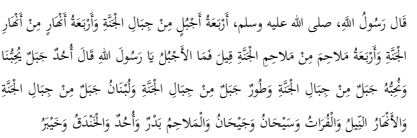
রাসূলুল্লাহ ﷺ বলেছেন: "জান্নাতের পাহাড়গুলোর মধ্য থেকে চারটি পাহাড়, জান্নাতের নদীগুলোর মধ্য থেকে চারটি নদী এবং জান্নাতের যুদ্ধগুলোর মধ্য থেকে চারটি ভয়াবহ মহাযুদ্ধ হবে।" জিজ্ঞেস করা হলো: "হে আল্লাহর রাসূল ﷺ, কোন পাহাড়গুলো?" তিনি বললেন: "উহুদ, যে পাহাড় আমাদেরকে ভালোবাসে এবং আমরাও তাকে ভালোবাসি, সেটি জান্নাতের পাহাড়গুলোর একটি। তূর একটি জান্নাতের পাহাড়। আর লুবনান জান্নাতের পাহাড়গুলোর মধ্যে একটি পাহাড়। আর নদীগুলো হলো নীল, ফুরাত, সাইহান (অক্সাস) ও জাইহান (জ্যাক্সার্টিস)। আর ভয়াবহ মহাযুদ্ধগুলো হলো বদর, উহুদ, খন্দক ও খাইবার।"
The Messenger of Allah (peace be upon him) said: “Four mountains are from the mountains of Jannah (paradise) and four rivers are from the rivers of paradise and four fierce great battles will be from the battles of paradise” It was asked: “Which mountains O Messenger of Allah?” He said: “Uhud, a mountain that loves us and we love it, is a mountain from the mountains of paradise, Tur is a mountain from the mountains of paradise and Lubnan is a mountain from among the mountains of paradise. And the rivers are the Nile, Euphrates, Saihan (Oxus) and Jaihan (Jaxartes), while the fierce great battles are Badr, Uhud, Khandaq and Khaibar”.
- মুহাম্মাদ ইবনু ‘আলী ইবনি মু‘আইম আল-বালাদী আমাদের নিকট বর্ণনা করেন, মুহাম্মাদ ইবনু ‘আবদিল্লাহ ইবনি ‘উমার থেকে, তিনি মা‘আফা ইবনি ‘ইমরান থেকে, তিনি কাসীর ইবনি ‘আবদিল্লাহ ইবনি ‘আমর থেকে, তিনি তাঁর পিতা থেকে, তিনি তাঁর দাদা থেকে যে, নবী ﷺ বলেছেন:
- Muhammad bin ‘Ali bin Mu’aim Al-Baladi related to us from Muhammad bin Abdullah bin ‘Umar, from Ma’afa bin ‘Imran, from Kathir bin Abdullah bin ‘Amr, from his father, from his grandfather: That the Prophet (peace be upon him) said:

“হে কুরাইশের সমাবেশ, আমার সাহাবীদের, তাদের সন্তানদের এবং তাদের সন্তানদের সন্তানদের ব্যাপারে আমাকে স্মরণ রেখো”।
“O gathering of the Quraish, keep me in mind in respect to my companions, their sons and the sons of their sons”.
- মুহাম্মাদ ইবনু রাবী' ইবনু সুলাইমান আল-জিযী আমাদের কাছে বর্ণনা করেছেন, আবূ উমাইয়াহ আত-তারসূসী থেকে, তিনি মু'আবিয়াহ ইবনু 'আমর থেকে, তিনি আবূ ইসহাক আল-ফাযারী থেকে, তিনি ইবনু কাসীর ইবনু আবদুল্লাহ থেকে, তিনি তাঁর পিতা থেকে, তিনি তাঁর দাদা থেকে, যিনি বলেছেন:
- Muhammad bin Rabi’ bin Sulaiman Al-Jiziy related to us from Abu Umayyah At-Tarsusiy, from Mu’awiyah bin ‘Amr, from Abu Ishaq Al- Fazariy, from Ibn Kathir bin Abdullah, from his father, from his grandfather, who said:

আল্লাহর রাসূল ﷺ বলেছেন: “লুণ্ঠন নেই, ছিনতাই নেই, এবং গনিমতের মাল থেকে চুরিও নেই; আর যে ব্যক্তি গনিমতের মাল থেকে চুরি করবে, সে কিয়ামতের দিন যা চুরি করেছে তা নিয়েই উপস্থিত হবে।”
The Messenger of Allah (peace be upon him) said: “There is no plundering, no looting and no stealing from the spoils and whoever steals from the spoils will come on the Day of Judgement with that which he stole”.
- মুহাম্মাদ বিন আহমাদ বিন আল-হুসাইন আল-আহওয়াযী আমাদের কাছে বর্ণনা করেছেন, তিনি বলেন: আমর বিন আলী থেকে, তিনি মুহাম্মাদ বিন খালিদ বিন আথমাহ থেকে, তিনি কাসীর বিন আব্দুল্লাহ আল-মুযানী থেকে, তিনি তাঁর পিতা থেকে, তিনি তাঁর দাদা থেকে, যিনি বলেছেন:
- Muhammad bin Ahmad Bin Al-Hussein Al-Ahwaziy related to us from ‘Amr bin ‘Ali, from Muhammad bin Khalid bin ‘Athmah, from Kathir bin Abdullah Al-Muzani, from his father, from his grandfather, who said:

রাসূলুল্লাহ ﷺ বলেছেন: "কিয়ামত ততক্ষণ পর্যন্ত আসবে না, যতক্ষণ না আল্লাহ কনস্টান্টিনোপল ও রোমকে তাসবীহ ও তাকবীরের সাথে বিজয় দান করেন।"
The Messenger of Allah (peace be upon him) said: “The final hour will not come until Allah conquers Constantinople and Rome accompanied by Tasbih and Takbir”.
আহমাদ ইবনু মুহাম্মাদ ইবনু আবদুল আযীয ইবনিল জা'দ আমাদের কাছে বর্ণনা করেছেন মুহাম্মাদ ইবনু ইসহাক আল-মাসীবী থেকে, তিনি আবদুল্লাহ ইবনু মুহাম্মাদ ইবনু সালম থেকে, তিনি আবদুর রহমান ইবনু ইবরাহীম থেকে, তিনি আবদুল্লাহ ইবনু নাফি' থেকে, তিনি কাসীর ইবনু আবদুল্লাহ থেকে, তিনি তাঁর পিতা থেকে, তিনি তাঁর দাদা থেকে, তিনি নবী ﷺ থেকে।
- Ahmad bin Muhammad bin Abdul ‘Aziz bin Al-Ja’d related to us from Muhammad bin Ishaq Al-Masibi, from Abdullah bin Muhammad bin Salm, from Abdur Rahman bin Ibrahim, from Abdullah bin Nafi’, from Kathir bin Abdullah, from his father, from his grandfather, from the Prophet (peace be upon him):

"যে ব্যক্তি যাকাত প্রদান করেছে, সে সফলকাম হয়েছে।" তিনি বললেন: যাকাতুল ফিতর।
“The one who gives Zakah has attained success” He said: Zakat ul-Fitr.
ইবনু সালম আমাদের কাছে বর্ণনা করেছেন, আবদুর রহমান থেকে, তিনি আবদুল্লাহ ইবনু নাফি' থেকে, তিনি কাসীর ইবনু আবদুল্লাহ থেকে, তিনি তাঁর পিতা থেকে, তিনি তাঁর দাদা থেকে, যে নবী ﷺ বলেছেন:
- Ibn Salm related to us from Abdur Rahman, from Abdullah bin Nafi’, from Kathir bin Abdullah, from his father , from his grandfather, that the Prophet (peace be upon him) said:

“আলিমের পদস্খলন থেকে সতর্ক থাকো এবং তার পুনরাবৃত্তির অপেক্ষা করো।” আহমাদ ইবনু হাফস আমাদের কাছে বর্ণনা করেছেন, আয-যুবাইর ইবনু বাক্কার থেকে, তিনি আবদুল্লাহ ইবনু নাফি' থেকে, উপরের মতোই। আহমাদ ইবনু 'আলী আল-মাদাইনী আমাদের কাছে বর্ণনা করেছেন, আহমাদ ইবনু মুহাম্মাদ আবু বাকর আল-খাতীবী থেকে, তিনি ইসহাক আল-জানবিয় থেকে, যিনি বলেছেন: কাসীর ইবনু আবদুল্লাহ আল-মুযানী তাঁর পিতা থেকে, তাঁর দাদা থেকে উল্লেখ করেছেন, যিনি বলেছেন: রাসূলুল্লাহ ﷺ বলেছেন: উপরের মতোই (অর্থাৎ “আলিমের পদস্খলন থেকে সতর্ক থাকো”)।
“Take guard from the slip or lapse of the ‘Aalim (scholar) and so await its recurrence”. Ahmad bin Hafs related to us from Az-Zubair bin Bakkar, from Abdullah bin Nafi’ the same as above. Ahmad bin ‘Ali Al-Mada’ini related to us, from Ahmad bin Muhammad Abu Bakr Al-Hatibi, from Ishaq Al-Janbiy who said: Kathir bin Abdullah Al-Muzani mentioned it from his father, from his grandfather, who said: The Messenger of Allah (peace be upon him) said: The same as above (i.e. “Take guard from the lapse of the ‘Aalim”).
আহমাদ ইবনু আলী আমাদের কাছে বর্ণনা করেছেন, মুহাম্মাদ ইবনু খুরাইম আল-কাযযায থেকে, তিনি হিশাম ইবনু খালিদ থেকে, তিনি মারওয়ান ইবনু মু‘আবিয়া থেকে, তিনি কাসীর ইবনু আবদুল্লাহ আল-মুযানী থেকে, তিনি তাঁর পিতা থেকে, তিনি তাঁর দাদা থেকে:
- Ahmad bin ‘Ali related to us from Muhammad bin Khuraim Al- Qazzaz, from Hisham bin Khalid, from Marwan bin Mu’awiyah, from Kathir bin Abdullah Al-Muzani, from his father, from his grandfather:

যে নবী (ﷺ) বিলাল ইবনুল হারিস-কে বললেন: “হে বিলাল, জেনে রাখো!” তিনি বললেন: “আমি প্রস্তুত আছি জানতে, হে আল্লাহর রাসূল!” তিনি (আবার) বললেন: “হে বিলাল, জেনে রাখো!” তিনি বললেন: “আমি প্রস্তুত আছি জানতে, হে আল্লাহর রাসূল!” তিনি বললেন: “হে বিলাল, জেনে রাখো যে, নিশ্চয়ই যে ব্যক্তি আমার সুন্নাহর মধ্য থেকে এমন কোনো সুন্নাহ পুনর্জীবিত করে, যা আমার পরে বিলুপ্ত হয়ে গেছে, তার জন্য রয়েছে সেই ব্যক্তির অনুরূপ প্রতিদান, যে এর উপর আমল করবে, তাদের প্রতিদান থেকে কোনো কিছু কমানো ছাড়াই। আর যে ব্যক্তি এমন কোনো ভ্রান্ত বিদআত প্রবর্তন করে, যাতে আল্লাহ সন্তুষ্ট নন এবং তাঁর রাসূলও নন, তবে তার উপর রয়েছে সেই ব্যক্তির অনুরূপ পাপ, যে এর উপর আমল করবে, তাদের পাপ থেকে কোনো কিছু কমানো ছাড়াই।”
“That the Prophet (peace be upon him) said to Bilal bin Al-Harith: “O Bilal, Know!”. He said: “I am ready to know O Messenger of Allah!” He said (again) “O Bilal, know!” He said: “I am ready to know O Messenger of Allah!” He said: “O Bilal, know that indeed whoever revives a Sunnah from my Sunnah which has died out after me, then for him is a reward similar to whoever acts upon it without diminishing anything from their rewards. And whoever introduces an erroneous innovation which Allah is not pleased with, nor His Messenger, then he shall receive sins similar to whoever acts upon it, without that diminishing anything from the sins of the people”.
- এই একই ইসনাদে তাঁর দাদা থেকে, যিনি বলেছেন:
- With the same Isnad from his grandfather, who said:

“আমি আল্লাহর রাসূল ﷺ থেকে দ্বীনের মূলনীতিসমূহের ১৬টি মূলনীতি মুখস্থ করেছি।” তিনি বলেন: আল্লাহর রাসূল ﷺ বলেছেন:
“I memorised from the Messenger of Allah (peace be upon him) 16 foundations from the foundations of the Deen”. He said: The Messenger of Allah (peace be upon him) said:

“কোনো পশুর (অর্থাৎ পশু কর্তৃক আক্রান্ত হওয়ার) কারণে কোনো দিয়ত (রক্তপণ) নেই, কূপের (অর্থাৎ কূপ-সংক্রান্ত দুর্ঘটনার) কারণেও কোনো দায় নেই, আর প্রোথিত ধন (রিকায)-এর ওপর এক-পঞ্চমাংশ (খুমুস) ওয়াজিব।”
“There is no liability (blood money) for beasts (i.e. from being attacked), there is no liability for wells (i.e. accidents related to them) and a fifth is due from the buried treasure (Rikaz)”.

তিনি বললেন: "জালাব নেই এবং জানাব নেই (অর্থাৎ যাকাত আদায়কারীর কাছে নেওয়ার জন্য পশুকে তার চারণভূমি থেকে সরিয়ে নেওয়া উচিত নয়), কোনো বাধা (তালাক্বী) নেই এবং শহরবাসীর (কোনো ব্যক্তির) পক্ষ থেকে গ্রামবাসীর পণ্য বিক্রি নেই।"
He said: “There is no Jalab and no Janab (meaning that animals should not be moved away from their place of grazing to the collector of Zakah), there is no obstruction and there is no trade of a townsperson
বেদুইনের জন্য। আর এতে কোনো অবৈধভাবে দখল নেওয়া, লুণ্ঠন, লুটতরাজ বা গনিমতের মাল থেকে চুরি নেই, আর যে গনিমতের মাল থেকে চুরি করবে, সে যা চুরি করেছে তা নিয়েই কিয়ামতের দিন উপস্থিত হবে।
for a Bedouin. And there is no unlawful taking of possession, no plundering, no looting and no stealing from the spoils and whoever steals from the spoils will come with that which he stole on the Day of Judgement”.

তিনি বললেন: “যে ব্যক্তি তার মাওয়ালী (মুক্তিদাতা প্রভু) ছাড়া অন্য কাউকে মাওলা হিসেবে গ্রহণ করে, তার উপর আল্লাহর লানত ও তাঁর ক্রোধ বর্ষিত হবে, এবং তার কোনো কিছুই কবুল করা হবে না।”
He said: “Whoever takes charge of a Mawla from other than his Mawali, then the curse of Allah and His anger will be upon him, and nothing will be accepted from him”.

তিনি বললেন: “যে ব্যক্তি কোনো অপরাধ করবে (অর্থাৎ অন্যের অধিকার লঙ্ঘন করবে বা অঙ্গীকার ভঙ্গ করবে), তার উপর আল্লাহর লানত ও তাঁর ক্রোধ বর্ষিত হবে, এবং তার কাছ থেকে কিছুই গ্রহণ করা হবে না।”
He said: “Whoever commits a crime (i.e. breaching the rights of others or the covenant), then the curse of Allah and His anger will be upon him, and nothing will be accepted from him”.
একই সনদে তাঁর দাদা থেকে বর্ণিত, তিনি বলেন: রাসূলুল্লাহ ﷺ বলেছেন:
- With the same Isnad from his grandfather, he said: The Messenger of Allah (peace be upon him) said:

মুসলিমরা তাদের শর্তাবলির উপর থাকে, তবে সেই শর্ত ছাড়া যা হালালকে (বৈধ) হারাম (অবৈধ) করে, অথবা যে শর্ত হারামকে (অবৈধ) হালাল (বৈধ) করে।
“The Muslims are upon their conditions apart from the condition which makes the Halal (lawful) Haram (unlawful) or a condition that makes the Haram (unlawful) Halal (lawful)”.
- আবদুল ওয়াহহাব ইবনু আবী উসমাহ আমাদের কাছে বর্ণনা করেছেন, ইসমাঈল ইবনু ইয়াযীদ আল-আসবাহানী থেকে, তিনি মা'ন ইবনু ঈসা থেকে, তিনি কাসীর ইবনু আবদুল্লাহ আল-মুযানী থেকে, তিনি তাঁর পিতা থেকে, তিনি তাঁর দাদা থেকে, যিনি বলেছেন:
- Abdul Wahhab bin Abu ‘Usmah related to us from Isma’il bin Yazid Al-Asbahani, from Ma’n bin ‘Eisa, from Kathir bin Abdullah Al- Muzani, from his father, from his grandfather who said:

আমি আল্লাহর রাসূল ﷺ-কে বলতে শুনেছি: “তিনি দাঁড়ালেন, আল্লাহর প্রশংসা ও মহিমা বর্ণনা করলেন। অতঃপর বললেন: হে লোকসকল, যারা হজ ও উমরা পালনকারী এবং যারা মরু প্রান্তরে ভ্রমণরত, তাদের মধ্যে যারা (এমন জায়গায় আছে) তারা পানি ও ছায়ার বেশি হকদার; অতএব ভূমিতে (অর্থাৎ ভূমির উপর প্রবেশাধিকারে) মানুষকে বাধা দিয়ো না।”
I heard the Messenger of Allah (peace be upon him): “He stood, praised Allah and extolled Him. He then said: O people, whoever from those undertaking Hajj and ‘Umrah and those who are travelling are upon deserted land have more right to water and shade and so do not prevent the people from the land (i.e. access)”.
এরপর এই মুদ্রিত সংস্করণে কিছু সংখ্যক অসংলগ্ন হাদীস এসেছে, যেগুলোর কাসীর ইবনে আবদুল্লাহর সঙ্গে আদৌ কোনো সম্পর্ক নেই। মনে হয়, ভুলের উৎস পাণ্ডুলিপি নিজেই, এবং অন্যান্য পাণ্ডুলিপি পাওয়া গেলে সেগুলো সংশোধন করে এর সঙ্গে তুলনা করা যেতে পারে... (সেই অসম্পর্কিত হাদীসগুলোর উল্লেখের পর ইবনে আদী বলেন):
Following this, there came, in this printed edition, a number of unconnected Ahadeeth which had no relationship with Kathir bin Abdullah at all. It appears that the origin of the error is the manuscript itself and other manuscripts can be revised and compared to this one if they can be found … (Following the mention of those unrelated Ahadeeth Ibn Adiy continues):
- তিনি (ইবনু 'আদিয়) বলেন: আহমাদ ইবনু হাফস আস-সা'দিয়ী আমাদের কাছে বর্ণনা করেছেন, তিনি আহমাদ ইবনু ইবরাহীম আদ-দুরাকী থেকে, তিনি আবদুল্লাহ ইবনু নাফি' থেকে, তিনি কাসীর ইবনু আবদুল্লাহ আল-মুযানী থেকে, তিনি তাঁর পিতা থেকে, তিনি তাঁর দাদা থেকে, যিনি বলেন:
- He (Ibn ‘Adiy) said: Ahmad bin Hafs As-Sa’diy related to us from Ahmad bin Ibrahim Ad-Duraqiy, from Abdullah bin Nafi’, from Kathir bin Abdullah Al-Muzani, from his father, from his grandfather, who said:

রাসূলুল্লাহ ﷺ বলেছেন: “ওই আবিসিনীয়দের তাদের অবস্থায় ছেড়ে দাও, যতক্ষণ তারা তোমাদের ছেড়ে থাকে।”
The Messenger of Allah (peace be upon him) said: “Leave be those Abyssinians as long as they leave you be”.
মুহাম্মাদ বিন আল-হাসান আল-বাসরি বর্ণনা করেন মুহাম্মাদ বিন বাক্কার আল-আইশি থেকে, তিনি মুহাম্মাদ বিন ইসমাঈল বিন আবু ফাদাইক থেকে, তিনি কাসীর বিন আবদুল্লাহ আল-মুযানি থেকে, তিনি তাঁর পিতা থেকে, তিনি তাঁর দাদা থেকে, যিনি বলেছেন:
- Muhammad bin Al-Hasan Al-Basriy related from Muhammad bin Bakkar Al-‘Aishi, from Muhammad bin Isma’il bin Abu Fadaik, from Kathir bin Abdullah Al-Muzani, from his father, from his grandfather, who said:

নবী ﷺ একজন লোককে এটিকে সবুজ (সতেজ) বলতে শুনলেন, তখন তিনি বললেন: "আমরা তোমার সেবায় উপস্থিত। আমরা গ্রহণ করেছি, আর তুমি যা তোমাদের মধ্যে আছে তা থেকে (গ্রহণ করেছ)।"
“The Prophet (peace be upon him) heard a man calling it green (luscious) and so he said: We are at your service. We have taken and you have from what is among you” .
মুহাম্মাদ বিন আল-হাসান আল-বাসরিয়্যি বর্ণনা করেছেন আল-আব্বাস বিন আব্দুল আযীম থেকে, তিনি আব্দুল্লাহ বিন জা'ফর বিন আবু কাসীর আল-আনসারী থেকে, তিনি কাসীর বিন আব্দুল্লাহ বিন 'আমর বিন 'আউফ আল-মুযানী থেকে, তিনি তাঁর পিতা থেকে, তিনি তাঁর দাদা থেকে, তিনি বিলাল বিন আল-হারিস আল-মুযানী থেকে:
- Muhammad bin Al-Hasan Al-Basriy related from Al-‘Abbas bin Abdul ‘Azhim, from Abdullah bin Ja’far bin Abu Kathir Al-Ansari, from Kathir bin Abdullah bin ‘Amr bin ‘Awf Al-Muzani, from his father, from his grandfather, from Bilal bin Al-Harith Al-Muzani:

যখন নবী (ﷺ) প্রস্রাব বা পায়খানার প্রয়োজনে যেতেন, তখন তিনি বেশ দূরে সরে যেতেন।
“That when the Prophet (peace be upon him) wanted to relive himself, he would move away at a distance”.
- আবদুল্লাহ বিন আবদুল হামিদ আল-ওয়াসিতি বর্ণনা করেছেন আন-নাদর বিন সালামাহ থেকে, তিনি আবু উজ্জিয়্যাহ মুহাম্মাদ বিন মূসা আল-আনসারি থেকে, যিনি মদিনার কাযী (বিচারক) ছিলেন, তিনি কাসির বিন আবদুল্লাহ থেকে, তিনি তাঁর পিতা থেকে, তিনি তাঁর দাদা 'আমর বিন 'আওফ থেকে, যিনি বলেছেন:
- Abdullah bin Abdul Hamid Al-Wasitiy related from An-Nadr bin Salamah, from Abu ‘Uziyyah Muhammad bin Musa Al-Ansari, the Qadi (Judge) of Al-Madinah, from Kathir bin Abdullah, from his father, from his grandfather ‘Amr bin ‘Awf, who said:

“আমি আল্লাহর রাসূল ﷺ-কে মাকামের উপর দাঁড়িয়ে থাকতে দেখেছি, আর তিনি বলছিলেন: হে লোকসকল, এই কিবলা, এটি মসজিদের কিবলা, আর মসজিদ হলো দুনিয়ার কিবলা।”
“I saw the Messenger of Allah (peace be upon him) standing upon the Maqam and he was saying: O people, this Qiblah, it is the Qiblah of the Masjid and the Masjid is the Qiblah of the Dunyaa (world)”.
- মুহাম্মাদ ইবনু ইউসুফ ইবনি ‘আসিম আল-বুখারী আমাদের কাছে বর্ণনা করেছেন আহমাদ ইবনু ইসমাঈল আল-কুরাশী থেকে, তিনি আব্দুল্লাহ ইবনু নাফি‘ থেকে, তিনি কাসীর ইবনু আব্দুল্লাহ থেকে, তিনি তাঁর পিতা থেকে, তিনি তাঁর দাদা থেকে:
- Muhammad bin Yusuf bin ‘Asim Al-Bukhari related to us from Ahmad bin Isma’il Al-Qurashi, from Abdullah bin Nafi’, from Kathir bin Abdullah, from his father, from his grandfather:

রাসূলুল্লাহ ﷺ মসজিদে ছিলেন। তিনি তাঁর পেছনে কথা বলার শব্দ শুনতে পেলেন, আর যে ব্যক্তি কথা বলছিল সে বলছিল: “হে আল্লাহ, আমাকে এমন বিষয়ের মাধ্যমে সাহায্য করুন যা আমাকে সেই বিষয় থেকে রক্ষা করবে যার ভয় আপনি আমার মধ্যে সৃষ্টি করেছেন।” তখন রাসূলুল্লাহ ﷺ এটি শুনে বললেন: “তুমি কি এর সাথে এর সহোদরটিও যুক্ত করবে না?” লোকটি তখন বলল: “হে আল্লাহ, আপনি সত্যবাদীদের জন্য যে বিষয়কে প্রিয় করেছেন, সেই বিষয়ের আকাঙ্ক্ষা আমাকে দান করুন।” রাসূলুল্লাহ ﷺ তখন তাঁর সঙ্গে উপস্থিত আনাস ইবনু মালিককে বললেন: “হে আনাস, তার কাছে যাও এবং তাকে বলো, রাসূলুল্লাহ ﷺ তোমাকে বলছেন: ‘আমার জন্য ক্ষমা প্রার্থনা করো।’” অতঃপর আনাস তার কাছে গিয়ে বিষয়টি তাকে জানালেন। লোকটি বলল: “হে আনাস, তুমি কি আমার কাছে রাসূলুল্লাহ ﷺ-এর দূত?” তিনি উত্তর দিলেন: “তুমি যেমন (আমাকে দেখছ), আমিও তেমনই।” লোকটি তা যাচাই করার জন্য ফিরে এল। তখন রাসূলুল্লাহ ﷺ বললেন: “তাকে বলো, হ্যাঁ।” অতঃপর লোকটি (আনাসকে) বলল: “যাও, তাকে বলো যে, আল্লাহ তোমাকে নবীদের উপর মর্যাদা দিয়েছেন, যেমনভাবে তিনি রমাদান মাসকে অন্যান্য মাসের উপর মর্যাদা দিয়েছেন, আর তিনি তোমার উম্মতকে অন্যান্য জাতির উপর মর্যাদা দিয়েছেন, যেমনভাবে তিনি জুমু‘আর দিনকে অন্যান্য সব দিনের উপর মর্যাদা দিয়েছেন।” তারা খুঁজতে গেল, আর দেখা গেল সে ছিল খিযির, আলাইহিস সালাম।
“That the Messenger of Allah (peace be upon him) was in the Masjid. He heard speech behind him and the one saying it was saying: “O Allah assist me with which will save me from that which you have made me fearful of”. So, the Messenger of Allah (peace be upon him) said when he heard that: “Will you not include its sister alongside it?” The man then said: “O Allah bestow upon me the longing of the truthful to that which you have made desirable for them”. The Messenger of Allah (peace be upon him) then said to Anas bin Malik who was in his company: “Go to him O Anas and say to him that the Messenger of Allah (peace be upon him) says to you: “Seek forgiveness for me”. So, Anas went to him and conveyed that to him. The man then said: “O Anas, you are the messenger of the Messenger of Allah (peace be upon him), to me. He replied: “Just as you are”. He returned to verify it. The Messenger of Allah (peace be upon him) then said: “Say to him yes”. So, he (the man) said to him: “Go and say to him that Allah has favoured you over the Prophets like He has favoured the month of Ramadan over other months and that He has favoured your Ummah (nation) over the nations like He has favoured the day of Jumu’ah over all of the other days”. They went looking and behold it was Khadir, peace be upon him”.
আহমদ ইবনে জা'ফর আমাদের কাছে বর্ণনা করেছেন ইয়াকূব ইবনে ইবরাহীম আদ-দুরাকী থেকে, তিনি ইবরাহীম ইবনে আবদুল্লাহ আর-রিফাঈ থেকে, তিনি কাসীর ইবনে আবদুল্লাহ থেকে, তিনি তাঁর পিতা থেকে, তিনি তাঁর দাদা থেকে:
- Ahmad bin Ja’far related to us from Ya’qub bin Ibrahim Ad-Duraqi, from Ibrahim bin Abdullah Ar-Rafa’iy, from Kathir bin Abdullah, from his father, from his grandfather:

“নিশ্চয়ই আল্লাহর রাসূল ﷺ নাজাশী (আবিসিনিয়ার বাদশাহ) এর জানাযার সালাত আদায় করেছিলেন এবং পাঁচ তাকবীর দিয়েছিলেন।”
“That the Messenger of Allah (peace be upon him) prayed over the Najashi (Negus of Abyssinia) and did five Takbirs”.
"ইমরান ইবনে মূসা আমাদের কাছে বর্ণনা করেছেন, তিনি ইবরাহীম ইবনে আল-মুনযির থেকে, তিনি আবূ আল-জা'দ আব্দুর রহমান ইবনে আব্দুল্লাহ আস-সালমী থেকে, তিনি কাসীর ইবনে আব্দুল্লাহ আল-মুযানী থেকে, তিনি তাঁর পিতা থেকে, তিনি তাঁর দাদা থেকে, যিনি বলেছেন:"
- ‘Imran bin Musa related to us from Ibrahim bin Al-Mundhir, from Abu Al-Ja’d Abdur Rahman bin Abdullah As-Salmiy, from Kathir bin Abdullah Al-Muzani, from his father, from his grandfather, who said:

আল্লাহর রাসূল ﷺ বলেছেন: “ঘোড়াকে তার পানি পানের দিনে (সওয়াবের জন্য) পেশ করা হয়।”
“The Messenger of Allah (peace be upon him) said: “the horse is offered the day of its watering”.
এখনও কাছির ইবনু আবদুল্লাহ তাঁর পিতা থেকে, তাঁর পিতামহ থেকে বর্ণিত কিছু হাদীস অবশিষ্ট রয়েছে, যেগুলো আমি উল্লেখ করেছি। তাঁর বর্ণিত অধিকাংশ হাদীসের সমর্থনকারী কোনো বর্ণনা নেই (অর্থাৎ এসব হাদীস বর্ণনায় তিনি একক)। - বাহলূল ইবনু ইসহাক আমাদের কাছে বর্ণনা করেছেন, তিনি ইসমাঈল ইবনু আবী উওয়াইস থেকে, তিনি কাছির ইবনু আবদুল্লাহ আল-মুযানী থেকে, তিনি রুবাইহ ইবনু আবদুর রহমান ইবনু আবী সাঈদ আল-খুদরী থেকে, তিনি তাঁর পিতা থেকে, তিনি তাঁর পিতামহ থেকে, যিনি বলেছেন:
There are still a small number of Ahadeeth related by Kathir bin Abdullah from his father, from his grandfather remaining and most of his Ahadeeth which I mentioned and most of what he related, does not have that which conforms (or supports) them (i.e. he is alone in narrating them). - Bahlul bin Ishaq related to us from Isma’il bin Abu Uwais, from Kathir bin Abdullah Al-Muzani, from Rubaih bin Abdur Rahman bin Abu Sa’id Al-Kudri, from his father, from his grandfather, who said:

“আমি আরবদের মধ্য থেকে (অর্থাৎ বেদুইনদের) কিছু লোককে আল্লাহর রাসূল ﷺ-এর কাছে আসতে দেখেছি। তারা বলল: ‘হে আল্লাহর রাসূল ﷺ, আমরা পশুপালের মালিক, আমরা তা থেকে আমাদের সাদাকাহ (অর্থাৎ যাকাত) বের করি। তাহলে কি তা আমাদের জন্য রমযানের যাকাতেরও যথেষ্ট হবে?’ আল্লাহর রাসূল ﷺ বললেন: ‘না, তা শিশু ও প্রাপ্তবয়স্ক, স্বাধীন ও দাস সবার পক্ষ থেকে নেওয়া হয়। এটি তোমাদের জন্য পবিত্রতা’। আবু সাঈদ আল-খুদরী বলেন: আমি এমন একটি বছর দেখেছি যখন পশুর সংখ্যা প্রচুর ছিল এবং সাদা ফসলের পরিমাণ কালো ফসলের চেয়ে বেশি হ্রাস পেয়েছিল। এরপর আমি পরের বছর দেখেছি যে ফসল প্রচুর ছিল এবং কালো পশুর সংখ্যা সাদা পশুর চেয়ে বেশি হ্রাস পেয়েছিল। রুবাইহ থেকে এই হাদীসটি কাসীর ইবনু আবদুল্লাহ ছাড়া আর কাউকে বর্ণনা করতে আমি জানি না— [ইবনু ‘আদী-এর উদ্ধৃতি শেষ]।”
“I saw men from the Arabs (i.e. Bedouins) approaching the Messenger of Allah (peace be upon him). They said: “O Messenger of Allah, we are people possessing livestock and we take out from them our Sadaqah (i.e. Zakat) and so does that also cover for us the Zakat of Ramadan?” The Messenger of Allah (peace be upon him) said: “No, it is taken from the child and the adult, from the free and the slave. It is a purification for you”. Abu Sa’id Al-Khudri said: I saw in the year that the herds were plentiful and that the white crops diminished more than the black. I then saw in the year following that the crops were plentiful and that the black herds were diminished more than the white”. I do not know anyone relating this Hadith from Rubaih apart from Kathir bin Abdullah] [End of quote of Ibn ‘Adiy].
ইবনু ‘আদিয়ের এই উক্তির ব্যাপারে—“কাসীর ইবনু আবদুল্লাহ তাঁর পিতা থেকে, তিনি তাঁর দাদা থেকে যে কয়টি হাদীস বর্ণনা করেছেন, তার কিছু অবশিষ্ট আছে, আর আমি যেগুলো উল্লেখ করেছি এবং তিনি যা বর্ণনা করেছেন তার অধিকাংশ হাদীসের এমন কোনো সমর্থক নেই (অর্থাৎ তিনি সেগুলো বর্ণনায় একাই)”—এ বক্তব্যটি দুর্বলতা বা অবিশ্বস্ততা ঘোষণা করার অর্থ বহন করে না। কারণ, শুধু হাদীস বর্ণনায় একা হওয়া, “তিনি যা বর্ণনা করেছেন তার অধিকাংশের কোনো সমর্থক নেই”, বিশেষত সাহাবীদের বিখ্যাত নাতিদের ক্ষেত্রে (যেমন বাহয ইবনু হাকীম), দুর্বলতা বা অবিশ্বস্ততা নির্ধারণ করে না। যেন ইবনু ‘আদিয়ে নিরাপদ থাকতে চেয়েছেন এবং লোকটির ব্যাপারে রায় প্রদান থেকে বিরত থেকেছেন। কারণ, তিনি যখন কোনো রাবীর দুর্বলতা বা ত্রুটি প্রকাশ করতে চান, তখন সাধারণত বলেন: “তার হাদীসে দুর্বলতা স্পষ্ট” বা এর অনুরূপ কথা। আর যখন কোনো রাবীর নির্ভরযোগ্যতা ও সুদৃঢ়তা ঘোষণা করতে চান, তখন বলেন: “তার ব্যাপারে আমি কোনো মুনকার (প্রত্যাখ্যাত) বর্ণনা পাইনি” বা “যদি কোনো সিকাহ (নির্ভরযোগ্য ও বিশ্বস্ত) রাবী তার থেকে বর্ণনা করে থাকেন, তবে তার কোনো মুনকার পাইনি”। স্পষ্ট যে, ইমাম বুখারী থেকে তাঁর কাছে যা পৌঁছেছে, তা ছাড়া কিছুই পৌঁছায়নি, অর্থাৎ তাঁর শাইখ ইসমা‘ঈল ইবনু আবী উওয়াইস তাঁর কাছে বর্ণনা করেছেন: “আমি কাসীর ইবনু আবদুল্লাহ ইবনু ‘আমর ইবনু ‘আওফ ইবনু ইয়াযীদ ইবনু মিলহা আল-মুযানী থেকে ১৫৮ সালে, তারপর ১৬১ বা ১৬২ সালে শুনেছি (বা তাঁর থেকে গ্রহণ করেছি)।”
I say: Concerning the statement of Ibn ‘Adiy: “There are still a small number of Ahadeeth related by Kathir bin Abdullah from his father, from his grandfather remaining and most of his Ahadeeth which I mentioned and most of what he related, does not have that which conforms (or supports) them (i.e. he is alone in narrating them)”, then this does not mean the declaration of unreliability or classification of weakness. That is because the mere being alone in relating Ahadeeth “most of what he related, does not have that which conforms (or supports) them”, especially in respect to the one who is from the infamous grandchildren of the Sahabah (like the case of Bahz bin Hakim for instance), does not dictate weakness or unreliability. It is as if Ibn ‘Adiy preferred to remain safe and chose to escape from issuing a verdict upon the man. That is because when he wants to express the unreliability or defectiveness of a man, he usually states: “And the weakness is evident in his Hadith” or words which are similar to that. That is whilst if he wants to declare the reliability and soundness of a narrator he says: “I did not find anything Munkar (rejectable) in relation to him” or “I did not find anything Munkar of his if a Thiqah (reliable and trustworthy narrator) related from him”. It is apparent that nothing reached him from Al-Bukhari apart from what his Sheikh Isma’il bin Abu Uwais related to him: “I heard (or received from) Kathir bin Abdullah bin ‘Amr bin ‘Awf bin Yazid bin Milhah Al-Muzani in the year 158 then the year 161 or 162”.


রাসূলুল্লাহ ﷺ মসজিদে ছিলেন। তিনি তাঁর পেছনে কথা বলার শব্দ শুনতে পেলেন, আর যে ব্যক্তি কথা বলছিল সে বলছিল: “হে আল্লাহ, আমাকে এমন বিষয়ের মাধ্যমে সাহায্য করুন যা আমাকে সেই বিষয় থেকে রক্ষা করবে যার ভয় আপনি আমার মধ্যে সৃষ্টি করেছেন।” তখন রাসূলুল্লাহ ﷺ এটি শুনে বললেন: “তুমি কি এর সাথে এর সহোদরটিও যুক্ত করবে না?” লোকটি তখন বলল: “হে আল্লাহ, আপনি সত্যবাদীদের জন্য যে বিষয়কে প্রিয় করেছেন, সেই বিষয়ের আকাঙ্ক্ষা আমাকে দান করুন।” রাসূলুল্লাহ ﷺ তখন তাঁর সঙ্গে উপস্থিত আনাস ইবনু মালিককে বললেন: “হে আনাস, তার কাছে যাও এবং তাকে বলো, রাসূলুল্লাহ ﷺ তোমাকে বলছেন: ‘আমার জন্য ক্ষমা প্রার্থনা করো।’” অতঃপর আনাস তার কাছে গিয়ে বিষয়টি তাকে জানালেন। লোকটি বলল: “হে আনাস, তুমি কি আমার কাছে রাসূলুল্লাহ ﷺ-এর দূত?” তিনি উত্তর দিলেন: “তুমি যেমন (আমাকে দেখছ), আমিও তেমনই।” লোকটি তা যাচাই করার জন্য ফিরে এল। তখন রাসূলুল্লাহ ﷺ বললেন: “তাকে বলো, হ্যাঁ।” অতঃপর লোকটি (আনাসকে) বলল: “যাও, তাকে বলো যে, আল্লাহ তোমাকে নবীদের উপর মর্যাদা দিয়েছেন, যেমনভাবে তিনি রমাদান মাসকে অন্যান্য মাসের উপর মর্যাদা দিয়েছেন, আর তিনি তোমার উম্মতকে অন্যান্য জাতির উপর মর্যাদা দিয়েছেন, যেমনভাবে তিনি জুমু‘আর দিনকে অন্যান্য সব দিনের উপর মর্যাদা দিয়েছেন।” তারা খুঁজতে গেল, আর দেখা গেল সে ছিল খিযির, আলাইহিস সালাম।
“That the Messenger of Allah (peace be upon him) was in the Masjid. He heard speech behind him and the one saying it was saying: “O Allah assist me with which will save me from that which you have made me fearful of”. So, the Messenger of Allah (peace be upon him) said when he heard that: “Will you not include its sister alongside it?” The man then said: “O Allah bestow upon me the longing of the truthful to that which you have made desirable for them”. The Messenger of Allah (peace be upon him) then said to Anas bin Malik who was in his company: “Go to him O Anas and say to him that the Messenger of Allah (peace be upon him) says to you: “Seek forgiveness for me”. So, Anas went to him and conveyed that to him. The man then said: “O Anas, you are the messenger of the Messenger of Allah (peace be upon him), to me. He replied: “Just as you are”. He returned to verify it. The Messenger of Allah (peace be upon him) then said: “Say to him yes”. So, he (the man) said to him: “Go and say to him that Allah has favoured you over the Prophets like He has favoured the month of Ramadan over other months and that He has favoured your Ummah (nation) over the nations like He has favoured the day of Jumu’ah over all of the other days”. They went looking and behold it was Khadir, peace be upon him”.
আমরা এই হাদীসটি সম্ভাব্য সব জায়গায় খুঁজে দেখেছি, কিন্তু ইমাম ইবনু ‘আদিয়্যের এই সূত্র ছাড়া তা খুঁজে পাইনি। “Unais As-Saari Fee Takhrij Ahadeeth Fat’h ul-Baari” (9/6578/4610) গ্রন্থেও হাদীসটি তাঁর দিকেই সম্বন্ধিত করা হয়েছে।
We searched for this narration in every conceivable place but we were unable to find it except from this path of Imam Ibn ‘Adiy. The narration is also attributed to him in the book “Unais As-Saari Fee Takhrij Ahadeeth Fat’h ul-Baari” (9/6578/4610):

‘আমর ইবনে ‘আওফ থেকে বর্ণিত: “নবী (ﷺ) মসজিদে থাকাকালে একটি কথা শুনতে পেলেন, অতঃপর বললেন: ‘হে আনাস, যে ব্যক্তি এ কথা বলেছে তার কাছে যাও এবং তাকে বলো, সে যেন আমার জন্য ক্ষমা প্রার্থনা করে।’ আনাস লোকটির কাছে গেলেন। লোকটি তাঁকে বলল: ‘(নবী ﷺ-কে) বলো, নিশ্চয়ই আল্লাহ তাঁকে নবীদের উপর এমন বিষয়ে মর্যাদা দিয়েছেন, যেমন তিনি রমজান মাসকে অবশিষ্ট মাসসমূহের উপর মর্যাদা দিয়েছেন।’ তিনি বলেন: তারপর তারা দেখতে গেল, আর দেখা গেল সেটি ছিল খাযির।” আল-হাফিয (ইবনে হাজার) বলেন: “এটি একটি দুর্বল হাদীস, যা ইবনে ‘আদিয়় কাছীর ইবনে ‘আমর ইবনে ‘আওফের সূত্রে, তাঁর পিতা থেকে, তাঁর দাদা থেকে বর্ণনা করেছেন, এবং এর সনদ (বর্ণনাসূত্র) দুর্বল।” ইবনে ‘আসাকির আনাসের হাদীস থেকে এর অনুরূপ বর্ণনা করেছেন, যার সনদ এর চেয়েও দুর্বল।” (৭/২৪৫ – কিতাবুল আহাদীসিল আম্বিয়া – অধ্যায়: মূসা (আ.)-এর সঙ্গে খাযিরের হাদীস) এটি অত্যন্ত দুর্বল। তিনি এটি ‘আমর ইবনে ‘আওফের হাদীস ও আনাসের হাদীস থেকে বর্ণনা করেছেন। ‘আমর ইবনে ‘আওফের হাদীসের ক্ষেত্রে ইবনে ‘আদিয় (৬/২০৮৩) এটি আবদুল্লাহ ইবনে নাফি’ আস-সা’ইগের সূত্রে, কাছীর ইবনে আবদুল্লাহ থেকে, তাঁর পিতা থেকে, তাঁর দাদা থেকে বর্ণনা করেছেন: “রাসূলুল্লাহ (ﷺ) মসজিদে ছিলেন, অতঃপর তিনি একটি কথা শুনতে পেলেন… ইত্যাদি…।”
[‘Amr bin ‘Awf related: “That the Prophet (peace be upon him) heard speech whilst he was in the Masjid and then said: “O Anas, go to the one who said that and ask him to seek forgiveness for me”. Anas went to the man and he (the man) said to him: “Say (to him i.e. the Prophet) that verily Allah has favoured you over the Prophets by that which he has favoured Ramadan over the remaining months”. He said: They then went to see and behold it was Khadir”. Al-Hafizh (Ibn Hajar) said: “It is a weak Hadith which Ibn ‘Adiy extracted via the path of Kathir bin ‘Amr bin ‘Awf, from his father, from his grandfather, and it is a weak Isnad (chain of transmission)”. Ibn ‘Asakir related similar to it from the Hadith of Anas, with a chain of transmission which is weaker than it” (7/245 – The book of the Ahadeeth of the Prophets – Chapter: The Hadith of Al-Khadir with Musa, peace be upon him). It is very weak. He related from the Hadith of ‘Amr bin ‘Awf and the Hadith of Anas. As for the Hsdith of ‘Amr bin ‘Awf, then Ibn ‘Adiy extracted it (6/2083) via the path of Abdullah bin Nafi’ As-Sa’igh from Kathir bin Abdullah, from his father, from his grandfather: “That the Messenger of Allah (peace be upon him) was in the Masjid and then he heard speech … etc …].
এ থেকে দেখা যায়, আল-হাফিয (ইবনু হাজার) বর্ণনাটিকে কাসির ইবনু আবদুল্লাহ-র দিকে সম্বন্ধিত করেছেন, আর “উনাইস আস-সারি” গ্রন্থের লেখক আবু হুযাইফাহ নাবিল ইবনু মানসুর ইবনু ইয়াকূব ইবনু সুলতান আল-বিসারাহ আল-কুওয়াইতি বর্ণনাটিকে আবদুল্লাহ ইবনু নাফি‘ আস-সা’ইগ-এর দিকে, তিনি কাসির ইবনু আবদুল্লাহ থেকে, এভাবে সম্বন্ধিত করেছেন। তবে তাঁদের উভয়ের মধ্যেই এ বিষয়ে একটি জঘন্য ত্রুটি রয়েছে।
As can be seen, Al-Hafizh (Ibn Hajar) attributed the narration to Kathir bin Abdullah whilst Abu Hudhaifah Nabil bin Mansur bin Ya’qub bin Sultan Al-Bisarah Al-Kuwitiy, the author of “Unais As- Saari”, attributed it to Abdullah bin Nafi’ As-Sa’igh from Kathir bin Abdullah. However, both of them are guilty of an obscene shortcoming in respect to this.

নিশ্চয়ই আল্লাহর রাসূল ﷺ বলেছেন: “দ্বীন হিজাযের দিকে ফিরে যাবে, যেমন সাপ তার গর্তের দিকে ফিরে যায়, আর দ্বীন হিজাযে আশ্রয় নেবে, যেমন পাহাড়ি ছাগল পর্বতচূড়ায় আশ্রয় নেয়। দ্বীন শুরু হয়েছিল অপরিচিত অবস্থায়, আর অপরিচিত অবস্থাতেই ফিরে আসবে। সৌভাগ্যবান সেই অপরিচিতরা, যারা আমার সুন্নাহ থেকে সেই বিষয়গুলো সংশোধন করবে, যা আমার পরের মানুষেরা বিকৃত করেছে।”
That the Messenger of Allah (peace be upon him) said: “Verily, the Deen will retreat back to the Hijaz as a snake retreats back to its hole, and the Deen will seek refuge in the Hijaz as the mountain goat seeks refuge in the mountain top. The Deen began as something strange and will return as something strange. Blessed are the strangers; those who will rectify what the people after me have corrupted from my Sunnah”.
কেউ কেউ কাসীর সম্পর্কে কথা বলেছেন; তিনি যদি তাঁর সম্পর্কে নীরব থাকতেন, তবে তা অধিক উপকারী হতো। নিশ্চয়ই কেবল অজ্ঞ লোকেরাই তাঁর সম্পর্কে এবং তাঁর উদ্দেশ্য (বা সম্পর্ক) নিয়ে কথা বলেছে। আমি ইবনু উওয়াইসকে বলতে শুনেছি: মালিক আমাকে তাঁর হাদীস সম্পর্কে জিজ্ঞাসা করেছিলেন, এবং ইয়াহইয়া ইবনু সাঈদ আল-আনসারী তাঁর থেকে বর্ণনা করেছেন। আমার কোনো সন্দেহ নেই যে আমি ইবরাহীম ইবনুল মুনযির থেকে শুনেছি (আর যদি আমি তাঁর কাছ থেকে না শুনে থাকি, তবে একজন নির্ভরযোগ্য ব্যক্তি আমাকে তা বর্ণনা করেছেন) যে তিনি বলেছেন: “কাসীর দাবি করতেন যে নবী ﷺ তাঁর দাদাকে কিছু জমি দান করেছিলেন, এবং তিনি সেই এলাকার লোকদের সঙ্গে এ নিয়ে বিবাদ করতেন। তিনি অনেক ঝগড়া করতেন। তিনি ঝগড়া করার জন্য ইবনু ‘ইমরানের কাছে গেলেন, তখন ‘ইমরান তাঁকে বললেন: “হে কাসীর, নিশ্চয়ই তুমি এমন অলস লোক যে, যা তুমি জানো না সে বিষয়ে অনেক ঝগড়া করো; তুমি এমন জিনিস দাবি করো যা তোমার নয়, আর তুমি যা দাবি করো তার পক্ষে তোমার কোনো প্রমাণ নেই। সুতরাং আমার কাছে এসো না, এবং যতক্ষণ না তুমি দেখো যে আমি মিথ্যাবাদীদের জন্য আমার সময় ফাঁকা করেছি, ততক্ষণ আমি তোমাকে আমার কাছে আসতে দেব না। যদি তুমি সেটা দেখো, তবে এসো।” একদিন ইবনু ‘ইমরান আমাদের সঙ্গে ছিলেন, আর তখন হঠাৎ কাসীর ইবনু আবদুল্লাহ তাঁর কাছে এলেন। তিনি (ইবনু ‘ইমরান) বললেন: “আমি কি তোমাকে বলিনি যে, আমি মিথ্যাবাদীদের জন্য সময় ফাঁকা করেছি দেখলে ছাড়া আমার কাছে এসো না?” কাসীর তখন উত্তর দিলেন: “আপনি সত্য বলেছেন, আল্লাহ কাযীর কাজ সুন্দর করুন। নিশ্চয়ই আমি আপনার কাছে তখনই এসেছি যখন মিথ্যাবাদীরা আপনার কাছে এসেছে। অমুক ও অমুক ব্যক্তি আপনার কাছে এসেছে। তারা দুজনেই মিথ্যাবাদী, তাই আমি তাদের দুজনের সঙ্গে এসেছি।” এটি ছিল ইবনু ‘ইমরানের নির্দেশেই তাঁর প্রতি। আবু ইউসুফ বলেন: “তিনি আদেশ করেছিলেন যে, বিচারিক কার্যক্রম থেকে উঠে না যাওয়া পর্যন্ত সে স্তম্ভের সঙ্গে লেগে থাকবে।” আবু ইউসুফ বলেন: “তারা ইবনু ‘ইমরানের অনুগতদের অন্তর্ভুক্ত ছিল।” এটি “আশ-শামেলা লিল-মা‘রিফাহ ওয়া আত-তারীখ” গ্রন্থের প্রতিলিপিতেও লিপিবদ্ধ হয়েছে (পৃ. ৬২ – শামেলা ই-লাইব্রেরির গণনা অনুযায়ী)।
Some have spoken about Kathir who had they been silent about him it would have been more beneficial. Indeed, only the ignorant have spoken about him and his motives (or relations). I heard Ibn Uwais saying: Malik asked me about his Hadith and Yahya bin Sa’id Al-Ansari related from him. I have no doubt that I heard Ibrahim bin Al- Mundhir (And if I didn’t hear it from him, then a Thiqah related it to me) that he said: “Kathir used to claim that the Prophet (peace be upon him) had granted his grandfather land and he used to dispute with those in that area. He used to quarrel a lot. He went to Ibn ‘Imran to quarrel and so ‘Imran said to him: “O Kathir, indeed you are an idle man who quarrels a lot in respect to that which you don’t know, you claim that which does not belong to you and you have no evidence from what you demand. So, don’t approach me and I will not let me see you unless you see that I have freed my time for the people of falsehood. If you see that, then come”. One day Ibn ‘Imran was with us and then behold Kathir bin Abdullah had approached him. He (Ibn ‘Imran) said: “Did I not tell you to not come to me unless you see me having freed my time for the people of falsehood?” Kathir then replied: ““You have said the truth, may Allah make good the affair of the Qadi. Indeed, I only came to you when the people of falsehood came to you. So and so and so and so person came to you. They are both people of falsehood and so I came along with them both”. It was from the command of Ibn ‘Imran to him. Abu Yusuf said: “He commanded to remain fast to the column until he had stood from judicial proceedings”. Abu Yusuf said: “They were from those devoted to Ibn ‘Imran]. This has also been recorded in the transcript of “Ash-Shamela Lil- Ma’rifah Wa At-Tarikh” (p. 62 – by the numbering of the Shamela E- library).