1.4 "मुआख़ात" (भाईचारे का समझौता) कब हुआ और "सहीफ़ा" (मदीना का संविधान) कब लिखा गया?
1.4 When was the “Mu’akhaah” (brotherhood pact) concluded and when was the Sahifah (of Al-Madinah) written?
उन पाठों से, जो पहले ही प्रस्तुत किए जा चुके हैं, हमें निम्नलिखित बातें समझ में आती हैं और इनसे हम यह निष्कर्ष निकालते हैं:
The texts that have already been presented should be sufficient and from them we deduce the following:
1) सही मत यह है कि मुहाजिरीन और अंसार के बीच यह भाईचारा As'ad bin Zurarah (अल्लाह उनसे राज़ी हो) की मृत्यु से पहले नहीं हो सकता था, बल्कि यह मस्जिद के निर्माण के दौरान हुआ, जो नबी ﷺ के आगमन के लगभग सात महीने बाद की बात है। यह सोचना संभव नहीं कि यह उनके जीवित रहते हुआ हो और उनका ज़िक्र इसमें न आया हो, क्योंकि वे अंसार के सरदार और नक़ीब (अक़बा की दूसरी बैअत में चुने गए अंसार के प्रतिनिधि नेताओं) में से एक थे। इसलिए अबू 'उमर इब्न 'अब्द अल-बर्र का कथन:
1) The correct view is that this brotherhood between the Muhajirin and the Ansar could not possibly have taken place prior to the death of As’ad bin Zurarah (May Allah be pleased with him), during the building of the Masjid, about seven months following the arrival of the Prophet (peace be upon him). It is not conceivable that it took place in his lifetime without him having been mentioned in it, as he was chief of the Ansar and one of the Naqeebs (selected leaders of the Ansar at the second pledge of ‘Aqabah). Therefore, the statement of Abu ‘Umar ibn Abd AlBarr:
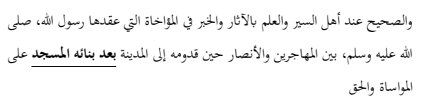
"सीरा के विद्वानों और रिवायतों के अनुसार सही मत यह है कि वह "मुआख़ात" (भाईचारा), जो अल्लाह के रसूल ﷺ ने मदीना आने पर मुहाजिरीन (प्रवासियों) और अंसार (सहायकों) के बीच स्थापित किया, वह मस्जिद बनाने के बाद हुआ था, और वह सहायता/समर्थन और हक़ (सत्य) के प्रावधान के आधार पर था …"
“The correct view as held by the scholars of Seera and reports in respect to the “Mu’akhaah” (brotherhood) which the Messenger of Allah (peace be upon him) concluded between the Muhajirin (emigrants) and the Ansar (helpers), when he came to Al-Madinah, was that it took place after his building of the Masjid and it was upon the basis of the provision of assistance/support and the Haqq (truth) …” .
यह बात बिल्कुल संभव है, और विशेष रूप से इसलिए कि मस्जिद का निर्माण पूरा होने और उसके उद्घाटन के उत्सव ने ऐसा कदम उठाने के लिए एक अच्छा अवसर प्रदान किया। इसके अतिरिक्त, यह बद्र की लड़ाई से पहले हुआ होगा, क्योंकि इसमें उबैदा बिन अल-हारिस (बिन अल-मुत्तलिब बिन अब्द मनाफ बिन कुसय्य अल-कुरैशी अल-मुत्तलिबी) का उल्लेख है, साथ ही उनके भाई ‘उमैर बिन अल-हुमाम (बिन अल-जमूह बिन ज़ैद बिन हराम बिन का’ब) का भी, और ये दोनों बद्र की लड़ाई में शहीद हुए, अल्लाह उनसे राज़ी हो। वे जीवन में भी भाई थे और मृत्यु में भी, और हम अल्लाह से आशा करते हैं कि क़यामत के दिन वे इसी प्रकार रहें। 2) सही मत यह है कि मुहाजिरीन और अंसार के बीच यह भाईचारा मूल रूप से लिखित नहीं था, क्योंकि उसका स्वरूप इसके अनुकूल नहीं था। इसका कारण यह है कि सभी रिवायतें, बिना किसी अपवाद के, किसी लिखित दस्तावेज़ का बिल्कुल उल्लेख नहीं करतीं। सीरत, इतिहास और हदीस की किताबों की जाँच से पता चलता है कि सहीफ़ा-ए-मदीना से पहले किसी संविधान, लिखित दस्तावेज़ या नियमावली का कोई उल्लेख नहीं मिलता। इसका अपवाद वे थे जो शामिल हैं:
is very conceivable, and particularly as the completion of the building of the Masjid and the celebration for its opening, represented a good occasion for such a step to be undertaken. I addition, it must have been undertaken prior to the battle of Badr because Ubaida bin Al- Harith (bin Al-Muttalib bin Abd Manaf bin Qusayy Al-Qurashi Al-Muttalibi) is mentioned in it along with his brother ‘Umair bin Al- Humam (bin Al-Jamuh bin Zaid bin Haram bin Ka’b) and they were both martyred at the battle of Badr, may Allah be pleased with them. They were brothers in life and at death, and we hope from Allah that they be like that also, on the Day of Judgement. 2) The correct view is that this brotherhood between the Muhajirin and the Ansar was not written in origin as its nature was incompatible with that. That is because all of the narrations, without exception, do not mention a written document at all. An examination of the books of Seera, history and Hadith reveal the absence of the mention of any charter, written document or code prior to the Sahifah of Al-Madinah. The exception to that included:
क) कुरआन के सहीफ़े (पन्ने): इनमें सबसे प्रसिद्ध वह सहीफ़ा (लिखित दस्तावेज़) है जिसका ज़िक्र उमर के इस्लाम क़ुबूल करने के संदर्भ में आता है, और जिसमें सूरह ताहा शामिल थी। इसके अलावा, वह सहीफ़ा जिसे उमर ने अपने हाथ से लिखा था और जो हिशाम बिन अल-आस को भेजा गया था। उसमें यह था:
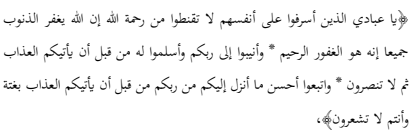
{"O My servants who have transgressed against themselves [by sinning], do not despair of the mercy of Allah. Indeed, Allah forgives all sins. Indeed, it is He who is the Forgiving, the Merciful"} के रूप में कहो: "हे मेरे बंदो, जिन्होंने अपने ऊपर ज़ुल्म किया है [गुनाह करके], अल्लाह की रहमत से निराश न हो। बेशक अल्लाह सारे गुनाह माफ़ कर देता है। बेशक वही बख़्शने वाला, रहम करने वाला है।" और अपने रब की तरफ़ तौबा के साथ लौट आओ और उसके आगे समर्पित हो जाओ, इससे पहले कि अज़ाब तुम पर आ जाए; फिर तुम्हारी मदद नहीं की जाएगी। और उस बेहतरीन चीज़ की पैरवी करो जो तुम्हारे रब की तरफ़ से तुम पर उतारी गई है, इससे पहले कि अज़ाब तुम पर अचानक आ जाए और तुम्हें उसका एहसास भी न हो। [TMQ 39:53-55]
“Say, “O My servants who have transgressed against themselves [by sinning], do not despair of the mercy of Allah. Indeed, Allah forgives all sins. Indeed, it is He who is the Forgiving, the Merciful”. And return [in repentance] to your Lord and submit to Him before the punishment comes upon you; then you will not be helped. And follow the best of what was revealed to you from your Lord before the punishment comes upon you suddenly while you do not perceive” [TMQ 39:53-55].
b) लुक़मान का मजल्लह: अल-मजल्लह और इसी तरह अस-सिजली एक सहीफ़ah (लिखित दस्तावेज़) है जिसके पन्ने पलटे जाते हैं या (उसके पन्ने) पलटे जाते हैं। यह वैसा ही है जैसा अल-बैहक़ी की “दलाइल अन-नुबुव्वह” (2/419) में आया है। (पूरी सनद का उल्लेख करने के बाद) 'आसिम बिन 'उमर बिन क़तादह अल-अंसारी ने अपने क़बीले के शुयूख (बुज़ुर्गों) से रिवायत किया कि उन्होंने कहा:
b) The Majallah of Luqman: Al-Majallah and likewise As-Sijli are a Sahifah (written document) that is turned or (its pages) turned over. That is like what came mentioned in “Dala’il An-Nubuwwah” of Al- Baihaqi (2/419). (After mentioning the full line of transmission) ‘Asim bin ‘Umar bin Qatadah Al-Ansaariy related from the Shuyukh (elders) of his people, that they said:
“सुवैद बिन अस-समित, जो बनी 'अम्र बिन 'औफ़ के भाई थे, हज या 'उमरा की नीयत से मक्का आए। उनकी क़ौम उन्हें अपने बीच उनकी उम्र, रंग-रूप और बालों के कारण कामिलियत (परिपूर्णता) का नमूना बताती थी। (रिवायत करने वाले ने) कहा:”
“Suwaid bin As-Samit, the brother of Bani ‘Amr bin ‘Awf, came to Makkah as a pilgrim for Hajj of ‘Umrah. Suwaid was described by his people as being the model of perfection among them, due to his age, skin and hair. He (the narrator) said:
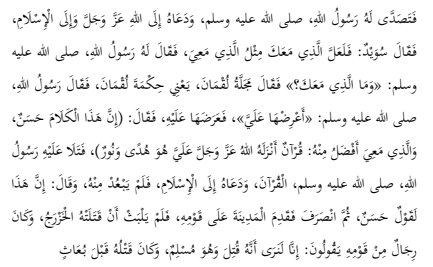
फिर अल्लाह के रसूल ﷺ उसके पास आए और उसे अल्लाह ‘अज़्ज़ व जल्ल और इस्लाम की ओर बुलाया। सुवैद ने कहा: “हो सकता है कि जो तुम्हारे पास है वह वैसा ही हो जैसा मेरे पास है।” तो अल्लाह के रसूल ﷺ ने पूछा: “और तुम्हारे पास क्या है?” उसने जवाब दिया कि उसके पास लुक़मान की “मजल्लह” है, यानी लुक़मान की हिक्मत (बुद्धि)। अल्लाह के रसूल ﷺ ने फिर कहा: “मुझे दिखाओ,” और उसने दिखाया। उन्होंने ﷺ कहा: “यह कलाम अच्छा है, लेकिन जो मेरे पास है वह इससे भी बेहतर है। वह अल्लाह ‘अज़्ज़ व जल्ल की उतारी हुई क़ुरआन है, जो हिदायत और रौशनी है।” फिर अल्लाह के रसूल ﷺ ने उसे क़ुरआन पढ़कर सुनाया और इस्लाम की ओर बुलाया। वह इससे दूर नहीं हुआ और बोला: “बेशक यह एक अच्छा कलाम है।” फिर वह चला गया और बाद में मदीना में अपनी क़ौम के पास पहुँचा। थोड़े ही समय बाद ख़ज़रज ने उसे क़त्ल कर दिया। उसकी क़ौम के कुछ लोग कहा करते थे: “हम मानते हैं कि वह मुसलमान होने की हालत में क़त्ल हुआ,” और उसका क़त्ल “बुआस” की लड़ाई से पहले हुआ था। [उद्धरण समाप्त] c) क़ुरैश की वह लिखित दस्तावेज़ (सहीफ़ा) जो ज़ालिमाना और मलऊन बॉयकॉट का था, जिसे उन्होंने का'बा के अंदर लटकाया था; उसकी कहानी, उसे दीमकों द्वारा खा जाने की कहानी और उसके निरस्त होने की प्रसिद्ध मुतवातिर कहानी। d) वे पन्ने (सुहुफ़) जो अल्लाह के रसूल ﷺ ने सैन्य अभियानों के सेनापतियों को दिए थे, जिनमें निर्देश थे, और वे मुहरबंद या जोड़े हुए थे। इसका एक उदाहरण वह है जो अल-वाक़िदी की “किताब उल-मग़ाज़ी” (1/13) में आया है:
Then, the Messenger of Allah (peace be upon him) approached him and invited him to Allah ‘Azza Wa Jalla and to Islam. Suwaid said: “It may be that what you have is like that which I have”. So, the Messenger of Allah (peace be upon him) asked: “And what do you have?” He responded by saying that he had the Majallah of Luqman, meaning the Hikmah (wisdom) of Luqman. The Messenger of Allah (peace be upon him) then said: “Show it to me” and so he did. He (peace be upon him) said: “This speech is good but what I have is better than it. It is a Qur’an that Allah ‘Azza Wa Jalla has revealed and it is guidance and light”. The Messenger of Allah (peace be upon him) then recited the Qur’an to him and invited him to Islam. He didn’t distance himself from it and said: “Verily, this is a good speech”. He then left and later arrived to Al-Madinah to his people. It was not long thereafter that he was killed by the Khazraj. There were men from his people who would say: “We view that he was killed whilst he was a Muslim” and his killing occurred before the war of Bu’ath” [End of Quote]. c) The Sahifah (written document) of the (oppressive and accursed) Boycott which the Quraish hung inside the Ka’ba along; its story, the story of the termites eating it and then its well-known Mutawatir story concerning its nullification. d) The pages (Suhuf) which the Messenger of Allah (peace be upon him) gave to the commanders of the military expeditions, containing instructions, and they were sealed or patched together. And example of that is what came stated in Al-Waqidi’s “Kitab ul-Maghazi” (1/13):
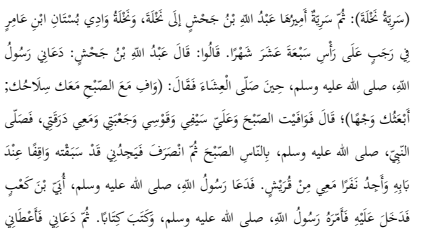
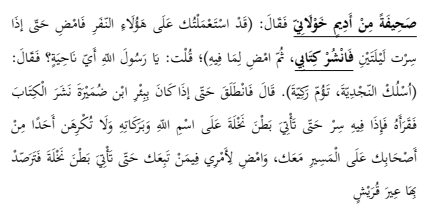
"अब्दुल्लाह बिन जह्श की कमान में नख़ला की ओर भेजा गया अभियान (नख़ला इब्न आमिर के बुस्तान (बाग़) में एक घाटी है) हिजरी के सत्रहवें महीने, रजब के महीने में हुआ।"
“The expedition to Nakhla commanded by Abdullah bin Jahsh (Nakhla is a valley in the Bustan (Orchard) of Ibn ‘Amir) took place in the month of Rajab, the seventeenth month AH.
उन्होंने कहा: अब्दुल्लाह बिन जह्श ने कहा: अल्लाह के रसूल ﷺ ने इशा की नमाज़ पढ़ी तो मुझे बुलाया और फ़रमाया: "सुबह को अपने हथियार लेकर मेरे पास आना, क्योंकि मैं तुम्हें एक मिशन पर भेजूँगा।" वे बोले: तो मैं सुबह अपनी तलवार, अपनी कमान, अपना तरकश और अपनी ढाल लेकर हाज़िर हुआ। नबी ﷺ ने लोगों के साथ फ़ज्र की नमाज़ पढ़ी, फिर निकले और मुझे पाया। मैं उनसे पहले ही उनके दरवाज़े पर खड़ा था, और मेरे साथ वहाँ क़ुरैश (यानी मुहाजिरीन) का एक समूह भी था। अल्लाह के रसूल ﷺ ने उबय्य बिन क़ाब को बुलाया और उन्हें एक दस्तावेज़ लिखने का हुक्म दिया। फिर उन्होंने मुझे बुलाया और ख़वलान की चमड़े की वह चादर दी, और फ़रमाया: "मैंने तुम्हें इस समूह का सरदार बनाया है। दो रातों की यात्रा तय करने तक आगे बढ़ते रहना। फिर मेरा ख़त खोलना और उसमें जो लिखा है उसके अनुसार अमल करना।" मैंने पूछा: "ऐ अल्लाह के रसूल, किस दिशा में?" उन्होंने फ़रमाया: "नज्दिय्या की ओर जाना, यहाँ तक कि एक छोटे से कुएँ तक पहुँच जाओ।" रावी ने कहा: अब्दुल्लाह बिन जह्श जल्दी चले, यहाँ तक कि इब्न दुमैरा के कुएँ तक पहुँच गए। फिर उन्होंने ख़त खोला और पढ़ा। उसमें लिखा था: "अल्लाह के नाम और उसकी बरकत से आगे बढ़ो, यहाँ तक कि नख़्ला की घाटी पहुँच जाओ, लेकिन अपने साथियों में से किसी को भी तुम्हारे साथ चलने पर मजबूर न करना। जो तुम्हारे साथ चले, उसके साथ मेरे आदेशों के अनुसार आगे बढ़ते रहना, यहाँ तक कि नख़्ला की घाटी पहुँच जाओ और वहीं से क़ुरैश के काफ़िले की घात में रहो।" [उद्धरण समाप्त]
They said: Abdullah bin Jahsh said: The Messenger of Allah (peace be upon him) called for me when he prayed Ishaa’, and said: “Come to me at dawn with your weapons, as I will send you on a mission”. He said: So, I approached at dawn with my sword, my bow, my quiver and my shield. The Prophet prayed Subh (i.e. Fajr) with the people, and then he left and found me. He found me having preceded him already standing at his door whilst I found a group of the Quraysh (i.e. Muhajirun) with me there. The Messenger of Allah (peace be upon him) called for Ubayy bin Ka’b and commanded him to write a document. Then he called me and gave me the sheet of leather from Khawlan, saying: “I have appointed you over this group. Proceed until you have travelled for two nights. Then open my letter and do as it says”. I said: “O Messenger of God, in which direction?” He replied, “Go towards Najdiyya until you reach a small well”. The narrator said: Abdullah bin Jahsh hastened, until he reached the well of Ibn Dumayra. He then opened the letter and read it. It said: “Go, in the name of Allah and with His blessings, until you come to the valley of Nakhla, but do not force any one of your companions to go with you. Proceed according to my commands with whoever follows you, until you reach the valley of Nakhla and lie in wait for the caravan of Quraysh from there” [End of Quote].
सारांश और निष्कर्ष
Summary Conclusion
जहाँ भी हमें किसी सहीफ़ा या लिखित दस्तावेज़ के बारे में कोई रिवायत मिले जो मुहाजिरीन और अंसार के बीच हो, या खून-बहा के हक़ों, जंग या सुलह से संबंधित हो, तो हम अनिवार्य रूप से जानते हैं कि उसका इस "मुआख़ात" (भाईचारे के गठन) से कोई संबंध नहीं है। वह या तो "सहीफ़ा-ए-मदीना" से संबंधित होगा, या ऐसी किसी चीज़ से जो उसके बाद आई या लिखी गई। अहमद अबू ज़ैद की "अस-सीरह अन-नबवीह" (पृ. 71) में "यहूदियों के साथ मुआहदे (संधि) के लिखे जाने की तारीख़" शीर्षक के तहत जो बात आई है, उसकी भी कोई वैधता नहीं है: "एक समकालीन शोधकर्ता ने यह प्रमुख पाया कि वह दस्तावेज़ मूलतः दो दस्तावेज़ थे, और फिर इतिहासकारों ने उन्हें एक में मिला दिया। उनमें से एक रसूलुल्लाह ﷺ की यहूदियों के साथ संधि से संबंधित था और वह बद्र की महान लड़ाई से पहले लिखा गया था। जबकि दूसरे में मुसलमानों, यानी मुहाजिरीन और अंसार, की ज़िम्मेदारियों, उनके अधिकारों और दायित्वों को स्पष्ट किया गया था। वे कहते हैं: 'मेरी राय में यह प्रमुख है कि यहूदियों के साथ शांति समझौते (मुवादआ) का दस्तावेज़ बद्र की महान लड़ाई से पहले लिखा गया था। जहाँ तक दूसरे दस्तावेज़ की बात है, तो वह उसके बाद लिखा गया।'" प्राचीन स्रोतों ने वह बात कही है जो इस प्रधानता का समर्थन करती है। अबू उबैद अल-क़ासिम बिन सल्लाम ने कहा: "वसीक़ा (दस्तावेज़) दो अवसरों पर लिखा गया, जब नबी ﷺ मदीना पहुँचे, इस्लाम के प्रभुत्व और मज़बूत होने से पहले, और इससे पहले कि उन्हें अहले किताब से जिज़या लेने का आदेश दिया गया।" अल-बलाज़ुरी ने कहा: "जब रसूलुल्लाह ﷺ मदीना पहुँचे तो उन्होंने यहूदियों के साथ एक संधि (मुवादआ) की और अपने और उनके बीच एक दस्तावेज़ लिखा। उन्होंने उन पर शर्त रखी कि वे उनके दुश्मनों का साथ न देंगे और न उनके पक्ष में होंगे, कि वे उनकी मदद करेंगे जो उन पर हमला करते हैं, और यह कि वे अहले ज़िम्मा की रक्षा में नहीं लड़ेंगे।" उन्होंने (नबी ﷺ ने) तब तक किसी के विरुद्ध युद्ध नहीं छेड़ा, न ही उन्हें बदनाम किया गया और न ही उन्होंने कोई सैन्य अभियान भेजा, जब तक अल्लाह अज़्ज़ा व जल्ल ने यह आयत नहीं उतारी: "जिन लोगों से लड़ाई की जा रही है, उन्हें (अब) लड़ने की अनुमति दी गई है, क्योंकि उन पर ज़ुल्म किया गया। और निश्चय ही अल्लाह उन्हें विजय दिलाने में सक्षम है। [ये वे लोग हैं] जिन्हें उनके घरों से अन्यायपूर्वक निकाल दिया गया।" (सूरा अल-हज्ज 22:39-40)
Wherever we find a narration about a Sahifah or a written document between the Muhajirin and the Ansar, or concerning blood money rights, war or peace, we know, by necessity, that it bears no relation to this “Mu’akhaah” (formation of brotherhood). It would either be related to the Sahifah of Al-Madinah or something that came or was written (much) later than it. There is also no validity in what came related in “As-Seera An- Nabawiyah” by Ahmad Abu Zaid (p. 71) under the heading “The date of the writing of the treaty (Mu’ahadah) with the Jews”: “One of the contemporary researchers found preponderant that the document was actually two documents in origin and then the historians combined them into one. One of them dealt with the treaty of the Messenger of Allah (peace be upon him) with the Jews and was written prior to the great battle of Badr. That is whilst the second clarified the commitments (duties) of the Muslims from the Muhajirin and the Ansar, their rights and obligations. He said: “It is preponderant in my view that the peace agreement (Muwada’ah) document with the Jews was written before the great battle of Badr. As for the second document, then it was written after it”. The classical sources have expressed that which supports this preponderance. Abu ‘Ubaid Al-Qasim bin Salam said: “The Wathiqa (document) was written on two occurrences, when the Prophet (peace be upon him) arrived in Al-Madinah, prior to the dominance of Islam and its becoming strong and before he was commanded to take the Jizyah from Ahl ul-Kitab (the people of the book)”. Al-Baladhari said: “When the Messenger of Allah (peace be upon him) arrived in Al-Madinah he made a treaty (Muwada’ah) with the Jews and wrote between himself and them a document. He stipulated upon them that they should not support or side with his enemies, to support him against those who attack him and that he would not fight in defence of the Ahl udh-Dhimmah. He did not then wage war against anyone, they did not defame him and he did not dispatch a military expedition, until Allah ‘Azza Wa Jalla revealed: “Permission [to fight] has been given to those who are being fought, because they were wronged. And indeed, Allah is capable of providing them victory. [They are] those who have been evicted from their homes without right” (TMQ 22:39- 40)”.

जिन लोगों से लड़ाई की जा रही है, उन्हें (लड़ने की) अनुमति दी गई है, क्योंकि उन पर ज़ुल्म किया गया। और निश्चय ही अल्लाह उन्हें विजय दिलाने की सामर्थ्य रखता है।
“Permission [to fight] has been given to those who are being fought, because they were wronged. And indeed, Allah is capable of providing them victory.
"जिन्हें उनके घरों से बिना किसी हक़ के निकाल दिया गया" [TMQ 22:39-40]
[They are] those who have been evicted from their homes without right” [TMQ 22:39-40]
ऐसा इसलिए है क्योंकि "मुवादआ" (शांति और युद्धविराम) स्वाभाविक और मूल स्थिति है, और इसे स्थापित करने के लिए किसी विशेष आयोजन की ज़रूरत नहीं होती। फिर, यदि युद्ध होता है, तो "मुवादआ" समाप्त हो जाती है और युद्ध समाप्त होने तक, किसी युद्धविराम, संधि या शांति समझौते के माध्यम से, वह वापस नहीं लौटती।
That is because the “Muwada’ah” (peace and truce) is the natural and original situation and is not in need of being convened in order to establish it. Then, if war was to take place, the “Muwada’ah” would cease and it would not return until the war ends by way of a truce, treaty or peace agreement.
अतः "मुवादअह" (मैत्री-संधि) एक ऐसी स्थिति है जो मौजूद भी हो सकती है और अनुपस्थित भी। इसीलिए अल्लाह के रसूल ﷺ का यह कथन: "अबीसीनिया वालों को छोड़ दो जब तक वे तुम्हें छोड़े रखें", इसका अनिवार्य अर्थ यह है: जब तक अबीसीनिया मुवादअह (शांति और युद्धविराम) पर कायम रहे, तब तक उस मौजूदा स्थिति की पुष्टि करो और उसी पर बने रहो। इसी तरह, सीरत के विद्वानों द्वारा प्रयुक्त कथन और नबी ﷺ से वर्णित उन रिवायतों के संबंध में, जैसे: "जब वे मदीना पहुँचे तो वहाँ रहने वाले सभी यहूदियों के साथ उन्होंने सुलह कर ली", यह समझना जायज़ नहीं है कि उन्होंने कोई आधिकारिक "मुवादअह" स्थापित किया या कोई वचनबद्धता (आधिकारिक संधि) की। बल्कि इसका अर्थ यह है कि उन्होंने उनके बीच मौजूद शांति और युद्धविराम की मूल स्थिति की पुष्टि की और उसी पर कायम रहे।
Consequently, the “Muwada’ah” represents a status that could be present or absent. Therefore, the statement of the Messenger of Allah (peace be upon him): “Leave the Abyssinians be as long as they leave you be” means by necessity: Affirm and continue upon the status quo of the Muwada’ah (peace and truce) as long as Abyssinia does so. As such, in respect to the statement used by the scholars of Seera and reports concerning the Prophet (peace be upon him) like: “When he arrived in Al-Madinah he made peace with all of the Jews who were residing there”, it is not permissible to be understood to mean that he established an official “Muwada’ah” or contracted a covenant (official treaty). Rather, it means that he affirmed and continued upon the original status quo of the truce and peace existing between them.
अगर हम उस बात पर ध्यान दें जो उनसे (ﷺ) रिवायत की गई है: "अगर वह (कअब बिन अल-अशरफ) उसी पर कायम रहता जिस पर उसके अलावा वे लोग कायम रहे जो उसकी राय में शरीक थे, तो उसका कत्ल न किया जाता। लेकिन उसने हमें गाली दी और शायरी के ज़रिए हमारा मज़ाक उड़ाया, और तुम में से कोई ऐसा न करता जब तक उसके पास तलवार न होती," तो हम देखेंगे कि यह हमारे इस नज़रिए की पूरी तरह पुष्टि करता है। इसका कारण यह है कि इसमें कहीं भी ऐसे किसी अहद या समझौते का ज़िक्र नहीं है जिसे कअब बिन अल-अशरफ ने तोड़ा हो। बल्कि उसने उस मुवादआह (शांति-संधि) पर न तो कायम रहना स्वीकार किया और न ही उसकी पुष्टि की, जिस पर बाकी लोग कायम रहे। इमाम इब्नुल-क़य्यिम (अल्लाह की रहमत उन पर हो) इनमें से कुछ बातों से अवगत थे। उन्होंने अपनी किताब "अहकाम अहल अज़-ज़िम्मा" (3/1404) में कहा:
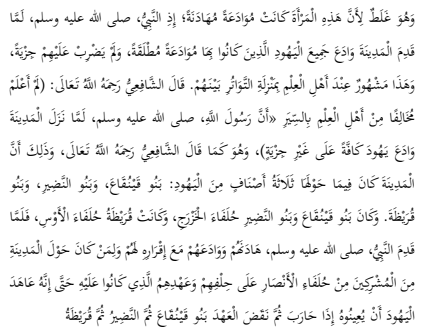
"और यह गलती है क्योंकि यह औरत शांति में थी और एक समझौते (मुहादनah) के तहत थी। ऐसा इसलिए है क्योंकि जब नबी ﷺ मदीना आए तो उन्होंने वहाँ रहने वाले सभी यहूदियों के साथ बिना किसी शर्त के शांति स्थापित की और उन पर जिज़्या नहीं लगाया। यह बात अहले-इल्म (ज्ञानी लोगों) के बीच तवातुर (निश्चित और लगातार रिवायत) की हद तक मशहूर है। इमाम अश-शाफ़िई (अल्लाह की रहमत उन पर हो) ने कहा: 'मुझे सीरत के किसी ऐसे आलिम का पता नहीं जो इस बात पर मतभेद रखता हो कि जब रसूलुल्लाह ﷺ मदीना में बस गए तो उन्होंने सभी यहूदियों के साथ जिज़्या लगाए बिना शांति स्थापित की।' बात वैसी ही है जैसी इमाम अश-शाफ़िई (अल्लाह की रहमत उन पर हो) ने कही। इसकी वजह यह है कि मदीना के चारों ओर यहूदियों के तीन समूह थे: बनू क़ैनुक़ाअ, बनू नज़ीर और बनू क़ुरैज़ा। बनू क़ैनुक़ाअ और बनू नज़ीर ख़ज़रज के सहयोगी थे, जबकि बनू क़ुरैज़ा औस के सहयोगी थे। फिर जब रसूलुल्लाह ﷺ मदीना आए, तो उन्होंने उनके साथ, और मदीना के आसपास के उन मुश्रिकों के साथ भी जो अंसार के सहयोगी थे, उनकी पहले से चली आ रही सहयोग और वचन की बुनियाद पर, उनकी स्वीकृति के साथ समझौता और शांति स्थापित की। उन्होंने यहूदियों से यहाँ तक वचन लिया कि अगर उन पर हमला हुआ तो वे उनका साथ देंगे। फिर बनू क़ैनुक़ाअ ने वचन तोड़ा, उसके बाद नज़ीर ने, और फिर क़ुरैज़ा ने।" [उद्धरण समाप्त]
“And it is a mistake because this woman was at peace and under a truce (Muhadanah). That is because when the Prophet (peace be upon him) came to Al-Madinah he made peace with all of the Jews residing there an unrestricted manner and he did not impose Jizyah upon them. This is well-known by the people of knowledge to the level of Tawatur (decisive concurrent transmission) among them. Ash- Shafi’iy (may Allah’s mercy be upon him) said: “I do not of any from the people of knowledge of Seera who disagree upon the point “That when the Messenger of Allah (peace be upon him) settled in Al- Madinah, he made peace with all of the Jews without the imposition of the Jizyah”. It is as Ash-Shafi’iy (May Allah’s mercy be upon him) stated. That is because Al-Madinah had three groups of Jews surrounding it: Banu Qainuqaa’, Banu An-Nadir and Banu Quraizha. Banu Qainuqaa’ and Banu An-Nadir were allies of the Khazraj, while Banu Quraizha were allies of the Aws. Then when the Messenger of Allah (peace be upon him) came to Al-Madinah, he made a truce and peace with them with his approval of them, alongside those who were around Al-Madinah from the polytheists who were allies of the Ansar, upon the basis of their alliance and covenant that they had previously been upon. He even took a covenant from the Jews that they would support him if he was fought against. Then, Banu Qainuqaa’ broke the covenant, followed by An-Nadir and then Quraizha” [End of Quote].
भले ही यहाँ प्रयुक्त कुछ अभिव्यक्तियाँ शायद सबसे सटीक न रही हों, जैसे यहूदी स्त्री को "मुहादनह" (सन्धि/युद्धविराम) के अधीन बताने वाला उनका कथन, जबकि अभी कोई लड़ाई हुई ही नहीं थी जिसके बाद कोई युद्धविराम लागू होता। हो सकता है यह केवल अभिव्यक्ति की चूक रही हो।
That is even if some of the expressions used here were possibly not the most accurate, like his statement describing the Jewish woman as being under a “truce” (Muhadanah), as there had not even been any fighting, for a truce to have come into effect followed it. It may be that this was merely a slip of expression.

"वथीक़ा (दस्तावेज़) दो अवसरों (हदथानी) पर लिखा गया, जब नबी ﷺ अल-मदीना पहुँचे, इस्लाम के प्रभुत्व और उसके मज़बूत होने से पहले, और इससे पहले कि उन्हें अहल अल-किताब (किताब वालों) से जिज़्या लेने का आदेश दिया गया।"
“The Wathiqa (document) was written on two occurrences (Hadathani), when the Prophet (peace be upon him) arrived in Al- Madinah, prior to the dominance of Islam and its becoming strong and before he was commanded to take the Jizyah from Ahl ul-Kitab (the people of the book)” .
"हदीथानी" शब्द हमें कोई निश्चित समय-सीमा नहीं बताता जिस पर विचार किया जा सके। इस्लाम तभी व्यापक रूप से प्रकट हुआ और वास्तव में शक्तिशाली बना जब अहज़ाब (खंदक की लड़ाई) में confederates की हार हुई। इसका कारण यह है कि नबी ﷺ लोगों के विरुद्ध आक्रमण करने लगे और लोग उनके विरुद्ध आक्रमण करने की स्थिति में नहीं रहे। इसके अलावा, हम नहीं जानते कि उन्हें लोगों से जिज़्या लेने का आदेश कब दिया गया। जबकि उनका यह कथन कि "अहल अल-किताब (किताब वालों) से जिज़्या लो", एक प्रसिद्ध भूल का दोहराव है, क्योंकि सच्चाई यह है कि जिज़्या मुशरिकों से भी लिया गया, जिनमें मजूस (अग्निपूजक) भी शामिल थे, जैसा कि अन-नोमान बिन मुक़र्रिन की हदीस में आया है, जो सहीह मुस्लिम और अन्य संग्रहों में दर्ज है। 2) जहाँ तक अल-बलाज़री के कथन का संबंध है,
is vague because the word “Hadathani” does not establish for us a determined time frame that can be taken into consideration. Islam only manifested in a prevalent manner and truly became powerful following the defeat of the confederates (Ahzab i.e. battle of the trench). That is because the Prophet (peace be upon him) began to go on the offensive against the people and they were no longer on the offensive against him. In addition, we do not know when he was commanded to take the Jizyah from the people. That is whilst his statement “take the Jizyah from Ahl ul-Kitab (the people of the book)” is a repetition of a well-known error, as the truth is that the Jizyah was taken even from the polytheists, including the Majus, as has come stated in the Hadith of An-Nu’man bin Muqarrin, recorded in Sahih Muslim and other collections. 2) As for the statement of Al-Baladhari
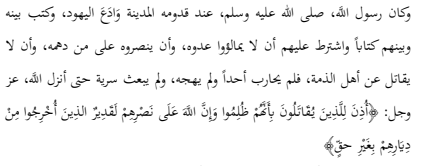
जब अल्लाह के रसूल ﷺ अल-मदीना पहुँचे तो उन्होंने यहूदियों के साथ एक संधि (मुवादा'आह) की और अपने तथा उनके बीच एक दस्तावेज़ लिखा। उन्होंने उन पर यह शर्त रखी कि वे उनके दुश्मनों का समर्थन या उनका पक्ष नहीं लेंगे, और जो लोग उन पर हमला करें उनके विरुद्ध उनकी मदद करेंगे, और यह कि वे अहलुज़-ज़िम्मह की रक्षा में युद्ध नहीं करेंगे। फिर उन्होंने किसी के विरुद्ध युद्ध नहीं छेड़ा, न उन्होंने उनकी निंदा की और न ही कोई सैन्य अभियान भेजा, यहाँ तक कि अल्लाह 'अज़्ज़ा व जल्ल ने यह आयत उतारी: {अनुमति दे दी गई उन लोगों को जिनसे युद्ध किया जा रहा है, क्योंकि उन पर अत्याचार हुआ है। और निःसंदेह अल्लाह उन्हें विजय दिलाने में सक्षम है। ये वे लोग हैं जो अपने घरों से बिना किसी हक़ के निकाले गए} (TMQ 22:39-40)।ﷺ
“When the Messenger of Allah (peace be upon him) arrived in Al- Madinah he made a treaty (Muwada’ah) with the Jews and wrote between himself and them a document. He stipulated upon them that they should not support or side with his enemies, to support him against those who attack him and that he would not fight in defence of the Ahl udh-Dhimmah. He did not then wage war against anyone, they did not defame him and he did not dispatch a military expedition, until Allah ‘Azza Wa Jalla revealed: “Permission [to fight] has been given to those who are being fought, because they were wronged. And indeed, Allah is capable of providing them victory. [They are] those who have been evicted from their homes without right” (TMQ 22:39-40)”.
इस भाषण में विरोधाभास है, क्योंकि नबी ﷺ को आयत के उतरने से पहले लड़ाई करने की अनुमति मूल रूप से नहीं दी गई थी, और वे किसी से युद्ध की स्थिति में नहीं थे। मदीना पर हमला होने की भी कोई उम्मीद नहीं थी। इसलिए उनके भाषण का यह वाक्य, "उन्होंने उनसे शर्त रखी कि वे उनके दुश्मनों की मदद या उनका साथ नहीं देंगे, और उन पर हमला करने वालों के विरुद्ध उनकी मदद करेंगे," जो "सहीफ़ा" में वर्णित बातों का सार प्रस्तुत करता है, उस समय की परिस्थितियों में अकल्पनीय है और उसकी कोई वास्तविकता नहीं है। इससे भी अधिक आपत्तिजनक वाक्य है: "और यह कि वे अहल उद-ज़िम्मा की रक्षा में नहीं लड़ेंगे", यह मानते हुए कि छपाई में कोई त्रुटि नहीं है। पहली बात, मूल रूप से वहाँ "अहल उद-ज़िम्मा" थे ही नहीं। दूसरी बात, यह कैसे हो सकता है कि वे उन पर हमला करने वालों के विरुद्ध उनकी मदद करने के लिए बाध्य हों, जबकि नबी ﷺ उन पर हमला करने वालों के विरुद्ध उनकी मदद करने के लिए बाध्य न हों?! 3) बनू क़ैनुक़ā' के बारे में अल-बलाज़ुरी का कथन:
This speech is contradictory because he (peace be upon him) had not been permitted in origin to engage in fighting prior to the revelation of the Aayah and was not in a state of war with anyone. There was also no expectation for Al-Madinah to be attacked. Therefore, the sentence from his speech: “He stipulated upon them that they should not support or side with his enemies, to support him against those who attack him”, which summarized some of what came stated in the “Sahifah”, is inconceivable and has no reality to it during that time period. Even more atrocious is the statement: “And that he would not fight in defence of the Ahl udh-Dhimmah”, assuming there was no error in the printing. Firstly, there were no “Ahl udh-Dhimmah” there in origin. Secondly, how could it be that they are obliged to support him against those who attack him, whilst he is not obliged to support them against those who attack them?! 3) The statement of Al-Baladhariy concerning Banu Qainuqaa’:
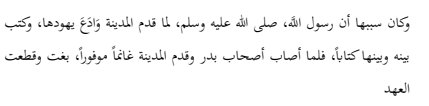
"मुहम्मद़ ﷺ" का कारण यह था कि जब अल्लाह के रसूल ﷺ मदीना पहुँचे, तो उन्होंने वहाँ के यहूदियों के साथ शांति समझौता किया और उनके और अपने बीच एक दस्तावेज़ लिखा। फिर जब मुसलमान बद्र में विजयी हुए और भारी माल-ए-ग़नीमत के साथ मदीना लौटे, तो यहूदियों ने बग़ावत की और अहद तोड़ दिया", तो यह बात भी अर्थहीन है। इसका कारण यह है कि "मुवादआह" (शांति की स्थिति) मूल है और उसके लिए आधिकारिक रूप से परस्पर अनुबंध करना या लिखित दस्तावेज़ होना आवश्यक नहीं है। जबकि पहले उल्लेख किए गए अनुसार, मुताववातिर (निर्णायक निरंतर) रिवायतों से स्थापित "मुवादआह" (शांति या युद्धविराम की स्थिति) को सबसे पहले काब बिन अल-अशरफ़ ने उल्लंघन किया, युद्ध छेड़ा और उसे तोड़ा। फिर उसने "सहीफ़ा" लिखा, जिसका उद्देश्य "मुवादआह" स्थापित करना नहीं था, बल्कि एक "संघीय संघ (इत्तिहाद कॉन्फ़ेडरली)" स्थापित करना था। इसके बाद बनू क़ैनुक़ा' इस "संघ" से अलग हो गए और युद्ध किया, फिर बनू अन-नज़ीर ने, और फिर क़ुरैज़ा ने इससे विश्वासघात किया। 4) अत-तबरी के कथन के संबंध में:
“The reason for it was that the Messenger of Allah (peace be upon him), when he arrived in Al-Madinah, made a peace agreement with its Jews and wrote a document between himself and them. Then, when the Muslims were victorious at Badr and came back to Al- Madinah with abundant booty, the Jews rebelled and broke the covenant”, then this also has no meaning to it. That is because the “Muwada’ah” (state of peace) is the origin and does not need to be officially mutually contracted or write. That is while Ka’b bin Al-Ashraf was the first to transgress, war and cut the “Muwada’ah” (state of peace or truce) which, as previously mentioned, has been established via Mutawatir (decisive concurrent) transmissions and he then wrote the “Sahifah” which was not the purpose of establishing a “Muwada’ah” but rather to establish a “Confederal Union (Ittihad Confedarali)”. Thereafter, Bani Qainuqaa’ exited from the “union” and waged war, followed by Banu An-Nadir and then Quraizhah betrayed it. 4) Concerning the statement of At-Tabari:
फिर अल्लाह के रसूल ﷺ बद्र से लौटने के बाद मदीना में ही रहे। जब वे मदीना पहुँचे तो उन्होंने वहाँ के यहूदियों के साथ एक शांति-समझौता किया, इस शर्त पर कि वे उनके विरुद्ध किसी की मदद नहीं करेंगे, और यदि मदीना में उन पर किसी शत्रु ने हमला किया तो वे उनका साथ देंगे। फिर जब अल्लाह के रसूल ﷺ ने कुरैश के मुशरिकीन (बहुदेववादियों) में से जिन्हें मारना था, उन्हें मार दिया, तो उन्होंने उनके प्रति ईर्ष्या और विद्रोह का प्रदर्शन किया और वचन तोड़ने का प्रदर्शन किया।
“Then the Messenger of Allah (peace be upon him) remained in Al- Madinah after his return from Badr. When he had arrived in Al- Madinah he had made a peace agreement with its Jews upon the stipulation that they do not assist anyone against him and that if he was attacked in Al-Madinah by an enemy, they would support him. Then when the Messenger of Allah (peace be upon him) killed those whom he had killed from the Mushrikin (polytheists) of Quraish, they demonstrated envy and rebelliousness towards him and demonstrated the breaching of the covenant”,
तो यह बात अल-बलाधुरी के कथन के अनुरूप है, और उस पर खंडन भी वही है, हालाँकि यह कहीं बेहतर है। इसका कारण यह है कि उन्होंने यह दावा नहीं किया कि बद्र से पहले की पुरानी "मुवाद'आह" (शांति/युद्धविराम का समझौता) कोई लिखित दस्तावेज़ था, जैसा कि अल-बलाधुरी से चूक हुई है, और न ही उनके पाठ में ऐसा कुछ है जो उस घृणित वाक्य के बराबर हो: "और यह कि वह ज़िम्मियों (अह्लुज़-ज़िम्मह) की रक्षा में नहीं लड़ेंगे।" इसके बावजूद, अत-तबरी का कथन "अहद का तोड़ना (नक़्ज़ अल-अहद)" वास्तविकता से मेल नहीं खाता। कारण यह है कि मूल रूप से कोई पूर्व "अहद" (वचन/संधि) था ही नहीं, बल्कि अपनी मूल अवस्था पर बनी एक "मुवाद'आह" थी। हाँ, यदि उसकी स्वीकृति और उस पर अमल को अंतर्निहित रूप से "अहद" (वचन/संधि) माना जाए, तो बात अलग है?! जैसा कि अहमद अबू ज़ैद का कथन है:
then it is in line with the speech of Al-Baladhariy above and the refutation to it is the same, although it is much better. That is because he did not assert that the old “Muwada’ah” (agreement of peace/truce), prior to Badr, was a written document, as Al-Baladhariy slipped up in, just as his text does not include something equal to the atrocious sentence “And that he would not fight in defence of the Ahl udh-Dhimmah”. Despite that, the statement of At-Tabari “breaching of the covenant (Naqdh Al‘Ahd)” is not something that fits with reality. That is because there was no prior “Ahd” (covenant) in origin but rather a “Muwada’ah” upon its original state. That is unless we were to consider its acceptance and adherence to it as being an “Ahd” (Covenant/treaty) implicitly?! As the statement of Ahmad Abu Zaid:

इन मुतवातिर (ऐसे निरंतर वर्णन जो निश्चयात्मकता का संकेत देते हैं) गवाहियों में इतना आधार मौजूद है कि यह निष्कर्ष निकाला जा सके कि यहूदियों के साथ शांति-संधि का दस्तावेज़ हिजरत के पहले वर्ष में लिखा गया था। इसके अलावा, उसकी धाराओं और पाठ के विश्लेषण से यह संकेत मिलता है कि उनमें नबी ﷺ और यहूदियों के बीच किसी तनाव का कोई संकेत नहीं है। अतः इन सब कारणों से इस्लामी विश्वकोश के दावे ध्वस्त हो जाते हैं और उनके संदेहों का खंडन हो जाता है, तो इसमें गंभीर, बल्कि घातक त्रुटियाँ हैं।
“In these Mutawatir (concurrent transmissions indicating decisiveness) testimonies, there is enough to establish preponderance to conclude that the peace agreement document with the Jews was written in the first year of the Hijrah. In addition, an analysis of its articles and texts indicate that they are not indicative of any tension between the Prophet (peace be upon him) and the Jews. As such, due to all of this, the claims of the Islamic encyclopaedia fall down and their doubts are refuted”, then there are significant, indeed fatal errors in it.
1) इतिहासकारों के बयान या विचार को शहादत (गवाही) नहीं कहा जाता, जब तक कि वह किसी समकालीन (प्रत्यक्षदर्शी) गवाह की ओर से न हो। अन्यथा ऐसा विचार केवल एक राय है, जो सही या गलत जानकारी अथवा मान्यताओं पर आधारित होती है। समान या मिलती-जुलती रायों की बड़ी संख्या को तवातुर (यानी निरंतर व लगातार प्रसारण के द्वारा निश्चित रूप से स्थापित होना) नहीं कहा जाता, और उनका वह मूल्य नहीं होता जो पुष्टि के लिए तवातुर (निर्णायक) गवाहियों का होता है।
1) The statements or views of the historians are not called testimonies (shahada) unless it is from a contemporary (first-hand) witness. Otherwise, such a view is merely an opinion based upon correct or incorrect information or premises. A large number of conforming or similar opinions is not called Tawatur (i.e. established definitely by concurrent transmission) and they do not hold the value of Tawatur (decisive) testimonies of affirmation.
2) कुछ संविधान गृहयुद्ध के बाद लिखे गए हो सकते हैं, फिर भी उनके पाठ में पक्षों के बीच किसी तनाव के अस्तित्व का संकेत नहीं मिलता। इसका कारण यह है कि संविधान का उद्देश्य राज्य के नियमन को निर्धारित करना है (यानी एकात्मक या संघीय रूप आदि)। अतः उससे पहले घटित तनाव या संघर्ष की तिथि और उसका विवरण न तो उसमें लिखा जाता है और न ही उल्लेखित होता है। परिणामस्वरूप, कथन "वे (अर्थात् पाठ) नबी ﷺ और यहूदियों के बीच किसी तनाव का संकेत नहीं देते" के संबंध में उसका विपरीत भी उतना ही सही है। इसलिए कि किसी संघीय संविधान या अंतरराष्ट्रीय संधि का लिखा जाना अपने आप में उससे पहले किसी तनाव, संघर्ष या युद्ध के अस्तित्व का प्रमाण नहीं है। हो सकता है ऐसा कुछ हुआ हो, और यह भी हो सकता है कि न हुआ हो। यह केवल अन्य ऐतिहासिक संकेतों से ही जाना जा सकता है, जिन्हें उस दस्तावेज़ से स्वतंत्र रूप से देखा जाए जिसकी जाँच हो रही है, या स्वयं दस्तावेज़ के उन पाठों से जो किसी संघर्ष के समाप्त होने, लड़ाई के रुकने, या मुआवज़ों और खूनबहा (दियत) आदि की समस्याओं के हल होने की ओर संकेत करते हैं। उस्ताद अहमद अबू ज़ैद उस "इस्लामी विश्वकोश" के दावों का खंडन करना चाहते हैं, जिसे उन्होंने इससे कुछ समय पहले "अस-सीरा अन-नबविय्या" में अहमद अबू ज़ैद (पृ. 70) द्वारा इस प्रकार तैयार किया था:
“विश्वकोश ने यह बताने के बाद कि उस संधि (मुआहदा) के अनुबंध में बुद्धिमत्तापूर्ण नबवी नीति-निर्धारण के कौन-से तत्व शामिल थे, और इब्न इस्हाक़ के उस संधि के पाठ को सुरक्षित रखने का संकेत देने के बाद, कहा: प्रतीत होता है कि यह पाठ, अपने लिखे जाने की तिथि के संदर्भ में, हिजरत के पहले वर्ष का नहीं है, क्योंकि यह नबी ﷺ और यहूदियों के बीच के तनावपूर्ण संबंधों को दर्शाता है।”
“After the encyclopaedia mentioned what the contracting of that treaty (Mu’ahadah) contained in terms of wise prophetic policy making and after it indicated to Ibn Ishaq having preserved the text of that treaty, it stated: It appears that this text does not go back, in respect to the date of its writing, to the first year of the Hijrah, because it reflects the tense relations between the Prophet (peace be upon him) and the Jews”.
सच्चाई यह है कि सहीफ़ा-ए-मदीना हिजरत के तीसरे वर्ष के आरंभ में लिखा गया था, और इसका आधार वे ऐतिहासिक नक़्ल किए गए पाठ हैं जो हम पहले प्रस्तुत कर चुके हैं। इस तरह, इस विषय में विश्वकोश सही था। जहाँ तक उन ओरिएंटलिस्ट्स का अनुमान है, जो इस विश्वकोश के लेखक हैं, कि यह पाठ (यानी सहीफ़ा)
The truth is that the Sahifah of Al-Madinah was written at the beginning of the third year of Hijrah based upon the evidence of the historical transmitted texts that we have presented earlier. As such, the encyclopaedia was correct regarding this matter. As for the deduction of the orientalists, who are the authors of the encyclopaedia, that the text (i.e. Sahifah)

पैगंबर (ﷺ) और यहूदियों के बीच तनावपूर्ण संबंधों को दर्शाता है।
“reflected tense relations between the Prophet (peace be upon him) and the Jews”, .
तो यह तर्क प्रभावशाली नहीं है और अपने स्थान से बाहर है। यहाँ लोगों ने अपनी कल्पनाओं को खुली छूट दे दी है। जबकि इतिहास केवल उन घटनाओं और वास्तविकताओं का नाम है जो बीत चुकी हैं, और उसकी रिवायतें प्रत्यक्षदर्शी गवाहों और उस समय जीवित लोगों के अभिलेखों से ली जानी चाहिए, कल्पनाओं या यहाँ तक कि तार्किक अनुमानों से नहीं। यह सच है कि सहीफ़ा (संविधान-पत्र) लिखे जाने की परिस्थितियाँ इस बात को प्रकट करती हैं कि यह कुछ यहूदियों (विशेषकर का'ब बिन अल-अशरफ़) के साथ संबंधों में तनाव उत्पन्न होने के कारण लिखा गया था। परंतु इसके पाठ में किसी पूर्व तनाव या संघर्ष की ओर इशारा करने वाली कोई बात शामिल नहीं है, और दूर-दूर तक भी नहीं!
then this is not convincing and out of place. People have given free reign to their imaginations here. That is whilst history is merely events and realities that have passed by and its reports must be taken from first-hand witnesses and records of those living at the time, not from imaginations or even logical deductions. Yes, it is true that the circumstances surrounding the writing of the Sahifah reveal that it was written due to the occurrence of a tension in the relations with some of the Jews (Ka’b in Al-Ashraf specifically). However, its text does not include anything indicating to any prior tension or conflict and not even remotely!