6.7 مطالعہ کے موضوعات اور مراحل
6.7 Study subjects and stages
جیسا کہ ہم پہلے کہہ چکے ہیں، سکول کی تعلیم کو طلبہ کی عمر کے مطابق 3 مراحل میں تقسیم کردہ 36 سکول ٹرمز (تعلیمی ادوار) میں تقسیم کیا گیا ہے، جس میں سے ہر مرحلہ متعلقہ شریعت کے قواعد کے تحت منظم ہوتا ہے۔ تعلیمی مضامین کے حوالے سے، ہر مرحلے کے مخصوص مضامین کے ساتھ ساتھ ناکامی اور ترقی (ایک کورس سے دوسرے کورس میں منتقلی) سے متعلق مخصوص قواعد بھی ہیں۔ ہر مرحلے میں تعلیمی مضامین کو دو حصوں میں تقسیم کیا گیا ہے: بنیادی مضامین اور مہارت و سرگرمیوں کے مضامین۔
As we have said before, the school education is divided into 36 school terms distributed between 3 stages according to student ages such that each stage is regulated by the relevant Shari’ah rules. With respect to study subjects, each stage has specific subjects together with specific rules related to failure and progress (transferring from one course to the next). Study subjects in each stage are divided into two: Basic subjects and Skills and Activities Subjects.

پہلے تعلیمی مرحلے میں، دو اساتذہ پہلے سمسٹر سے طلباء کو پڑھانا شروع کرتے ہیں۔ پہلا استاد انہیں اسلامی ثقافت اور عربی زبان پڑھاتا ہے، جبکہ دوسرا استاد انہیں سائنس اور ریاضی پڑھاتا ہے۔ دونوں تدریسی مہارتوں اور سرگرمیوں میں ایک دوسرے کا ساتھ دیتے ہیں۔ استاد کو اس مرحلے میں کم از کم مسلسل تین تعلیمی سمسٹرز تک اپنے طلباء کے ساتھ رہنا چاہیے۔
In the 1st school stage, two teachers begin teaching students from the first term. The first teaches them Islamic culture and Arabic language, the second teaches them sciences and mathematics. Both share in teaching skills and activities. The teacher should remain with his students in this stage for at least three consecutive school terms.
مہارتوں کے مضمون میں، استاد بچے کو ایسی سرگرمیاں دیتا ہے جن سے اس کی ربط پیدا کرنے اور سوچنے کی صلاحیت پروان چڑھے، مثلاً چیزوں کو بنانا اور انہیں کھولنا۔ اس بات کا خیال رکھا جانا چاہیے کہ ان سرگرمیوں اور مہارتوں کو سمسٹر کے بنیادی اپنائے گئے مضامین سے جوڑا جائے۔
In the skills subject, the teacher gives the child activities to develop his ability to link and think e.g. building and dismantling of things. Care must be taken to relate these activities and skills to the term’s basic adopted subjects.
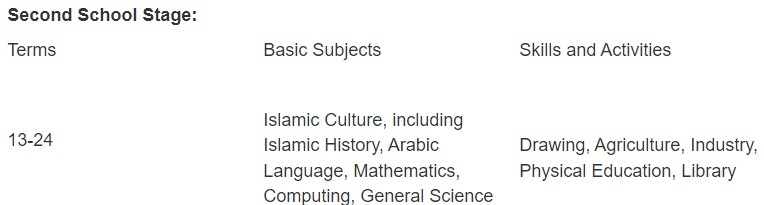
اس مرحلے میں "جنرل سائنسز" (عمومی علوم) کے مضمون میں کیمیا، حیاتیات، فزکس اور جغرافیہ کے اصول شامل ہیں۔
The “General Sciences” subject in this stage includes principles of chemistry, biology, physics and geography.
تیسرا تعلیمی مرحلہ:
Third School Stage:
یہ مرحلہ ٹرم 25 سے 36 تک کا ہے۔ اس مرحلے میں، تمام طلبہ صرف ٹرم 25 سے 30 تک ایک ہی تعلیمی مضامین میں حصہ لیتے ہیں۔ اس کے بعد، ٹرم 31 سے 36 میں طلبہ اپنی پسند کے اختیاری شعبوں (فروع) میں شامل ہو جاتے ہیں۔ یہ اختیارات درج ذیل ہیں:
This stage covers the terms 25 to 36. In this stage, all students participate in the same study subjects in terms 25 to 30 only. Thereafter, in terms 31 to 36 students join the optional branches (furoo’) they prefer. These options are:
- ثقافتی انتخاب - سائنسی انتخاب - صنعتی یا تکنیکی انتخاب (کمپیوٹنگ، میکانکس، الیکٹریکل، کمیونیکیشنز، نقشہ نگاری وغیرہ)
- Cultural Option - Scientific Option - Industrial or Technical Option (computing, mechanics, electrical, communications, cartography etc.)
- زرعی شعبہ - تجارتی شعبہ - گھریلو شعبہ (خواتین کے لیے)
- Agricultural Option - Commerce Option - Domestic Option (for females)
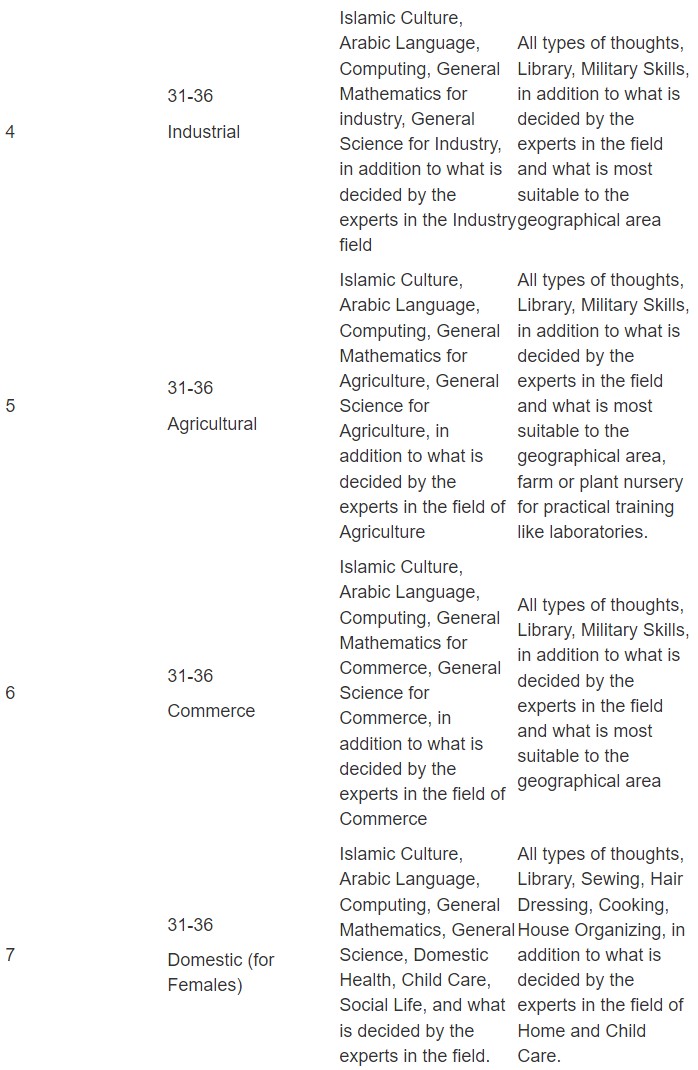
درج ذیل چارٹ ان میں سے ہر آپشن میں پڑھائے جانے والے مضامین کو ظاہر کرتا ہے:
The following chart shows the subjects studied in each of these options:
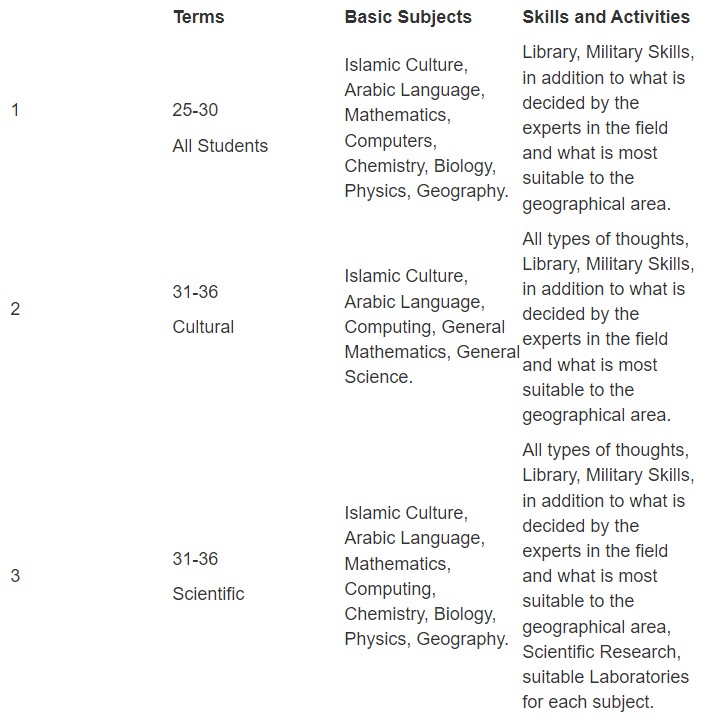
تیسرے تعلیمی مرحلے کے ثقافتی انتخاب میں، طالب علم اسلامی ثقافت اور عربی زبان دونوں میں تفصیلی موضوعات کا مطالعہ کرتا ہے۔ ماہرین فقہ، اصول، تفسیر، علوم الحدیث، تاریخ اور اسلامی ثقافت کے دیگر اختیاری مضامین کے تقاضوں کا تعین کرتے ہیں۔ اسی طرح، وہ اس مرحلے کے لیے ضروری عربی زبان کے اختیاری مضامین میں مخصوص نصاب (مناهج) اپناتے ہیں، جیسے کہ بلاغت، ادبی متن وغیرہ۔
In the cultural option of the third school stage, the student takes extended topics in both Islamic Culture and Arabic Language. Experts determine the requirements in the subjects of Fiqh, Usul, Tafseer, '‘Ulum Al-Hadith, History and other Islamic culture options. Likewise, they adopt specific courses (manaahij) in the Arabic language options required for this stage such as Eloquence (Balagha), Literature texts etc.
غیر سائنسی اختیارات میں، طالب علم ریاضی اور سائنس کے مضامین مختصر شکل میں پڑھتا ہے جس میں توجہ صرف ان موضوعات پر دی جاتی ہے جو اس کے منتخب کردہ شعبے کے لیے ضروری ہوں۔ چنانچہ کامرس (تجارت) کے شعبے کا طالب علم ریاضی کے وہ موضوعات پڑھتا ہے جن کا تعلق تجارت سے ہو، مثلاً اکاؤنٹنگ، زکوٰۃ اور وراثت کے حسابات، نفع و نقصان کے کھاتے، بک کیپنگ اور کیش بک کے کھاتے؛ اسی طرح وہ شماریات کے موضوعات بھی پڑھتا ہے۔ جبکہ انڈسٹریل (صنعتی) شعبے کا طالب علم صنعت سے مخصوص موضوعات پڑھتا ہے جیسے کہ جیومیٹریکل ڈرائنگ، اشکال، رقبہ اور حجم کا حساب کتاب وغیرہ۔
In non-scientific options, the student takes Mathematics and Sciences in a concise form with focus paid only to the topics required for their option. Thus the Commerce option student takes Mathematics topics related to Commerce e.g. Accounting, Zakat and Inheritance Accounts, Profits and Loss Accounts together with Bookkeeping and Cashbook Accounts; likewise he/she takes topics in Statistics. Whereas the Industrial option student takes topics specific to Industry such as Geometrical Drawing, Shapes, Area and Volume Calculation etc.
غیر سائنسی آپشن کا جنرل سائنسز کا طالب علم ایسے موضوعات کا مطالعہ کرتا ہے جن کی توجہ انسانی جسم، امراض، عوامی تحفظ کے ساتھ ساتھ انسان اور اس کے ماحول سے متعلق سائنسی موضوعات پر ہوتی ہے۔ زرعی آپشن میں، زراعت اور غذائیت سے متعلق موضوعات کا اضافہ کیا جاتا ہے جیسے کہ نباتاتی زراعت کے طریقے، ان کے امراض اور علاج، مٹی کی اقسام، کھادیں، کیڑے مار ادویات وغیرہ۔
The General Sciences student of the non-scientific option takes topics focusing upon studies of the Human Body, Diseases, Public Safety as well as scientific topics related to man and his environment. In the agricultural option, topics related to agriculture and nutrition are added such as methods of Plant Agriculture, their diseases and treatment, types of soil, fertilisers, insecticides etc.
انڈسٹریل آپشن کا طالب علم مادوں کے علم اور ان کی خصوصیات مثلاً کثافت اور وزن کے ساتھ ساتھ مکینیکل ڈائنامکس اور عوامی تحفظ کے اصولوں سے متعلق مضامین پڑھتا ہے۔