٦.٦ المدارس الحكومية ونظام الفصول الدراسية
6.6 State schools and the system of school terms
تُبنى تقسيمات المدارس في الدولة على أساس متوسط أعمار الطلاب لا على المراحل الدراسية، وذلك لالتزام الأحكام الشرعية المتعلقة بالتعليم والتأديب، حتى يُعامَل الطلاب بحسب أعمارهم. وتُقسَّم المدارس بحسب هذه الفئات العمرية إلى ثلاثة أنواع كما هو موضح في الجدول التالي:
The division of schools within the State is built upon the basis of average student age rather than school terms in order to be bound by the Shari’ah rules related to teaching and discipline, so as to deal with students according to their age. Schools are divided according to these age groups into 3 types as shown in the following chart:
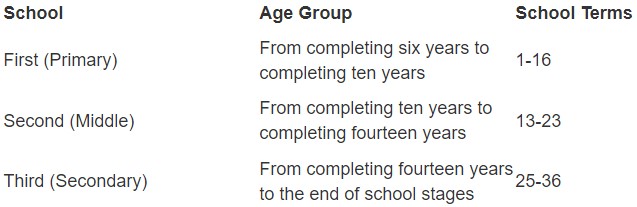
لا يقتصر المدرسة على الفصول الدراسية فحسب، بل تمتد لتتداخل مع مدارس المرحلة السابقة والتالية في عدد من الفصول، وذلك لضمان توزيع الطلاب في المراحل الثلاث وفق فئاتهم العمرية. فمدرسة المرحلة الأولى من التعليم مخصّصة حصراً للطلاب الذين تقل أعمارهم عن عشر سنوات، ويكون الطالب قد أتمّ عند بلوغه العاشرة اثني عشر فصلاً دراسياً (4 سنوات × 3 مقررات في السنة = 12 مقرراً). غير أن الطالب الجادّ يستطيع في هذه المرحلة أن يُتمّ ستة عشر فصلاً دراسياً (4 سنوات × 4 فصول في السنة = 16 فصلاً). وعليه، تتداخل مدارس المرحلتين الأولى والثانية في تدريس الفصول المطلوبة من الثالث عشر إلى السادس عشر للطلاب الذين تتراوح أعمارهم بين 9 و12 سنة؛ فعلى سبيل المثال، يُدرَّس الفصل رقم "15" في المرحلة الأولى للطالب الجادّ الذي لا يطلب إجازةً في أي فصل، وسيكون عمره حينئذٍ (6 + 4/15 = 9 ¾ سنة)، أي ضمن فئة عمر المرحلة الأولى. أما الطالب الذي يطلب الإجازة، فسيكون عمره (6 + 3/15 = 11 سنة)، أي ضمن فئة عمر المرحلة الثانية. ويوجد هذا التداخل أيضاً بين مدرسة المرحلة الثانية ومدرسة المرحلة الثالثة، إذ تتداخلان في تدريس الفصول "25–32"، وهي إلزامية للطلاب الذين تتراوح أعمارهم بين 13 و17 سنة. فالمقرر الثامن والعشرون، على سبيل المثال، يُدرَّس في المرحلة الثانية للطالب الجادّ الذي لا يأخذ إجازةً من أي فصل؛ وعمره حينئذٍ (6 + 4/28 = 13 سنة)، أي ضمن المرحلة الثانية. وبالمثل، يُدرَّس المقرر الثامن والعشرون في مدرسة المرحلة الثالثة للطلاب الذين يأخذون إجازةً بين المقررات: وعمره حينئذٍ (6 + 3/28 = 15 ⅓ سنة)، أي ضمن فئات عمر المرحلة الثالثة. وهذا هو الحال في جميع الفصول المتداخلة بين المراحل المذكورة في الجدول الوارد في الصفحة 74.
The school is not exclusively bound by school terms only; rather it extends to associate with schools of the previous and following stage in a number of terms in order to guarantee distribution of students in the 3 stages according to their age groups. The first stage school of teaching is exclusively for students less than ten years old, with the student having completed 12 school terms upon attaining ten years (4 yrs times 3 courses per year=12 courses). However, the serious student can at this stage complete 16 school terms (4 years times 4 terms per year=16 terms). Accordingly, schools of the first 2 stages overlap in teaching the required terms 13-16 to students between 9 and 12 years, for instance, term number “15” is taught in the first stage to the serious student who is not seeking a break in any term, his age will be (6+4/15= 9 ¾ years) i.e. within the first stage group. The second stage for the student who seeks the holiday, he will be (6+3/15=11 years) i.e. within the second stage age group. This overlap exists also between the second stage school and the third stage school, they overlap in teaching the term “25-32” which are mandatory for students between 13 and 17 years of age. The 28th course for example, is taught in the second stage for the serious student who does not take a break from any term; his age will be (6+4/28=13 years) i.e. within the second stage. Similarly, the 28th course is taught in the third stage school for the students who take a break between courses: his age will be (6+3/28=15 1/3 years) i.e. within the third stage age groups. This is the case for all the overlapping terms between the mentioned stages in the chart on page 74.